First time in Taiwan’s capital? This Taipei travel guide shows you exactly how to plan your trip, from essential tips to the best things to do, where to stay, and how to make the most of your time.
Taipei is one of those cities that’s easy to love from the moment you arrive. Taiwan’s capital blends modern convenience with rich tradition, all wrapped in a welcoming vibe.
Think sizzling night markets, steaming xiao long bao, and quiet temples tucked between scooter-filled streets. There are world-class museums, lush hikes like Elephant Mountain, and hot springs just a quick train ride away. Public transport is effortless, and day trips to places like Jiufen or Pingxi are a breeze. Whether you’re here for food, culture, shopping, or the outdoors, visiting Taipei puts it all within easy reach.
If you’re planning a trip to Taipei for the first time, this travel guide has all the essentials from practical Taipei travel tips to the best places to eat and explore. You’ll find advice on when to go, how to get around, and where to stay. By the end, you’ll be ready to enjoy your first visit to Taipei without missing any of the good stuff.
* Disclosure: This Taipei travel guide contains affiliate links. We will receive a small commission if you book through our links. This is at no extra cost to you. We only recommend products we like and trust ourselves.

Taipei Quick Travel Guide & Tips
| Language Mandarin Chinese (official). English is common in tourist areas, but not everywhere; use translation apps. | Time Zone Taipei Standard Time (TST), UTC+8 |
| Currency New Taiwan Dollar (TWD). 1 USD = ~30 TWD | Visa Many nationalities get visa-free entry for 30–90 days; check requirements on ivisa.com |
| Plugs and Voltage Type A and B plugs; 110V, 60Hz. Use a universal adapter with surge protection | Safety One of the safest cities in Asia; petty theft is rare but stay aware in busy areas. |
| Drinking Water Drink bottled or filtered water | Transport Get an EasyCard for hassle-free MRT, bus, and even convenience store payments. |
| Credit cards & ATMs Cash is common in markets & small eateries. ATMs are widely available. Bank of Taiwan ATMs often have no extra fees. | Daily Budget $40–70 USD per person per day (mid-range travel). |
| When to go March–May and October–November for pleasant weather and lower humidity. | How long to go Minimum 3 days for the city, add an extra day for day trips to Jiufen, Shifen, or Yehliu. |
| Getting there Fly into Taoyuan International Airport; MRT, bus, and taxi options connect to the city center. | Stay Connected Get a SIM card upon arrival at the airport or use an Airalo e-SIM for instant connectivity. |
Essential travel info before you visit Taipei
Visa requirements & entry rules
Many nationalities (including the US, Canada, UK, EU countries, Australia, and New Zealand) can enter Taiwan visa-free for 30 to 90 days, depending on their passport. If you’re not sure about your country’s eligibility, always double-check the latest entry rules on Taiwan’s official immigration website or iVisa.com before booking your trip. This ensures you have the most accurate and up-to-date information, as requirements can change. Make sure your passport is valid for at least six months beyond your intended departure date, as that’s a standard requirement for entry.
💡 TRAVEL TIP | In addition to your passport, you’ll need to complete Taiwan’s arrival card before entering the country. These days, the process is digital. You can fill out the online form within three days before your arrival, which makes things much smoother at immigration. Starting October 1, 2025, this will become 100% paper-free, so the old paper cards will no longer be available.
Best time to visit Taipei
Taipei is a year-round destination with a humid subtropical climate. The city is situated in a basin surrounded by mountains, so expect high humidity regardless of the time of year.
Spring (March–May) offers pleasant temperatures, low rainfall, and blooming cherry blossoms. It’s one of the most comfortable times to explore, though it’s also high season, meaning more crowds and higher prices.
Summer (June–August) is hot, humid, and wet. Temperatures can reach the mid-30°C (86°F) with humidity over 90%. Rainfall peaks and typhoons are most likely during this time, which can disrupt travel plans.
Autumn (September–November) brings mild temperatures, lower humidity, and sunny days, so the perfect weather for city sightseeing and day trips. There’s still a small chance of typhoons.
Winter (December–February) is cooler, usually 12–18°C (54–64°F), and ideal for hiking, cycling, and hot springs. It’s also low season, so you can find better deals. The exception is Chinese New Year, when prices and crowds spike.
We visited at the end of March and again in early June. Both times were hot and humid, with occasional downpours. The weather can be unpredictable, so pack an umbrella.
💡 TRAVEL TIP | If you want to experience local culture, time your visit for festivals like the Lantern Festival in February or the Dragon Boat Festival in June.
How many days to spend in Taipei
If it’s your first time in Taipei, we’d recommend at least three full days just for the city itself. That gives you enough time to see the main sights, enjoy a few night markets, and soak in the atmosphere without rushing.
If you’re planning to explore outside the city, such as day trips to Jiufen, Shifen, Yehliu, or Yangmingshan, we recommend adding at least one extra day. Taipei is surrounded by scenic and cultural gems, and it’s worth building them into your itinerary.
Later in this post, you’ll find a 3-day Taipei itinerary suggestion to help plan your days, as well as the best things to do in Taipei.
Is it safe to visit Taipei?
We personally felt very safe in Taipei, even late at night in both busy districts and quiet neighborhoods. Crime rates are low, locals are friendly, and petty theft is rare across Taiwan. You’ll hardly hear of pickpocketing or robberies. That said, it’s always smart to stay aware of your surroundings, choose well-lit streets, avoid dodgy alleys alone, and keep an eye on your belongings no matter where you travel. Taipei consistently ranks among the safest cities in the world for travelers.
While earthquakes occasionally make the news, tremors are rare. Most buildings and skyscrapers are built to withstand them, so it’s not something that should stop you from visiting.
We always recommend getting travel insurance. Our pick is Heymondo, which offers a simple app for managing your policy and claims, even through WhatsApp. Coverage includes emergency medical assistance, medical expenses for accidental injury or illness, and hospitalization. They also cover stolen or damaged luggage, replacing missing visas or passports, and travel disruptions such as delays that require meals or accommodation. Trip cancellation protection is included for emergencies like family hospitalization. Optional add-ons cover electronics and adventure sports.
Planning your Taipei trip
Booking flights to Taipei
Most international flights land at Taoyuan Airport, about 40 km west of the city. It’s the main hub for long-haul flights. Some regional flights arrive at Songshan Airport, which is right in Taipei and is more convenient if you’re coming from nearby Asian cities.
For finding the best flight deals, we recommend using Skyscanner first, then cross-check prices on Google Flights and Kiwi. Generally, it’s best to book your Taipei flights several months ahead to lock in lower fares. Prices tend to rise the closer you get to your departure date. Flying mid-week often gets you cheaper tickets, while peak periods like Lunar New Year can be pricey.
💡 TRAVEL TIP | If you don’t mind longer travel times, flights with a stopover in China can sometimes cost half the price of direct routes. We flew with China Airlines over Beijing, and really enjoyed the flight; the service was excellent!
Where to stay in Taipei
Even though Taipei isn’t as intense & sometimes overwhelming like Chongqing or Bangkok, Taipei is bigger than most expect. There isn’t a single city center but many districts, each with its own vibe and charm. Luckily, Taipei’s extensive MRT system makes it easy and affordable to get around anywhere.
For this reason, we recommend staying at an accommodation close to a metro station if you want to explore lots of the city. Since attractions are spread out, your district choice depends on your budget and what kind of atmosphere you want.
Best Neighborhoods for First-Timers
If it’s your first time in Taipei, these neighborhoods are great picks, each with its own flair and price range:
- Ximending (Wanhua District)
This is our personal favorite and where we stayed both times. It’s vibrant and lively, full of street food, trendy shops, and a buzzing atmosphere. Perfect for budget travelers and anyone who loves being in the heart of the action. - Zhongzheng
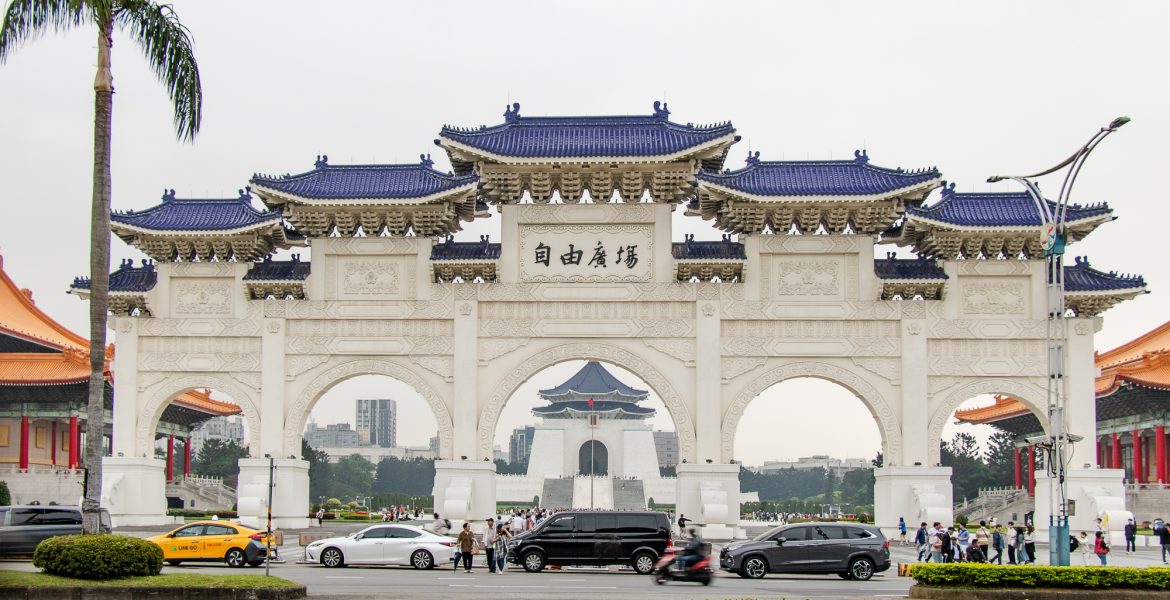
Home to many historic landmarks like Chiang Kai-shek Memorial Hall, Liberty Square, and the 228 Peace Memorial Park. It’s central and makes it easy to reach other parts of Taipei quickly. - Datong
This historic district has charming old-style buildings and is where you’ll find Taipei’s oldest street, Dihua Street’. If you love history, this area is for you. - Da’an
Da’an sits on the MRT’s red, yellow, and brown lines, offering easy access to central, west, and east Taipei, including the city’s famous landmark Taipei 101. It feels more local, with leafy streets & markets. Yongshang Road here is one of our favorite foodie spots. - Xinyi
Taipei’s modern business district with skyscrapers, luxury malls, and Taipei 101. It’s bustling and contemporary, with a lively nightlife scene and walking distance to Xiangshan Mountain.
How to Pick the Right Stay
Taipei’s accommodation is quite affordable compared to other major cities like Seoul or Tokyo, although it’s not as cheap as Southeast Asia. You can still find a good hotel double room for about $40.
One thing to watch for: many basic hotel rooms here don’t have windows. You’ll see this clearly when searching for hotels as they mention it specifically for each room type. So if you need natural light, make sure to double-check before booking.
To get the best deals, always compare prices on both Agoda and Booking.com. They often have different offers, so it pays to look at both.
Our Hotel Recommendations for Taipei
Below are our top picks for a first-time stay in Taipei in different areas of the city:
★ BUDGET
We Come Hostel
- Features a library, a terrace, and a cozy shared lounge
- Located just a few steps away from Dihua Street & the MRT Green line
- Dormitory & Double Rooms $
★★ MID-RANGE
Hotel Resonance Taipei
- Guests can enjoy a fitness center, a coffee shop & additional services
- Located close to Taipei Main Station & right at the MRT Blue line
- Twin & King Rooms $$
★★★ LUXURY
Kimpton Da An Taipei
- There is a restaurant, fitness room, & bicycle rental on site
- Located close to Sun Yat-Sen Memorial Hall & MRT Blue & Brown Line
- Twin & King Rooms $$$
Our top picks specifically for Ximending, as this is our favorite area to stay as a first-time visitor:
★ BUDGET
- Guests can enjoy a sun deck & cozy shared lounge
- Twin, Double & Family Rooms $
★★ MID-RANGE
Solaria Nishitetsu Hotel Taipei Ximen
- Guests can enjoy a fitness center & on-site restaurant
- Breakfast is available
- Twin, Triple & Queen Rooms $$
★★★ LUXURY
Sotetsu Grand Fresa Taipei Ximen
- There is an on-site restaurant
- Breakfast is available
- Twin, Double & Family Rooms $$$
What to pack for Taipei
Taipei’s weather is humid subtropical, so pack lightweight, breathable clothes for most of the year. Bring a light rain jacket or umbrella as showers can pop up anytime. In winter, layers are useful as it can get cooler, especially in the evenings.
Don’t forget comfortable walking shoes as you’ll be exploring a lot! Also, a portable charger for your phone is a lifesaver since you’ll probably be using maps and translation apps frequently.
Here are some packing essentials from our Taipei travel guide:
- Comfortable Walking Shoes: Taipei is a city made for exploring on foot, so bring comfy shoes that can handle everything from bustling night markets to hiking trails. (see his / hers)
- Universal Adapter: Taiwan uses Type A and B plugs with 110V, so a universal adapter is a must to keep your devices charged throughout your trip.
- Power Bank: With so much to see and snap around Taipei, a reliable power bank will keep your phone and camera powered all day long.
- Packing Cubes: Packing cubes help keep your bag organized and make it easy to switch between city strolls and day trips out of town.
- Cross-body Bag: A secure cross-body bag keeps your essentials close and your hands free for tasting all the amazing street food. (see his / hers)
- Sleeping Mask & Earplugs: Whether you’re in a lively neighborhood like Ximending or a quieter district, a sleeping mask and earplugs ensure you get restful sleep after busy days.
Cost of travel in Taipei
Taipei is a bit pricier than some parts of Southeast Asia but still affordable. It’s cheaper than megacities like Tokyo or Seoul, especially if you eat street food and shop smart.
Street food is delicious and cheap, so perfect for budget travelers. Also, don’t miss Taiwan’s convenience stores like 7/11 and Family Mart. They’re everywhere and packed with delicious, ready-to-go meals, snacks, coffee, and essentials at decent prices. Seriously, schedule a stop in one during your trip as it’s one of the best things to do in taipei!
Accommodation ranges widely. You can find hostel dorm beds for around $20 and private double rooms from around $30 per night.
Transport is affordable too. Bus or MRT rides usually cost NT$15-18, with the airport MRT at NT$160 one way.
On average, budget travelers might spend about $40 per day, while those wanting more comfort and activities could budget $95 USD or more.
Here’s a rough daily breakdown travel guide for Taipei (low to mid budget):
- Hotels: $30 – $70
- Food: $5 – $15
- Activities: $5 – $15
- Transport: ~$3
💡 TRAVEL TIP | Consider getting a Taiwan Fun Pass or EasyCard. The Taiwan Fun Pass covers public transport, entrance fees, and some shuttle buses for day trips. It’s worth it if you plan to use it a lot. The EasyCard is reloadable and perfect for MRT and buses around the city. It can also be used to pay in convenience stores. More on these cards later on!
Places to visit on your Taipei itinerary
Here’s a quick travel guide of must-dos for first-timers in Taipei:
- Get a killer view from the Taipei 101 Observatory.
- Hike Elephant Mountain for an unforgettable sunset over the city skyline.
- Eat your heart out at night markets like Raohe and Shilin.
- Experience the bustling streets and neon lights of Ximending at night.
- Taste Taipei’s amazing Taiwanese breakfast, don’t miss soy milk and egg pancake rolls.
- Watch the changing of the guard ceremony at Chiang Kai-shek Memorial Hall.
- Explore the National Palace Museum to see priceless Chinese art and artifacts.
- Visit iconic temples like Longshan Temple for a glimpse of local spirituality.
- Take a relaxing morning bike tour around Taipei’s riverside parks.
- Go on day trips to charming spots like Jiufen, Pingxi, or Yangmingshan National Park.
- Try the famous xiao long bao (soup dumplings), a Taiwanese classic.
- Sip on authentic boba tea where it all began, in Taipei’s vibrant tea shops.
- Discover creativity at Huashan 1914 Creative Park, full of galleries and cool cafes.
Practical tips for during your Taipei visit
Currency & ATM’s travel guide for Taipei
Taiwan’s currency is the Taiwan New Dollar (TWD). At the time of writing, $1 is roughly 30 TWD. We always keep a currency converter app on our phone for quick checks. Coins come in NT$1, 5, 10, and 50, while notes are NT$100, 500, and 1000.
ATMs are widely available in convenience stores, metro stations, and banks. Most machines accept foreign cards, but some may only work with local networks. If one machine rejects your card, just try another nearby.
Cash is still king in many smaller shops, street stalls, and night markets, though you can pay by Visa and master card in most hotels, malls, and larger restaurants. Mobile payments like Apple Pay, Google Pay, and local apps such as LINE Pay are also becoming popular.
Skip money exchange counters at the airport as the rates aren’t great. If you need cash right away, withdraw it from an ATM at the airport instead. Certain banks, like Bank of Taiwan and Cathay United Bank, don’t charge international withdrawal fees, so keep an eye out for those. It’s smart to withdraw enough at once to avoid extra costs later.
💡 Money Tip: When withdrawing NTD from an ATM, some machines will ask if you want to proceed “with conversion” or “without conversion.” Always choose without conversion, this lets your own bank handle the exchange rate, which is almost always much better (check the conditions of your card!). Choosing with conversion usually means higher rates and extra fees from the foreign bank running the ATM.
Getting around Taipei travel guide
From the Airport to the City
If you’re flying into Taoyuan Airport, the easiest way to reach the city is the Airport MRT. It’s quick, clean, and affordable. It costs around NT$160 and the ride takes 35–50 minutes. Trains run from 6:12 AM to 10:42 PM.
Follow the “MRT” signs from Terminal 1 or 2 after immigration. Take the express train, not the commuter one; it’s about 15 minutes faster with fewer stops. You’ll arrive at Taipei Main Station, where you can transfer to the Taipei Metro for your final stop.
📌 TRAVEL TIP – Transportation Cards & Passes
An EasyCard is a must if you plan on using public transport often. You can use it on MRT, buses, YouBike, and even in convenience stores. It saves time, avoids buying single tickets, and gets you a 20% discount on Taipei MRT rides (and 15% off Kaohsiung MRT).
The card costs NT$100 (non-refundable) plus however much you load onto it. You can buy and top up at any MRT station. At the end of your trip, you can refund unused credit minus a NT$20 fee.
Another option is the Taipei Fun Pass. Perfect for short stays, some versions include unlimited transport plus entry to popular attractions, Taiwan Tourist Shuttle routes, and discounts at over 150 shops. There are four types available; check Viator for more details.
Getting Around in the City
Taipei is huge, but many neighborhoods are very walkable. Ximending, Daan, and Zhongshan are great for strolling. For sights farther out, public transport is your best friend.
The MRT is one of the cleanest, easiest metro systems we’ve ever used. Signs are in both Chinese and English, trains come every 5 minutes, and most attractions are close to a station. Download the Go! Taipei Metro app for a detailed map and route planning (Android | iOS).
Buses fill in the gaps where the MRT doesn’t go. Many stops even have screens showing real-time arrivals, though buses aren’t as frequent as trains. For short hops, yellow taxis are everywhere, and Uber is also available.
YouBike rentals are another fun option, especially for riverside parks or quieter streets. It costs as little as NT$10 per 30 minutes. You’ll find YouBike stations all over the city, usually near MRT stations. To rent one, you’ll need an EasyCard and a local phone number.
4-Hour Morning Cycling City Tour (incl. breakfast)
Explore Taipei like a local on this small-group morning bike tour, starting with a classic Taiwanese breakfast. Ride through the city’s most historic neighborhoods, hidden lanes, and temples while your guide shares personal insights into Taipei’s culture and daily life.
Language & communication in Taipei
Around 80% of Taiwanese people speak Mandarin. In Taipei, English is common in hotels, attractions, and tourist-friendly restaurants, but less so in small eateries or markets. When that happens, pointing at menus or using a translation app works just fine.
Most street signs and MRT information are in both English and Chinese, so navigating is easy. Still, knowing a few basic Chinese phrases goes a long way. Even just “nǐ hǎo” (hello) or “xiè xiè” (thank you) can make locals smile. Apps like Google Translate or Pleco are great for menus without English.
Useful phrases for your trip:
- Hello: Nǐ hǎo
- How are you?: Nǐ hǎo ma?
- Thank you: Xiè xiè
- You’re welcome: Bú kèqi
- Goodbye: Zàijiàn
- Excuse me (getting attention): Qǐng wèn
- Excuse me / I’m sorry: Duìbùqǐ
- Is there someone here who speaks English?: Zhèlĭ yǒu rén huì shuō Yīngyǔ ma?
- Help!: Jiùmìng!
- How much?: Duōshǎo qián?
SIM Cards & Wi-Fi in Taipei
The easiest place to get a SIM card is right at the airport when you land. You’ll find several booths with competitive packages for short or long stays. Packages are cheap, fast, and usually come with unlimited data. Alternatively, skip the queue and go with an eSIM. We recommend Airalo, which lets you set everything up before you even fly.
Free Wi-Fi is available in many public spaces, cafes, and hotels, but it’s not always the most reliable for heavy use. If you want to stay connected on the go, to use maps, translation, or video calls, a SIM or eSIM is worth it.
Get Connected with an eSIM
Secure reliable internet access for your Taiwan trip with Airalo. Airalo eSIM lets you stay connected as soon as you arrive at your destination. Simply install it on your eSIM-compatible smartphone before your journey. It’s easy, convenient, and affordable + you don’t have to keep switching SIM cards! Use our promo code NEWTOAIRALO15 for 15% off any eSIM (for new Airalo users only). Use AIRALOESIM10 for 10% off as an existing user.
Useful apps for Taipei
📱 Here are the apps we use most:
Google Maps – Our go-to for everything: finding places, checking reviews, transport times, and walking routes.
Taipei Metro Go – Real-time MRT updates and route planning.
Google Translate – Quick translations for menus or chats.
Pleco – The best Mandarin-English dictionary app.
Uber – Often cheaper than calling a taxi by phone.
Klook / KKday – Book tours, tickets, and activities at a discount.
Viator / GetYourGuide – More options for tours and day trips.
Booking.com / Agoda – For hotels and guesthouses.
YouBike – Rent a bike anywhere in the city.
Weather app – Taipei’s weather can change fast, so check before heading out.
FoodPanda – Food delivery when you’re too tired to go out.
LINE – The local messaging app. Businesses often share promotions here, and LINE Pay is widely accepted.
12GO – Compare buses, trains, and ferries.
XE Currency – Quick and accurate currency conversions.
ExpressVPN – For secure browsing and protecting personal data.
Taipei food & dining tips
Taiwan is a food lover’s dream, and Taipei is its heart. Night markets are everywhere, and street food is part of daily life. If you’re wondering what to eat in Taipei, check out our full Taipei food guide.
Some of the best food areas include Ximending (street snacks and trendy bites), Yongkang Street (beef noodles and dumplings), and Zhongxiao East Road (BBQ, hot pot, and upscale dining).
Many visitors eat dinner at a different night market every night. Shilin is the biggest and most famous. Raohe and Ningxia are long-time favorites with Michelin-rated stalls. For something less crowded, try Tonghua (near Taipei 101) or Huaxi Street (near Longshan Temple).
Don’t miss a traditional Taiwanese breakfast, we fell in love with it! Try soy milk tea, scallion pancakes, dumplings, and egg crepes. Local must-tries also include xiao long bao, beef noodle soup, and bubble tea.
Tipping isn’t common in Taiwan, though some restaurants add a 10% service charge. Street stalls never expect tips.
🚱 TRAVEL TIP | Tap water isn’t safe to drink, so stick to bottled or filtered water. Many hotels have water dispensers, so bring a reusable bottle to save money and reduce waste.
Not sure what to eat in Taipei? Join a Food Tour!
If you’re overwhelmed by all the food choices in Taipei, a guided food tour is the perfect way to start. It’s a fun, low-stress way to try a variety of local dishes while learning a bit about the culture, especially if it’s your first time here.
You’ll taste everything from dumplings to quirky desserts, explore markets and backstreets with a local guide, and pick up useful tips for ordering food on your own. It’s a great intro to Taiwanese cuisine—and a fun way to explore parts of the city you might’ve missed otherwise.
Suggested Taipei Itineraries
If you want to see the best of Taipei without feeling rushed, I’ve put together a 3-day travel guide that covers the city’s culture, history, food, and views. It’s the one I personally follow and recommend to friends visiting for the first time. You can read the full details (with exact routes, food stops, and tips) in my 3 Days in Taipei Itinerary.
Here’s a quick look at what’s covered each day:
Day 1
Traditional Taiwanese breakfast, 228 Peace Memorial Park, Chiang Kai-shek Memorial Hall, Coffee stop at Rongjin Gorgeous Time, Lunch at Yongkang Street, Huashan 1914 Creative Park, Songshan Ciyou Temple, Raohe Street Night Market
Day 2
Breakfast, National Palace Museum, Lunch at Huaxi Street Market, Bangka Longshan Temple, Bopiliao Historical Block, Dihua Street, Ximending Walking District, Xiao Long Bao dinner, Ximending Night Market
Day 3
Songshan Cultural and Creative Park, Sun Yat-Sen Memorial Hall , Taipei 101 Observatory, Food court lunch and shopping, Explore the Xinyi area, Elephant Mountain Hike, Local dinner
Day 4 (optional)
If you’re staying longer, we highly recommend using Day 4 to take a short trip outside the city. From coastal villages to hot springs and tea plantations, Taipei has some incredible escapes just a train ride away. See the “Recommended Trips” section in our Taipei itinerary for all the details.
24 Hours in Taipei Travel Guide: What to See & Do
But what if you only have one day — maybe you’re here on a layover or just passing through? You can still get a real taste of the city.
📌 One Day in Taipei — Suggested Route
- Morning: Start with a traditional Taiwanese breakfast in Ximending. Then visit Bangka Longshan Temple and the impressive Chiang Kai-shek Memorial Hall.
- Lunch: Head to Taipei 101’s food court — Din Tai Fung for xiao long bao if you can — and enjoy the view from the Taipei 101 Observatory.
- Afternoon: Take on the short Elephant Mountain hike for stunning sunset views over the skyline.
- Evening: End with a night market double hit — Raohe Street Night Market for iconic street eats, then Ximending Night Market for shopping and snacks.
💡 Time & Pace Check: This one-day plan is doable if you keep things moving, skip long shopping breaks, and use the MRT or taxis to save time. Taipei’s efficient transport makes it realistic, but you’ll need to be comfortable with a busy, non-stop day.
Final Tips for First-Time Visitors
Before wrapping up this Taipei travel guide, here are a few last pieces of advice to make your trip even smoother.
Common Mistakes to Avoid
One of the biggest mistakes first-timers make is trying to see everything in just a few days. Taipei is packed with sights, but it’s also a city to slow down in. Leave time to wander local streets, pop into small cafés, or just people-watch at a night market.
Another common slip-up is underestimating how spread out the city is. Even with the MRT, hopping between different corners takes time. Group nearby sights together to save both time and energy, and definitely pick up an EasyCard for the convenience of swiping onto all public transportation.
Timing also matters. Try to avoid visiting during Lunar New Year unless you specifically want to experience the holiday crowds. Plum Rain Season (May to early June) can mean a lot of showers, and summer can be hot, humid, and right in the middle of typhoon season. Long weekends and New Year’s Eve are also extra busy.
The weather in Taipei can be unpredictable, so pack a lightweight travel umbrella, especially if you’re visiting between May and November.
Local Customs to Embrace
Taiwanese people are incredibly polite, and a little courtesy goes a long way. A friendly smile, a soft “xièxiè” (thank you), and queuing up patiently are all appreciated.
It’s also polite to hand over money or cards with both hands, especially in more formal settings. In temples, dress modestly and avoid loud conversations; it’s a place of worship first, sightseeing spot second.
Practical Things to Know
Restaurants tend to close early, often between 8 PM and 10 PM, and many shut down after lunch between 2 PM and 5 PM. Night markets typically start from 5 PM onwards.
Many museums, cafés, and small shops close on Mondays, so always double-check opening hours.
Taiwan uses Type A and Type B electrical outlets, with a voltage of 110V and a standard frequency of 60Hz, so make sure you have the right adapter for your devices.
If you want to get oriented quickly, join a free walking tour in Taipei. It’s a fantastic way to learn about the city’s history and culture while exploring key areas. The tour is free, but tips are encouraged.
Explore Beyond the Main Sights
This Taipei travel guide has covered the big attractions, but the real charm of the city is often found in the smaller details, the tucked-away noodle shop, the quiet lane with traditional houses, or the unexpected rooftop view.
If you have the time, hop on a local bus or bike and just see where it takes you. Sometimes the best memories come from places you didn’t plan to visit.
In short, use this Taipei travel guide as your starting point, but leave space for the unexpected. That’s when Taipei truly works its magic.
Taipei Travel Guide Resources
TRANSPORTATION | To book bus, minivan, and train rides online, we recommend using the website 12go.Asia. This platform has been our go-to across Asia. If you’re traveling during peak season, book tickets ahead as some routes in Taiwan can get booked out quickly.
ACCOMMODATION | Finding affordable places to stay in Taipei is a breeze with Booking.com. It’s the ideal platform to discover budget-friendly hostels and hotels.
FLIGHTS | Discover the best flight deals to Taipei on Skyscanner. Benefit from their feature highlighting the cheapest days to fly and the flexibility to search by month or region.
TRAVEL INSURANCE | When it comes to travel insurance, consider Heymondo. It’s our top recommendation for comprehensive and trustworthy coverage. Get 5% OFF through our link.
STAY CONNECTED | Secure reliable internet access for your Taiwan trip with Airalo. Simply install it on your eSIM-compatible smartphone before your journey. Use promo code NEWTOAIRALO15 for 15% off any eSIM (for new Airalo users only). Use AIRALOESIM10 for 10% off as an existing user.
TOURS & ATTRACTIONS | For the best and most affordable tours, day trip excursions and cooking classes in Taipei, check out GetYourGuide or Viator.
VISA ORGANIZATION | Before your trip, ensure you check the visa requirements for your passport nationality. Explore details on travel documents at iVisa.com.
ONLINE PRIVACY | Always safeguard your online activity and digital privacy when using public Wi-Fi abroad by using a VPN. We’ve trusted ExpressVPN for years! Plus, a VPN lets you stream Netflix shows from any country. Get 3 months FREE when getting a 12-month plan with our link.
No time to read now? Pin it to Pinterest for later!


