Planning a 5-day Shanghai itinerary and hoping to experience more than the usual highlights? This travel guide gives you everything you need for a smooth Shanghai trip: practical tips, budget-friendly options, and plenty of lesser-known spots that most visitors skip. It’s designed so you can make the most of your five days without feeling rushed.
Shanghai is full of contrasts, you’ll find historic temples beside futuristic towers, tiny food stalls next to high-end dining, quiet lanes close to lively nightlife, and skyline views you won’t forget. It’s a city that’s best explored slowly, which is why five days is the perfect amount of time.
We studied, lived, and revisited this city we once called home, and this Shanghai itinerary brings together our personal favorite places. Each day is organized by area so you don’t have to run across town. You’ll see the big sights, explore local neighborhoods, enjoy great cafés and food spots, and even fit in a day trip. By the end, you’ll have a clear plan to experience the real Shanghai with all of its culture, flavors, and hidden corners. If you’re planning a 5-day Shanghai itinerary, this travel guide will help you make every day count.
* Disclosure: This Shanghai itinerary contains affiliate links. We will receive a small commission if you book through our links. This is at no extra cost to you. This way you’re helping us write awesome travel guides and keep providing you with free content. We only recommend products we like and trust ourselves.

Essential travel tips for your Shanghai itinerary
How many days for your Shanghai itinerary?
We might be biased because Shanghai is our favorite city, but you can easily spend a full week here. There are so many things to do in Shanghai itself, plus great day trips. To do the city justice, we recommend 5 days in Shanghai so you can see more than just the highlights and still have time to enjoy the vibe.
Of course, this doesn’t fit every China itinerary, so if you’re short on time, the minimum would be 2–3 days. Below our 5-day plan, we’ll also include an adjusted 3-day Shanghai itinerary.
As for whether you should start or end your China trip in Shanghai, there’s no right or wrong. Practically speaking, Shanghai has some of the best international flight connections. It’s also the easiest city to “ease into” if it’s your first time in China. It’s modern, organised, and has that slight European touch that makes navigating everything super smooth.
On the other hand, ending your China itinerary in Shanghai is just as great. It’s the perfect place to slow down, wander neighbourhoods, and finish your days with skyline cocktails. In most cases, visitors put Shanghai at the beginning or end of their trip for logistical reasons, as it makes sense route-wise, definitely if you do the classic Golden Triangle with Xi’An and Beijing.
How to pay in Shanghai
Shanghai is basically cash-free; these days, most locals don’t carry a single coin. The easiest way to pay for literally everything is through Alipay or WeChat Pay. Foreigners can now use both apps without a Chinese bank account, which makes life a lot easier. Set everything up before your trip, as the verification (passport scan, card input, etc.) takes a little time.
Get a VPN to stay connected
As you probably know, apps like Instagram, WhatsApp, Facebook, YouTube, and all Google services are blocked in China. You’ll need a VPN to access them. We’ve used ExpressVPN in China and it worked perfectly. They offer 3 months free when you sign up for a 12-month plan using our link. Just make sure you download and activate it before arriving, since once you’re in China, the website and app store page won’t load.
Download a translation app
Very few people speak English in Shanghai, and most things, from menus to payment screens, are in Chinese. We often use Google Translate (when the VPN is on), but it’s also useful to download a Chinese-based option like Baidu Translate or use WeChat’s built-in translation. It makes daily interactions so much easier. Simply take a picture of a menu or sign, and the app will translate everything for you. We also have full conversations with people thanks to these apps.
Internet access
You’ll need mobile data for payments and navigation, so get connected as soon as you land. We usually pick up a local SIM card at the airport when in China. Alternatively, we use an eSIM such as the one from Airalo, which is super convenient. You install them before your trip and avoid swapping SIM cards.
If you’re new to Airalo, use our promo code NEWTOAIRALO15 for 15% off your first eSIM purchase. Returning users can use AIRALOESIM10 for 10% off.
How to Get From the Airport to Shanghai’s City Center
Shanghai has two international airports and is one of the easiest cities in China to reach. If you’re already traveling around China, bullet trains are also a great option to get to Shanghai; you can book tickets through Trip.com or 12306 Railway.
From Pudong Airport
Maglev Train – The famous Maglev covers the 30 km to the city in about 7 minutes, reaching up to 431 km/h. Tickets cost 50 CNY (80 CNY return), and you can pay with international cards. The station sits between Terminals 1 & 2 and will get you to the city center. You’ll usually need to transfer to the metro afterward to reach your hotel. Trains run every 20 minutes from 06:51 to 21:51.
Metro – Take Metro Line 2 straight into the city (around 50 minutes). From there, transfer to whichever line you need. Since Google Maps doesn’t work in China, download Metroman to check which subway line to use during your stay in Shanghai.
Didi (ride-hailing) – China’s version of Uber and by far the easiest option. It’s affordable, reliable, and avoids taxi scams. You can use the Didi app or book directly through Alipay. The airport has a separate, organised ride-hailing pick-up zone.
From Hongqiao Airport
Hongqiao is closer to downtown and directly connected to Hongqiao Railway Station. From Terminal 1, take Metro Line 10, and from Terminal 2, you can take Line 2 or 10. It takes around 35 minutes to reach People’s Square and costs only 5 CNY.
GOOD TO KNOW | You must put your luggage through a security scanner every time you enter a metro station.
How to get around Shanghai, China
Once you know the right apps, getting around the city is super easy. Google Maps doesn’t work, but it’s still helpful for saving locations. For navigation during your Shanghai itinerary, use Amap, Apple Maps, or Baidu Maps.
Metro – The best way to travel around Shanghai. Shanghai has one of the largest metro networks in the world. It’s clean, fast, cheap, and reliable. Fares are usually 2–6 CNY. Download the free apps Shanghai Metro or Metroman (covers multiple cities), which help you plan every journey.
Bus – Useful when there’s no metro nearby. Fares are 1–2 CNY. Traffic can be busy, but it’s a cheap option.
Walking – We always recommend walking whenever you can. Great for soaking up the city vibe and exploring its cozy neighborhoods. Many areas are pedestrian-friendly with wide sidewalks.
Biking – One of our favorite ways to explore. Use Alipay (blue bikes) or Meituan (yellow bikes), scan the QR code, unlock, and go. Super cheap and perfect for covering smaller neighbourhoods on your Shanghai itinerary.
Ride-hailing Cab – Didi is China’s version of Uber, and it’s super convenient. The Didi app has an auto-translate feature, so communicating with drivers isn’t a problem. You can pay with a card, cash, or even through Alipay.
💡 TRAVEL TIP | Download Alipay and WeChat before your trip, since you’ll use them for transport and daily transactions the moment you arrive & setting up these ups takes a bit of time.
Best time to visit Shanghai
The best time to visit Shanghai is during spring (March to May) and autumn (September to mid-November), when temperatures are mild, and the humidity is low. These months make exploring the city much more comfortable, especially if you plan to spend a lot of time outside exploring.
It’s worth avoiding traveling to China in general during national holidays. The biggest one is Golden Week at the beginning of October, as the entire country is on the move and prices jump. The same goes for Chinese New Year, Labour Day, and the Spring Festival period. Travel during those weeks can be crowded, expensive, and it becomes noticeably harder to book trains.
We last visited Shanghai in mid-October and experienced unusually warm weather, with temperatures between 27°C and 30°C every day, which is definitely not the norm, but good to know it can happen. Summers, on the other hand, are consistently humid, hot, and often rainy, which can make exploring outdoors a bit challenging.
Where to stay in Shanghai
For a first trip, the most convenient areas are Jing’an, Huangpu, and the central part of Xuhui to book accommodation for your 5-day Shanghai itinerary. After trying different neighbourhoods ourselves, we usually look for places inside the French Concession, as it’s simply a pleasant part of the city to base yourself. You can walk or bike everywhere, cafés and restaurants are scattered across every block, and several metro lines run through the area. Being close to a metro stop makes getting around much easier, so it’s worth keeping that in mind when browsing options. We’ve returned multiple times to MoYu Movie Hotel, which has a solid price-quality balance.
If you’re planning a splurge, staying along the Bund is hard to beat. Hotels like The St. Regis on the Bund offer uninterrupted skyline views right from your room, which is a pretty unforgettable way to experience the city.
When booking accommodation in China, we recommend using Trip.com because it lists far more local hotels than Booking.com or Agoda. Cross-checking between platforms can still be worth it if you want the best deal.
★ BUDGET
- Features rooms with Large-screen projection, food delivery robots & laundry room
- Located near Changle Rd & Huaihai Rd & close to Metro Lines 13 & 1, 10 and 12
- Queen, Twin & Family Rooms $
★★ MID-RANGE
- Guests can enjoy a fitness room, additional breakfast, and a laundry room
- Located just a few steps away from Xintiandi & near Metro Lines 9, 10, and 13
- Twin, Queen, Family Rooms & Suits $$
★★★ HIGH-END
- There is a fitness center, on-site restaurant & cafe, and laundry room. Includes breakfast & skyline river views
- Located on the Bund & close to Metro Lines 2, 10, and 14
- Twin & King Rooms $$$
Overview of your 5-day Shanghai itinerary
Shanghai Itinerary Day 1: Skyline Walks, Classic Gardens & Shanghai’s Big Landmarks
- Morning: Start with a walk along the famous Bund, where you’ll see early 20th-century Western architectural landmarks facing the futuristic skyline across the river. Continue to Yuyuan Garden and the Old Town area before having your first Xiao Long Bao for lunch.
- Afternoon: Wander through People’s Park and People’s Square, and stop by the Shanghai Museum if you have time. Make your way down East Nanjing Road to browse the flashy stores and huge commercial streets.
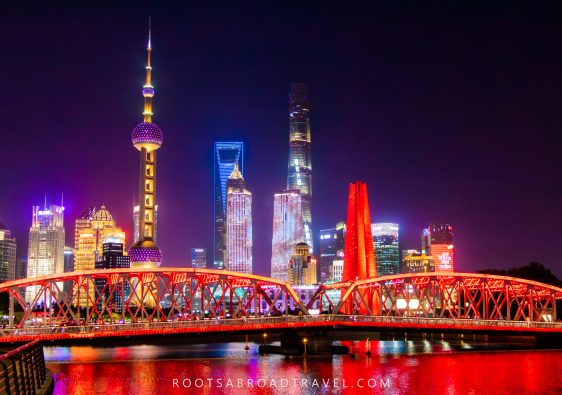
- Evening: Head back to the Bund to catch the Pudong skyline lighting up at night, then walk to our favorite photo spot to wrap up the day.
Shanghai Itinerary Day 2: Biking the French Concession, Café Streets & Local Shopping
- Morning: After grabbing breakfast, get yourself a bike to start exploring the French Concession. Ride through Huaihai Road, then continue West along charming tree-lined roads for boutique shopping, café hopping, and relaxed neighborhood exploring. Don’t miss the Wukang Building along the way.
- Afternoon: Spend some time in Tianzifang’s narrow alleys, then cycle over to Sinan Mansions and Fuxing Park for a slower break.
- Evening: Try crab roe noodles at 阿娘面馆 for dinner, then end the evening in Xintiandi.
Shanghai Itinerary Day 3: Water Town Wanderings & Pudong Skyscraper Views
- Morning: Take a half-day trip to the water town of Zhujiajiao, where canals, bridges, and old lanes offer a complete break from the city.
- Late Afternoon: Head back to Shanghai and go straight to Lujiazui for a walk along the skywalk with postcard views of the Oriental Pearl Tower.
- Evening: Visit one of the Pudong towers for sunset and watch the city lights come on from above.
Shanghai Itinerary Day 4: Temples, Shopping Streets & Creative Spaces in Jing’an
- Morning: Begin at Jing’an Temple, then explore the surrounding area, including Wujiang Road, the Louis Vuitton flagship store, newly renovated, exciting neighborhoods & more.
- Afternoon: Continue to the Jade Buddha Temple, visit the M50 art district, and stop by the 1001 Trees complex for a cool architectural photo spot.
- Evening: End the day with a cocktail with a view!
Shanghai Itinerary Day 5: Greenhouse Worlds & the Best Views in Hongkou
- Morning: Visit the Shanghai Greenhouse complex and walk through the Sand Mirage Pavilion, Cloud Forest and Cloud Canyons.
- Afternoon: Make your way to Hongkou District to explore quieter areas around the Rockbund, the 1933 Old Millfun and the riverside paths around North Bund Green Land.
- Evening: Head up to the Stage Observatory for jaw-dropping evening views, afterwards grab either high-end dining or a casual meal at the food court, and then return to the North Bund waterfront for one last look at the Shanghai skyline.
Shanghai Itinerary Day 1
Start the Day Early at the Bund
If you can get out of bed early, begin your first day of this 5-day Shanghai itinerary with a sunrise walk along The Bund (外滩). Early mornings are calm here, with locals practicing tai chi, jogging, or flying dragon kites as the sun comes up. The Bund’s row of colonial-era buildings, which date back to the late 19th and early 20th centuries, still reflects the period when Shanghai was divided into foreign concessions after the First Opium War and the Treaty of Nanking.
The mix of neoclassical, baroque, and art deco architecture earned the Bund its “Museum of International Architecture” nickname. As you walk the promenade, take in the carved balconies, stone pillars, and domed roofs. Then look across the Huangpu River to see a completely different skyline: Pudong’s futuristic towers, including the Oriental Pearl Tower, Shanghai Tower, and Jin Mao Tower. This contrast between old and new is one of the best introductions to the city.
Nearest metro: East Nanjing Road Station (南京东路站), Line 2.
Make Your Way to Yu Garden
From the Bund, follow the boardwalk south and continue on foot toward Yu Garden. You can pass through Gucheng Park and grab a quick breakfast around the Old Town before heading in.
Try to visit Yu Garden (豫园) as early as possible, as it’s popular at all hours. The garden is one of the best surviving examples of a classical Ming Dynasty garden in Shanghai. Built in 1559 by Pan Yunduan as a private retreat for his parents, the five-acre space is arranged in traditional Chinese style with pavilions, rockeries, ponds, zigzag bridges, and landscaped greenery designed for balance and harmony.
Yu Garden has been damaged and rebuilt multiple times throughout its history, especially during the Opium Wars and the Taiping Rebellion, but it remains beautifully preserved.
Entrance: ¥40 (tickets on Trip.com help skip queues)
Nearest metro: Yuyuan Garden Station (豫园站), Line 10.
Explore the Old Town
Once you exit the garden, you’ll step straight into the Old Town of Shanghai. Most of the buildings here are newer but built in a traditional style, making it a great place to get a feel for old Shanghai on your 5-day Shanghai itinerary. The area is always buzzing, which adds to the charm. Wander the souvenir streets, check out the traditional architecture, and maybe try one of those giant soup dumplings with a straw that you’ve probably seen online. It’s a fun area to visit both day and night, so if you have extra energy to spare on one of the evenings, make sure to return!
💡 TRAVEL TIP | For souvenirs, you’ll find better prices in the streets surrounding the Old Town. For quality handicrafts, head to Tianzifang.
Stop by the City God Temple
While you’re in the area, visit the nearby City God Temple (10 yuan entrance). Dedicated to three well-known city gods: Huo Guang, Chen Huacheng, and Qin Yubo. The temple complex has been restored several times over the centuries. It’s interesting to see if you’ve never visited a Taoist temple before, though it’s not the most impressive one unless you happen to be here around Chinese New Year, when the lantern decorations make it extra festive.
Lunch: Your First Xiao Long Bao
You can stay around the Old Town for snacks, but for your first proper xiao long bao experience, we suggest heading to the Michelin Bib Gourmand–awarded Lailai Snack Dumpling (莱莱小吃汤包馆), known for its crab roe soup dumplings. There’s usually a long line, and waiting 45 minutes is normal.
If you want something quicker, go to Jia Jia Tang Bao, just a street away. They also serve crab roe xiao long bao, plus great noodle dishes and braised pork ribs. They have several branches around the city.
Nearest metro: People’s Square Station (人民广场站), Line 1, 2, 8.
Walk Through People’s Park
People’s Park is the most central park in Shanghai, right next to Nanjing Road and People’s Square. Once part of the colonial-era racetrack, it became a public park after 1949. Today, it’s both a green escape and a window into daily life. As in most Chinese parks, you’ll see elderly locals practicing tai chi, painting, dancing, playing board games, or exercising together. Parks here are very social, which is what makes them so fun to walk through.
What makes People’s Park unique is the weekend marriage market, mostly on the north side of the park. Parents and grandparents set up umbrellas covered with “dating profiles” for their adult children, listing age, education, career, and whether they own a car or property. It’s a fascinating glimpse into local culture. On our last visit, it was happening even on a weekday.
Nearest metro: People’s Square Station (人民广场站), Line 1, 2, 8.
See People’s Square
Right next to the park is People’s Square, the largest square in the city and home to malls and the excellent Shanghai Museum. If you want to add a museum to your Shanghai itinerary, this one is a solid pick and free to enter (online reservation required).
The museum holds over a million artifacts, including ancient bronze, porcelain, jade, calligraphy, traditional clothing, minority crafts, and more. Everything is displayed chronologically with clear English explanations. A full walk-through takes around two hours.
Opening Hours: Tuesday – Sunday, 9:00–17:00 (last entry 16:00). Closed Mondays except holidays.
Shop & wander East Nanjing Road
From People’s Square, make your way along East Nanjing Road to explore one of Shanghai’s busiest and most iconic shopping streets. It’s a modern pedestrian zone packed with bright neon lights, familiar international brands, and plenty of Chinese retailers. The street has been a commercial hub since the early 20th century and is best visited in the evening, when the lights and crowds give it a lively atmosphere.
From here, you can continue walking all the way back to the Bund. Arriving at night gives you a completely different atmosphere compared to the calm you saw in the early morning.
Nearest metro: People’s Square Station or East Nanjing Road Station (Line 2).
Evening Walk Along the Huangpu River
Walking from East Nanjing Road to the Bund takes around half an hour. The closer you get to the river, the busier it becomes, but the skyline views make it worth it every time. The first tower that lights up is the Oriental Pearl Tower, Shanghai’s most iconic landmark & jewel. This stretch is always the most crowded, so keep walking a bit farther along the promenade for more space.
This is where Shanghai’s past and future line up perfectly. The historic Bund on one side, and Pudong’s skyscrapers, including the Shanghai Tower, on the other. On clear nights, the clouds wrap around the tallest buildings, which is always a great sight. Make sure to stick around for the light show, which starts from 7:30 pm and runs every 30 minutes.
💡 TRAVEL TIP | For quieter views and great photo opportunities, head north of the Bund toward Waibadu Bridge. Walk along Suzhou Creek toward the second bridge on Zhapu Road for the best framing of the skyline behind the iron structure.
Shanghai Itinerary Day 2
Start Your Morning in the Former French Concession
Your second day in this Shanghai itinerary is all about slowing down. We will be biking through tree-lined streets and soaking up the relaxed atmosphere of the former French Concession. This part of the city is best enjoyed at an easy pace rather than rushing from one landmark to the next. The streets below are suggestions for where to bike and wander, but the real magic of this neighborhood lies in lingering wherever you feel comfortable.
To ease into the day, you can start with a traditional Chinese breakfast at Xiao Tao Yuan, a local chain where many Shanghainese people eat in the morning. Here you’ll find all the classics, from steamed baozi and warm soybean milk to youtiao, savory egg-filled pancakes, and our personal favorite, sesame balls. You’ll find similar breakfast spots all over the French Concession, so you can always stop wherever looks inviting.
If you prefer a sweeter start to the day, you will notice that this neighborhood is packed with excellent bakeries, often even better than many we’ve tried in Europe. Sinan Road and Nanchang Road have several great options where you can pick up pastries before grabbing a coffee from Manner. This Shanghai-born franchise serves what we think is the best quality coffee at the most reasonable price in the city, and it makes for an easy breakfast on the go.
Biking Through the Former French Concession
Once you’ve had breakfast, it’s time to unlock one of the yellow Meituan bikes or blue Alipay bikes. Just scan the QR code in the app and start riding. The French Concession is our favorite part of Shanghai to bike through, and exploring it this way gives you a completely different feel for the city.
Historically, this area was the heart of French colonial life in Shanghai. You can still see traces of that era in the European-style villas, Art Deco residences, and leafy boulevards. Today, the neighborhood blends that colonial architecture with boutique shops, small creative studios, and countless cafés. It’s much larger than most visitors expect, but by bike you can easily cover the key streets and still have time to stop wherever the atmosphere feels right
JOIN A SHANGHAI BIKING & FOOD TOUR
If you want a fun, effortless way to get oriented in the city, the Shanghai: Half‑Day Biking and Local Food Tour is a great add-on. In just a few hours, you’ll cycle through highlights like the French Concession, Xintiandi, Taikang Road, and the Bund with an English-speaking guide. It’s relaxed, beginner-friendly, and includes local snacks along the way, perfect if you want a compact but immersive taste of everyday Shanghai life.
Huaihai Road
Depending on where you had breakfast, a good starting point is Huaihai Road. Known as the “Champs-Élysées of the East,” this major avenue has a mix of flagship stores, designer boutiques, and historic buildings. Landmarks like the Cathay Theatre and the Former Residence of Soong Ching Ling sit right along the road, so you get a nice balance of history and modern energy.
Wukang Road and the Wukang Mansion
Follow Huaihai Road until you reach its intersection with Wukang Road, where the famous Wukang Mansion sits on the corner. This wedge-shaped Art Deco building from 1924 became incredibly popular on social media and now attracts crowds taking photos from all angles. Police officers often monitor the intersections to keep people from stepping into traffic while trying to get the perfect shot. Despite the attention it gets, the building’s red-brick façade and New York-style silhouette make it a fun stop on your route.
Anfu Road, Changle Road & Wuyuan Road
Continue down Wukang Road until you reach Fuxing Road, then start exploring the side streets around Anfu Road, Changle Road, and Wuyuan Road. This cluster of small streets is packed with trendy cafés, boutique stores, and the signature trees that make the French Concession so atmospheric. It’s one of the best areas to shop, people-watch, and experience Shanghai’s big café culture. Anfu Road especially has a very young, creative vibe with a mix of local and international brands, making it one of the most stylish corners of the district.
Tianzifang in the Afternoon
In the afternoon, make your way to Tianzifang, a maze of narrow alleyways filled with shikumen houses. It’s one of Shanghai’s most interesting architectural styles that mixes Western elements with traditional Chinese layouts. Originally a residential area from the 1930s, Tianzifang transformed in the early 2000s when artists began moving in and opening studios. Today it still has a creative atmosphere, even though some independent food stalls have slowly been replaced by more commercial shops.
You’ll still find plenty of small design stores, local crafts, art studios, and cozy cafés scattered throughout the alleys. It can get busy, but it remains our favorite place for unique, handmade souvenirs. The ambiance is lively yet authentic, with laundry hanging overhead and residents going about their day.
Nearest metro: Dapuqiao Station on Line 9.
Pause at Fuxing Park and Wander Sinan Mansions
From Tianzifang, Fuxing Park is just a short bike ride away. This historic park is a great place to slow down and observe local life. It’s common to see groups practicing tai chi, singing, or even doing ballroom dancing in the early evening. It feels very communal and gives you another glimpse into daily life in Shanghai.
Right by the south gate, you’ll find Sinan Mansions, a restored collection of colonial villas that have been turned into a quiet lifestyle street with cafés, wine bars, and boutique restaurants. As soon as the lanterns switch on in the evening, the area becomes especially atmospheric and worth a short wander.
Dinner at 阿娘面馆
When you’re ready for dinner, head to 阿娘面馆, a simple, no-frills place that appears frequently in the Michelin guide. They serve several Shanghainese staples, including their well-known crab roe noodles (available depending on the season), sesame noodles, pork cutlet noodle soup, and fried chicken cutlets. If you’re not sure yet which local dishes you want to try, this is a good place to start.
End the Day in Xintiandi
To finish the second day of your Shanghai itinerary, make your way to Xintiandi, one of the city’s most polished districts. Here, historic shikumen houses have been restored and integrated into a modern area with restaurants, bars, and high-end shops. At night, the terraces fill up, the lanterns glow, and the whole place takes on a very European feel. You could also choose to have dinner here if you’re craving something more upscale or Western-style.
If you’re interested in culture, Xintiandi also has the Shikumen Open House Museum and the Museum of the First National Congress of the Chinese Communist Party. Between its historic buildings, lively streets, and relaxed nighttime vibe, it’s a great place to wrap up the day before heading back to your hotel.
Shanghai Itinerary Day 3
Visit a Water Town: Zhujiajiao
This third morning, you’ll escape the city and explore one of Shanghai’s beautiful water towns. Many of these ancient towns sit just one hour outside the city, and Zhujiajiao is the most accessible.
You’ll discover a glimpse of traditional life dating back to old Chinese dynasties. The waterways flow gently through narrow alleys, and the wooden houses line the canals with charming bridges crossing above them. Street-food stalls fill the walkways, creating an atmosphere that feels warm and lived-in.
Zhujiajiao itself is nearly 1,700 years old. Many people call it the “Venice of Shanghai.” You can enjoy a boat ride, wander through the alleys, or relax in a tea house while watching the boats drift by.
In total, we suggest spending about five hours in Zhujiajiao. This includes enough time for lunch and a relaxing tea break. If you move quickly, you could finish in around three hours.
Take in the towering views at Lujiazui
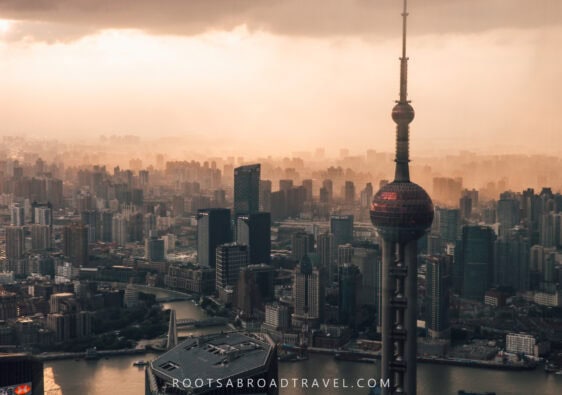
Later in the afternoon, return to Shanghai and get off at Lujiazui Station. When you exit the MRT, walk directly onto the circular pedestrian skywalk. From here, you get an amazing view of the Pudong skyscrapers. You’ll stand right next to the iconic Oriental Pearl Tower.
Below the walkway, the roundabout is constantly busy with cars. Above it, the buildings rise dramatically into the sky. This is the center of Shanghai’s financial district.
If you want to explore indoors for a moment, head into Super Brand Mall (正大广场). It has trendy shops and plenty of restaurants.
Visit Pudong’s Skyscrapers
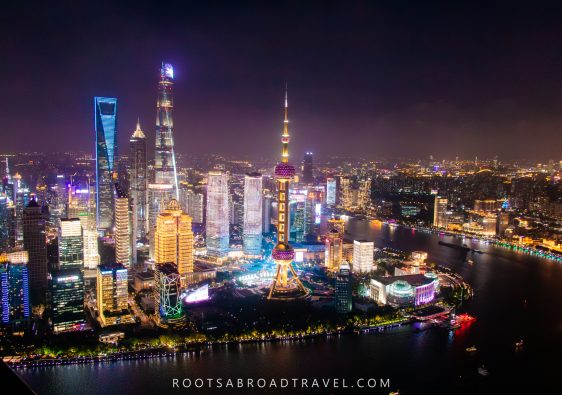
As the sun begins to set, choose one of the Pudong towers for a nighttime city view. Watching Shanghai light up from above is unforgettable. You can visit:
Shanghai Tower — At 632 meters, it is one of the tallest buildings in the world and the tallest in Shanghai. Book tickets on Trip here.
Oriental Pearl TV Tower — The most iconic tower in the skyline. Book tickets on Trip here.
Shanghai World Financial Center — Famous for its shape and the sky deck, often called the “bottle opener.” Book tickets on Trip here.
Jin Mao Tower — Offers a fantastic city panorama and an impressive view inside its hollow core. Book tickets on Trip here.
The views from these observation decks are breathtaking. Stay for sunset if possible. As the lights switch on across the city, the entire skyline transforms. For the best overall experience, we recommend going up the Shanghai Tower or the Jin Mao Tower. Both offer incredible views and a fantastic perspective over the whole city.
Shanghai Itinerary Day 4
Morning temple visit at Jing’an Temple
Today, we are exploring everything the Jing’an district has to offer. Day 4 of our Shanghai itinerary starts at Jing’an Temple, one of the city’s most famous Buddhist temples. Its golden roofs stand out beautifully against the modern towers of West Nanjing Road, making it one of the city’s most striking contrasts of old and new.
Once inside, take a slow walk through the main courtyards and halls, like the Mahavira Hall and the Hall of the Heavenly Kings, where locals often toss coins for good luck or stop to pray. Since this is an active temple, expect to see monks moving quietly between the spaces.
Before you leave, head up to the upper level for a closer look at the temple’s towers and a different perspective over the complex. The pagoda at the back isn’t open to visitors, but you can admire its full height from outside the grounds as you continue your day in Jing’an.
Opening times: 7:30–17:00
Admission: ¥50
Nearest metro: Jing’an Temple Station, Line 2 or Line 7
Exploring West Nanjing Road
After your visit, continue along West Nanjing Road. This street is the more upscale and non-pedestrianized version of East Nanjing Road, and it stretches on for quite a distance. Along the way, you’ll pass luxury shops, tall malls, and a mix of modern architecture. The area becomes more interesting toward the end of the street, where several side streets branch off.
One of the liveliest is Wujiang Road. It is a compact food-focused alley with multi-level restaurant buildings, big-name franchises, and cute bakeries and tea shops like Chagee. If you started your morning without breakfast, this is the perfect area to grab something to eat.
Popular Photo Stops Nearby
When you reach the end of the street, you will immediately spot two major photo hotspots. The first one is the new Louis Vuitton flagship store. The building is shaped like a giant monogrammed ship, and it attracts a steady crowd of people posing for photos. Right next to it stands the Starbucks Reserve Roastery, one of the largest in the world. Even if you don’t plan to stop for coffee, it is still impressive to see from the outside.
Heritage Meets Modern Design at Zhangyuan
From here, continue south toward Zhangyuan. This newly restored area blends old Shanghai charm with modern luxury. What was once a private garden and later a traditional Shikumen neighborhood has now become an elegant lifestyle district.
International brands, boutique shops, and cafés have moved into the old lane houses, giving the area a slightly Parisian feel. Despite its modern transformation, Zhangyuan still carries the soul of “old Shanghai,” especially in the quieter corners of the alleys. It is a lovely place for a slow stroll or a quick coffee break.
Visiting the Jade Buddha Temple
After lunch, head back toward West Nanjing Road Station and take Line 13 to Jiangning Road Station. From the metro station, it’s only a four-minute walk to reach the Jade Buddha Temple. The temple is a former Buddhist monastery built at the beginning of the 20th century in Song Dynasty style. This sacred shrine is characterized by its bright yellow walls, symmetrical halls, and a central courtyard. The center of attention must be the 2-meter sitting Buddha statue. It was crafted from pure white Burmese jade and has a robe of precious gems. Further, you will find an abundance of other Buddhist statues and relics. This temple might be a bit outside the area of other sights, but it’s definitely worth a visit.
Nearest metro station: Jiangning Road Station (江宁路站), line 13
M50 Art District
When you’re ready for something more creative, continue on to the M50 Art District. This former industrial complex has been transformed into one of Shanghai’s most exciting art hubs. Today, the warehouses are filled with contemporary art galleries, small design studios, and trendy coffee bars. It is often compared to New York’s Soho because of its edgy atmosphere and its focus on emerging artists.
The galleries range from commercial pieces to more provocative works, and the entire district is extremely photogenic. It’s a great place to wander, browse artwork, or simply enjoy a coffee while soaking in the neighborhood’s creative vibe.
1000 Trees & Suzhou Creek
Close to M50, you’ll find the 1000 Trees complex, one of the most iconic architectural projects in Shanghai. The structure is covered in hundreds of concrete “tree columns,” giving it the appearance of an urban mountain wrapped in greenery. Even if the shopping mall inside is still developing, the exterior alone is worth the visit.
While you’re in the area, don’t forget to walk along Suzhou Creek. This waterfront is one of Shanghai’s most underrated spots. The path along the water is peaceful, scenic, and surprisingly quiet considering how central it is.
Cocktails With a View
After such a full day in Jing’an, it’s time to wind down with a drink. Shanghai has no shortage of rooftop bars, and many of them come with incredible skyline views. Our favorite is The Edition. Its terrace faces straight toward Pudong’s skyscrapers, with the river curving beautifully around the view. Other popular options include ‘Char’ at Hotel Indigo, Flair Shanghai or Bar rouge if you’re looking for a party vibe. For something more laid-back and affordable, you can head to Captain Bar.
Shanghai Itinerary Day 5
Explore the Shanghai Greenhouse at Expo Cultural Park
Start your final day with something fresh and unexpected: the new Shanghai Greenhouse in the Expo Cultural Park. The complex features three themed pavilions: a desert hall with cacti and baobabs, a mist-filled cloud forest, and an orchid-focused flower dome with elevated walkways.
It’s compact, beautifully designed, and easy to wander without rushing. If you’ve been to Singapore’s greenhouses, this will feel familiar but still impressive; if not, it’s a great introduction to this style of immersive indoor nature.
Plan about 1.5–2 hours, then grab lunch at one of the nearby malls in the Expo area before heading back toward the city center.
Nearest Metro Station: Expo Avenue Station, Line 13
Red-Brick Corners Around Rock Bund
After lunch, make your way to the Rock Bund area, just off East Nanjing Road. This little pocket of red-brick architecture has become popular locally for its European-style façades and photogenic angles.
Walk up Sichuan Road toward East Beijing Road and you’ll pass landmarks like the Somekh Building and the Rockbund Art Museum, surrounded by streets that naturally frame the skyline.
It’s a quick but rewarding stop, perfect for wandering and taking photos before continuing north.
How to get there: Take Line 13 to the French Concession stop, switch there to Line 10 and get off at East Nanjing Road.
Old & New in Hongkou District
From Rock Bund, head into the nearby Hongkou District by foot, one of the more surprising areas of the city. Start at Building 1933, a former slaughterhouse turned creative complex with striking concrete walkways and layered bridges.
The neighborhood around it reveals a quieter side of Shanghai—narrow lanes, water channels, and pockets of traditional shikumen-style homes mixed with newer developments. It’s still under the radar for most tourists, which is exactly why it feels special. Wander your way north toward the river for a gradual transition from local streets to modern waterfront.
Find a quiet escape at North Bund Green Land
Continue your walk until you reach North Bund Green Land, a newer riverside park offering some of the best calm-but-scenic skyline views in town. Expect landscaped gardens, shaded paths, and several viewing platforms overlooking the Pudong skyscrapers.
The long riverfront boardwalk is ideal for a slow afternoon stroll. If you need a break, you’ll even find a tiny Manner Coffee kiosk by the water for a caffeine recharge.
Take in the city from The Stage Observatory
Before sunset, head back to the main street to the Stage observatory. Built on top of a helipad (similar to the one in Chongqing), this observatory is more like an experience than just a viewpoint. It’s one of Shanghai’s most unique new viewpoints, giving you a rare angle that captures both Pudong’s futuristic towers and the historic curve of The Bund.
Booking Tip | Reserve ahead via Trip.com, due to timed entries. The ticket is pricier than other viewpoints, but the perspective is unmatched.
For dinner, simply go downstairs into Shanghai Baiyulan Plaza, which has everything from upscale dining to an excellent food court on the lower floor.
Final Skyline Walk From North Bund
To close your 5-day Shanghai adventure, return to the waterfront for one last skyline fix. Walk along the North Bund boardwalk toward the main Bund area, it’s very scenic, and beautifully lit at night.
A final highlight: the Dongdaming Road Bridge. From here, the skyline forms a perfect layered composition that feels different from the classic Bund view. It’s the ideal final snapshot of your Shanghai trip.
Practical Travel Resources
TRANSPORTATION | For booking transportation online such as bullet trains and domestic flights, we recommend using the website Trip.com. This platform has been our go-to for China, saving us from the hassle of queuing at travel agencies and securing a seat in peak seasons.
ACCOMMODATION | Finding affordable places to stay in China is a breeze with Booking.com. It’s the ideal platform to discover budget-friendly hostels and hotels.
FLIGHTS | Discover the best flight deals to China on Skyscanner. We love that they highlight the days with the cheapest prices for a destination, and the ability to search by month or region for flexibility.
TRAVEL INSURANCE | Ensure comprehensive and reliable coverage for your journey in China with Heymondo. Prioritize peace of mind with their trustworthy travel insurance options. Get 5% OFF through our link.
STAY CONNECTED | Guarantee reliable internet access throughout your China trip by using Airalo. Install it on your eSIM-compatible smartphone before your journey for convenient connectivity. Use promo code NEWTOAIRALO15 for 15% off any eSIM (for new Airalo users only). Or use the code AIRALOESIM10 for 10% off as an existing user.
TOURS & ATTRACTIONS | For the best and most affordable city tours, day trip excursions, food tours, and cooking classes in China, check out GetYourGuide or Viator.
VISA ORGANIZATION | Before your trip, ensure you check the visa requirements for your passport nationality. Explore details on travel documents at iVisa.com.
ONLINE PRIVACY | Always safeguard your online activity and digital privacy when using public Wi-Fi abroad by using a VPN. We’ve trusted ExpressVPN for years! Plus, a VPN lets you stream Netflix shows from any country. Get 3 months FREE when getting a 12-month plan with our link.
Pin it to Pinterest for later!