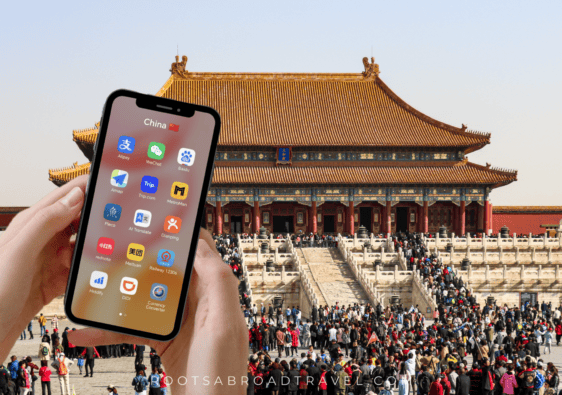
Planning your first trip to China and wondering what you should know before you go? These China travel tips bring together the practical advice, insider tips, and little things we wish we’d known before visiting China, so you can avoid common mistakes and travel with confidence.
After studying, living, and travelling around China for multiple extended periods, we can confidently say it’s one of the most fascinating, and easily our favourite, countries we’ve ever explored. These travel tips comes from years of travelling across China, plenty of research, and, admittedly, learning a few lessons the hard way so you don’t have to. The language barrier, internet restrictions, cashless payment systems, and cultural differences can make it feel overwhelming at first, especially if it’s your first time visiting. At the same time, practical, experience-based information can still be surprisingly difficult to find online, making China a destination that requires a bit more preparation than many other countries in Asia.
In this guide, we’ll share our most useful China travel tips, from staying connected with a VPN and SIM card to navigating high-speed trains, paying with Alipay, avoiding common scams, and understanding local customs. These are the practical lessons we’ve picked up over the years to help make your first trip to China smoother, easier, and even more enjoyable.
* Disclosure: These China Travel Tips contain affiliate links. We will receive a small commission if you book through our links. This is at no extra cost to you. This way you’re helping us write awesome travel guides and keep providing you with free content. We only recommend products we like and trust ourselves.

Quick China Travel Tips
Planning your first trip? Here’s a quick overview of the most important things to know before visiting China.
| Language Mandarin Chinese (official). English is limited, so translation apps are highly recommended. | Time Zone China Standard Time (CST) UTC/GMT +8 hours |
| Currency Chinese Yuan / Renminbi (CNY or RMB). 1 USD ≈ ¥7 RMB | Visa Visa requirements vary by nationality. Check the latest requirements on ivisa.com |
| Plugs and Voltage Type A, C and I plugs. Standard voltage is 220V. Use a universal adapter with surge protection | When to go Spring (March–May) and autumn (September to November) |
| Drinking Water Drink bottled or filtered water | Transport Alipay App can be used for metro rides, bike sharing, and many other transport services. For booking trains & domestic flights, check Trip.com |
| Credit cards & ATMs China is largely cashless. Set up Alipay and WeChat before your trip, as most payments are made via QR codes. | Stay Connected Buy a local SIM card at the airport or use an eSIM before arrival. Make sure your VPN is installed before entering China. |
30 Essential China Travel Tips for Visiting in 2026
1. Download the right apps before your trip
One of the most useful China travel tips I can give you is to download the right apps before you arrive. China has its own ecosystem for almost everything, from messaging and navigation to ride-hailing and payments. Without the right apps, even simple tasks like finding directions or ordering food become much more difficult.
The most important app by far is Alipay. It quickly became our go-to app for almost everything during our trips. Besides paying in shops and restaurants, you can also use it for public transportation, booking taxis through Didi, and many other everyday services.
Although cash is still accepted, hardly anyone actually uses it anymore. China is one of the most cashless countries we’ve ever visited. From shopping malls and convenience stores to tiny street food stalls, nearly every payment is made by scanning a QR code. We even withdrew cash as a backup last time, but ended up barely touching it.
Besides Alipay, it’s also worth installing WeChat before your trip. We mainly used it as a backup payment method and to communicate with hotels, tour operators, and locals.
Once you’ve linked your bank card, paying is incredibly easy. Simply scan the merchant’s QR code, or let them scan yours.
💡 CHINA TRAVEL TIP | Set up both Alipay and WeChat before leaving home. Registration requires your passport and a few verification steps, so it’s much easier to do this before you arrive.
READ MORE | For a full list, check out our detailed guide on the essential apps you need in China
2. You need a SIM card and a VPN to get around
Having mobile data in China isn’t just convenient; it’s essential. You’ll constantly rely on your phone to navigate, translate menus, book transport, communicate with locals, and pay for almost everything.
While Wi-Fi is available in hotels and some cafés, public Wi-Fi is much less common than many travelers expect. Even worse, many shopping malls, restaurants, and public networks require a Chinese phone number before they’ll send you a login code.
For that reason, we generally recommend getting a local SIM card. The three main providers are China Unicom, China Mobile, and China Telecom. SIM cards are inexpensive and can easily be purchased at the airport or official phone stores throughout the country. Just don’t forget your passport, as it’s required for registration.
If you’re only visiting China for a short trip, an eSIM is often the easiest option. For longer stays, however, a local SIM card usually offers better value.
One of the most important China travel tips to remember is that you’ll also need a VPN. Because of China’s Great Firewall, services like Google, Gmail, WhatsApp, Instagram, Facebook and YouTube are blocked. A VPN or Virtual Private Network, is a cybersecurity tool that allows you to access blocked websites while also protecting your online privacy and location.
During our most recent trip, we used V1VPN, which worked flawlessly throughout our stay. Previously popular options like ExpressVPN and NordVPN were much less reliable than they used to be.
💡 CHINA TRAVEL TIP | Just make sure to install your VPN before arriving in China, otherwise, downloading one afterwards can be difficult.
3. Don’t rely on Google Maps
If you’re used to navigating with Google Maps, this might come as a surprise. While the app technically works in some situations with a VPN, it’s simply not reliable enough for traveling around China.
Many businesses aren’t listed, locations are often inaccurate, and roads don’t always line up correctly. We mainly used Google Maps to look up places we had already saved before our trip.
Instead, download Amap (Gaode Maps). It has become our favorite navigation app in China and now includes an English interface. It offers accurate walking directions, metro routes, live traffic information, and even tells you which metro exit to use, which is incredibly helpful in China’s huge subway stations.
If you’re an iPhone user, Apple Maps also works surprisingly well throughout China. Another option would be to use Baidu Maps during your China trip.
4. Great food is everywhere, don’t overplan your meals
One of the best parts about traveling through China is that amazing food is everywhere. In cities like Beijing, Shanghai, Xi’an, Chengdu, Chongqing or Shenzhen, you really don’t need to spend hours researching restaurants before your trip.
Some of our favorite meals came from small neighborhood restaurants we simply walked into while exploring. We’ve eaten incredible food inside train stations, shopping malls, side streets and tiny local eateries.
If a restaurant catches your eye, simply look it up on Dazhong Dianping, Amap, or Apple Maps and check the rating. If it looks good, give it a try.
Another one of our favorite China travel tips is to be adventurous with food. Menus are often only available in Chinese, and automatic translations don’t always make much sense. Some of our favorite dishes were complete surprises after ordering what basically felt like a mystery meal.
Street food is another must-try. We ate from countless stalls throughout China without any issues. As a general rule, choose busy vendors with a steady stream of local customers.
💡 CHINA TRAVEL TIPS | Don’t automatically join every long queue you see. Chinese locals love lining up for new trendy cafés, bakeries and restaurants. While some are worth it, many are simply the latest hype. Unless it’s somewhere you’ve specifically been wanting to visit, you’re often better off finding another great spot nearby than wasting precious time queuing up. Good personal example from Lijiang, we got in line for this sweet treat stand as it seemed so popular. While in line we double checked its Amap rating, turned out to be a 1 star and really bad. What they did was, they ‘rigged’ the long queues by purposly making people wait long for their order, so a line would form.
5. Use Dianping for discounts
Most travelers know Dazhong Dianping 大众点评 as China’s version of Yelp, but it’s actually much more useful than that.
Besides reviews, the app is packed with discounted set menus and special offers. We regularly found excellent meal deals that saved us quite a bit of money throughout our trip. Even for getting your favorite milk tea at Chagee or another chain, you often have deals, such as a second one for free or even a newly launched flavor completely free to try!
The only downside is that these discount pages are still only available in Chinese. Even the built-in translation doesn’t work very well, so we usually take screenshots and translate them with another app. It takes a little extra effort, but it’s often worth it. Several times, restaurant staff even pointed out better deals for us and helped us redeem them.
👉 Pro China Travel Tips | Dianping isn’t just useful for restaurants. You’ll also find discounts for teahouses, spas, attractions, costume rentals, and plenty of other activities.
6. Every region has its own cuisine
One thing that surprised us most during our travels is just how diverse Chinese food really is. There isn’t one single “Chinese cuisine.” Instead, every region has its own flavors, ingredients, and signature dishes.
In Sichuan, cities like Chengdu and Chongqing are famous for spicy málà dishes and hot pot. Hunan cuisine is equally bold, with plenty of chili, garlic, and fragrant spices.
Around Shanghai, dishes are generally sweeter, with specialties such as braised pork and the famous xiaolongbao. Many local dishes are difficult to find elsewhere in China.
Even something as simple as noodles changes completely from one province to another. From Xi’an’s biang biang noodles to Chongqing’s dan dan noodles, every region has its own take.
One of our favorite China travel tips is to research a few local specialties before arriving in each destination. Trying regional dishes became one of the highlights of every one of our China visits.
7. Don’t underestimate shopping malls
You’ll probably spend far more time inside shopping malls than you expect.
In China, malls aren’t just places to shop. They’re places to cool down, grab a coffee, charge your phone, use clean restrooms, and enjoy a meal. Just like in Bangkok, we found ourselves popping into malls throughout the day whenever we needed a short break.
Many of them are attractions in their own right. Think futuristic architecture, viewing platforms, indoor gardens, waterfalls, public art installations, designer stores, and huge food courts packed with excellent restaurants.
Some of our favorite meals in China were hidden away at the food court inside shopping centres. So whenever you need to escape the heat, recharge for a while, or simply grab a bite to eat, there’s usually a shopping mall nearby that’s well worth stepping into.
8. Always carry toilet paper and hand soap
Public toilets are free and easy to find throughout China, which is incredibly convenient while sightseeing.
The only catch is that many don’t provide toilet paper or soap. We quickly got into the habit of carrying a small pack of tissues (you can get these at convenience stores), hand sanitizer, and travel soap sheets wherever we went.
In bigger cities like Shanghai, Beijing, or Chongqing, you’ll often find spotless restrooms inside shopping malls. Some were honestly nicer than the bathrooms back home.
9. Get used to squat toilets
Squat toilets are still very common throughout China, especially outside the larger cities.
In major destinations, you’ll usually find a mix of squat and Western-style toilets. Most public restrooms even indicate the toilet type on the stall door, making it easy to choose.
Once you start exploring more rural areas, however, squat toilets become much more common. It’s simply something to expect when traveling around China.
10. Install a translation app
Don’t expect many people to speak English outside hotels and major tourist attractions. While you’ll occasionally find someone who speaks a little English, most daily interactions happen entirely in Mandarin.
That’s why one of the smartest China travel tips is to install a good translation app before your trip. We used ours every single day, for reading menus, translating signs, asking questions, and chatting with locals.
You will be pleasantly surprised by how many airports, train stations and major attractions include English signage, but you’ll still depend on a translation app far more often than you might expect.
With a bit of patience, some gestures, and your phone, communicating in China is much easier than it first seems.
11. Travel beyond the big cities
When people picture China, they usually think of futuristic megacities like Shanghai, Shenzhen, Chongqing, or Chengdu. And while we absolutely love those cities, they’re only one side of the country.
One of the best China travel tips I can give is to venture beyond the major urban centres if your itinerary allows. China is home to some of the most breathtaking natural landscapes in the world, along with countless ancient towns that feel completely different from its modern metropolises.
Places like Furong Ancient Town or Fenghuang Ancient Town offer a much slower pace of life, traditional architecture, and a glimpse into a side of China many first-time visitors never experience. You might have seen pictures of Zhangjiajie, the landscapes also known as the Avatar Mountains, or the idyllic limestone mountains surrounded by water of Yangshuo. Adding just one destination like this to your itinerary creates a wonderful contrast with cities like Shanghai or Beijing.
12. Book trains and domestic transport in advance
China’s high-speed rail network is one of the best in the world, but it’s also incredibly popular. Especially on weekends and during public holidays, trains can sell out surprisingly quickly.
Tickets become available 15 days before departure through the official 12306 Railway app. If you’d rather use an English platform, we recommend booking through Trip.com. One advantage is that Trip lets you reserve tickets about a month in advance. They automatically purchase them for you as soon as sales officially open, which can be a lifesaver on popular routes.
Once you’ve booked a few journeys, the process becomes very straightforward. During busy travel periods, however, it’s worth reserving your tickets as early as possible, since popular departures can disappear within minutes.
13. Arrive early for high-speed trains
Chinese railway stations are enormous. Many feel more like airports than train stations, complete with multiple security checkpoints, waiting halls, and dozens of departure gates.
One of the most practical tips for travelling in China is to arrive at least one hour before departure, especially if it’s your first time using the railway system.
After entering the station, you’ll go through airport-style security before scanning your passport at the foreign passenger gate. If the machine doesn’t recognise your passport, don’t panic, head to the staff who can manually verify your documents within a few minutes.
14. Avoid aerosol toiletries when travelling by train
Every passenger goes through security before entering a train station, and certain aerosol products aren’t allowed on board.
During our own trips around China, we’ve had deodorant and other pressurised toiletries confiscated more than once. If you’re planning to travel frequently by high-speed rail, consider bringing stick deodorant or non-aerosol alternatives instead.
It’s a small detail, but one that can save you from replacing your toiletries several times throughout your trip.
15. Take advantage of the free hot water everywhere
One thing you’ll quickly notice while travelling in China is how easy it is to find free (most of the time) hot water. Train stations, shopping malls, airports, hotels, and even every carriage on high-speed trains usually have hot water dispensers available.
Many locals carry reusable bottles or thermos flasks and refill them throughout the day. On trains, it’s completely normal to see passengers preparing instant noodles, tea, or coffee using the onboard dispensers. We ended up doing exactly the same on longer journeys. Just be careful when using public water dispensers, as some only dispense boiling water. I learned that lesson the hard way more than once.
16. China travel tips: Always carry your passport
Your passport is probably the single most important thing you’ll carry while travelling in China.
Hotels, train journeys, attraction tickets, and many online bookings are all linked directly to your passport number. In fact, for many attractions and train rides, your passport effectively is your ticket. Instead of scanning a barcode, you’ll simply present your passport at the entrance. Because of this, we recommend carrying it with you whenever you’re out exploring, while keeping it somewhere secure.
One thing that’s also important to know is that China uses real-name verification for many bookings. Always enter your name exactly as it appears on your passport, including your surname, given names, and any middle names. Even small differences can cause your reservation to be rejected.
17. Plan your China itinerary earlier than you normally would
China is one of those destinations where planning ahead really pays off. Hotels, trains, and domestic flights should ideally be booked well in advance, but that’s only part of it. Many of China’s most famous attractions also work with daily visitor quotas and timed-entry reservations.
The Forbidden City in Beijing, for example, often sells out several days ahead during busy periods, while places like Yulong Snow Mountain in Yunnan or Tianmen Mountain in Zhangjiajie also require advance reservations.
One of my biggest China travel tips is to check ticket requirements as soon as you’ve decided on your itinerary and the activities you want to do. The last thing you want is to travel all the way across the country only to discover that the attraction you came for is fully booked.
18. You absolutely can travel around China independently
A lot of people assume China is difficult to travel independently, but that’s one of the biggest misconceptions about the country.
Yes, travelling China requires a little more preparation than some destinations. You’ll rely on translation apps, use different payment systems, and occasionally need to figure things out as you go. But once you’ve downloaded the right apps and prepared a little beforehand, travelling around China becomes surprisingly straightforward.
In fact, my very first trip to China was completely solo as a student. This was before there was much information available online, before Alipay worked smoothly for foreign visitors, and long before travelling in China became as accessible as it is today. I managed just fine, and nowadays it’s even easier.
If you’re wondering whether you need an organised tour, the answer is simple: absolutely not. Independent travel in China is perfectly doable.
19. Use the metro, Didi, and shared bikes
Getting around China’s major cities is incredibly easy once you know which transport options to use.
The metro systems in cities like Shanghai, Beijing, Chengdu, Chongqing, and Shenzhen are modern, affordable, clean, and very easy to navigate. Through Alipay, you can activate each city’s digital transport pass and simply scan your QR code when entering and leaving stations, no physical ticket required.
For navigation, I highly recommend using Amap, as it even tells you which metro exit to take, something that’s surprisingly useful inside China’s massive stations. Metroman is another excellent app if you’re planning to use public transport regularly across multiple cities.
When you don’t feel like taking the metro, Didi (China’s version of Uber) is by far the easiest alternative. The app is available in English, accepts international bank cards, and removes any language barrier with drivers.
And finally, my favourite way to explore any Chinese city: cycling.
If you asked me what I enjoyed most about travelling around China, I’d probably say riding shared bikes. They’re incredibly cheap, easy to unlock through Alipay or Meituan, and often the fastest way to explore neighbourhoods, parks, riversides, and historic districts. We ended up cycling almost every day during our time in Shanghai.
20. Ignore anyone offering you a taxi at the airport
One of the easiest scams to avoid in China happens before you’ve even left the airport.
If someone approaches you in the arrivals hall offering to arrange a taxi, simply decline and head to the official taxi rank instead. If you do choose a regular taxi, always make sure the driver switches on the meter before setting off.
Personally, I almost always use Didi instead. You know the fare before confirming the ride; prices are often lower than those of regular taxis, and you completely avoid any misunderstandings. Just make sure your SIM card or eSIM is already working when you land so you can book a ride immediately.
21. Avoid traveling to China during public holidays
One of the biggest China travel tips is to avoid travelling during public holidays whenever possible.
China’s national holidays trigger one of the largest annual migrations in the world, with millions of people travelling across the country at the same time. Expect packed attractions, sold-out trains, higher hotel prices, and long queues almost everywhere you go.
If your trip overlaps with one of these holidays, it’s usually much easier to stay in one destination for a few days instead of moving between cities.
Keep these major holidays in mind when planning your itinerary:
- Chinese New Year (late January or February)
- Qingming Festival (early April)
- Labour Day Holiday (May 1–5)
- Dragon Boat Festival (June)
- Mid-Autumn Festival (September or October)
- National Day / Golden Week (October 1–7)
Even outside these periods, try to visit major attractions on weekdays rather than weekends. With a population of more than 1.4 billion people, weekends naturally bring much larger crowds at China’s most popular sights.
22. Book almost everything through Trip.com
If there’s one website we use throughout every trip to China, it’s Trip.com.
We book almost everything through it, including hotels, high-speed trains, domestic flights, attraction tickets, airport transfers, and even SIM cards. Because it’s a Chinese company, it offers a much wider selection of hotels and activities than most international booking platforms.
For accommodation, Booking.com still works, but you’ll often find significantly more options on Trip.com, especially when looking for locally owned hotels.
The platform is available in English, easy to use, and provides verified reviews, making it one of the most useful tools when planning a trip to China.
23. Be careful when booking organised tours
If you’re planning to join guided tours, pay close attention to what’s included.
China still has plenty of so-called shopping tours (购物团), where extremely cheap prices are made possible by taking visitors to souvenir shops, jade factories, tea stores, or silk outlets that pay commissions to tour operators. These shopping stops can easily take up a large part of your day and sometimes come with pressure to buy.
Instead, look for tours that clearly mention “no shopping stops” or “pure sightseeing” in the description. This is another reason why we prefer booking through Trip.com. The itineraries are clearly explained, reviews are easy to check, and we’ve successfully booked everything from Terracotta Warriors tickets to Shanghai observation decks and entrance tickets to national parks like Zhangjiajie without any issues.
Many attractions can also be booked through WeChat, but unless you’re already familiar with the app, Trip.com is usually the much simpler option for international travellers.
24. Try as many tea chains as possible
China takes tea just as seriously as many countries take coffee. Besides traditional teahouses, you’ll find countless modern tea chains serving everything from fresh fruit teas to cheese foam teas and milk teas. Every region seems to have its own favourites, making it surprisingly fun to compare them during your trip.
Some of the biggest brands you’ll come across are Chagee and Mixue, while HEYTEA remains one of our personal favourites. We also loved Dakotea in Yunnan province and 茶颜悦色 Modern China Tea Shop in Chongqing. Even if you’re not usually a tea drinker, it’s something we highly recommend trying while travelling through China.
25. Don’t overlook China’s convenience stores
Convenience stores are one of our favorite things in Asia, and China has amazing ones as well. Chains like FamilyMart, Lawson, 7-Eleven, and countless regional brands are everywhere in major cities. They’re perfect for grabbing breakfast, late-night snacks, fresh coffee, drinks, or ready-made meals before hopping on a train.
You’ll also find local specialities, steamed buns, instant noodles, desserts, and plenty of snacks you’ve probably never seen before. One of our favourite little traditions while travelling in China became stopping by a convenience store every evening to try something new.
26. Pack a universal travel adapter
China mainly uses plug types A, C, and I with a 220V / 50Hz electrical system. Most modern chargers for phones, laptops, cameras, and tablets already support worldwide voltages (110–240V), but it’s still worth checking the label on each device before travelling.
Although many hotels now provide USB charging ports alongside standard sockets, bringing a universal travel adapter means you’ll always be prepared, no matter where you stay.
27. Check the latest power bank rules before flying
Your power bank will probably become one of your most-used travel accessories in China. Between navigation, translation apps, QR code payments, and taking photos, your phone battery disappears surprisingly fast.
However, one of the newer China travel tips worth knowing is that China has introduced stricter rules for power banks, now only allowing models carrying the official Chinese 3C certification.
Since most power banks purchased in Europe or North America don’t include this certification, they may not be accepted on certain domestic flights and may even be confiscated upon your arrival in the country.
During our most recent trip, we simply bought a certified power bank at a Xiaomi store after arriving in Chongqing. They’re easy to find throughout the country, and rental power banks are also available almost everywhere in cities.
28. Personal space works a little differently
One cultural difference that often surprises first-time visitors is the concept of personal space. Queues can feel less structured than what many Western travellers are used to, and people standing very close, squeezing past, or occasionally skipping ahead aren’t necessarily considered rude. It’s simply part of everyday life in a country this densely populated.
I’ll admit this was probably one of the hardest things for us to get used to, especially in busy metro stations and at popular attractions. Once you understand it’s cultural rather than personal, though, it’s much easier to take it in stride.
29. Don’t be surprised if locals ask for photos
One of my favourite memories from my very first trip to China was how curious people were. Whether we were in Shanghai, smaller towns, or even walking along the Bund, locals would occasionally come over and ask if they could take a photo with us. Sometimes entire families joined in, and after a quick picture everyone simply smiled, thanked us, and carried on.
It might feel unusual at first, but we always found these interactions genuinely sweet. It’s one of those experiences that makes travelling in China feel unlike anywhere else.
30. Learn to embrace the crowds
If there’s one thing you simply can’t avoid in China, it’s people. With more than 1.4 billion inhabitants, even places that seem relatively unknown can suddenly become surprisingly busy. Popular attractions in cities like Beijing, Shanghai, or Xi’an are almost always lively, and tour groups are part of the experience.
That doesn’t mean you can’t make things easier on yourself. Visiting famous landmarks early in the morning or later in the afternoon when tour groups are gone usually means smaller crowds, and traveling outside national holidays makes a huge difference.
At the end of the day, though, the crowds are simply part of travelling through China. Instead of fighting them, embrace them. They’re a reminder of just how energetic, vibrant, and alive the country really is.
Practical Travel Resources
TRANSPORTATION | For booking transportation online such as bullet trains and domestic flights, we recommend using the website Trip.com. This platform has been our go-to for China, saving us from the hassle of queuing at travel agencies and securing a seat in peak seasons.
ACCOMMODATION | Finding affordable places to stay in China is a breeze with Booking.com. It’s the ideal platform to discover budget-friendly hostels and hotels.
FLIGHTS | Discover the best flight deals to China on Skyscanner. We love that they highlight the days with the cheapest prices for a destination, and the ability to search by month or region for flexibility.
TRAVEL INSURANCE | Ensure comprehensive and reliable coverage for your journey in China with Heymondo. Prioritize peace of mind with their trustworthy travel insurance options. Get 5% OFF through our link.
STAY CONNECTED | Guarantee reliable internet access throughout your China trip by using Airalo. Install it on your eSIM-compatible smartphone before your journey for convenient connectivity. Use promo code NEWTOAIRALO15 for 15% off any eSIM (for new Airalo users only). Or use the code AIRALOESIM10 for 10% off as an existing user.
TOURS & ATTRACTIONS | For the best and most affordable city tours, day trip excursions, food tours, and cooking classes in China, check out GetYourGuide or Viator.
VISA ORGANIZATION | Before your trip, ensure you check the visa requirements for your passport nationality. Explore details on travel documents at iVisa.com.
ONLINE PRIVACY | Always safeguard your online activity and digital privacy when using public Wi-Fi abroad by using a VPN. We’ve trusted ExpressVPN for years! Plus, a VPN lets you stream Netflix shows from any country. Get 3 months FREE when getting a 12-month plan with our link.
No time to read these China Travel Tips right now? Pin it to Pinterest for later!