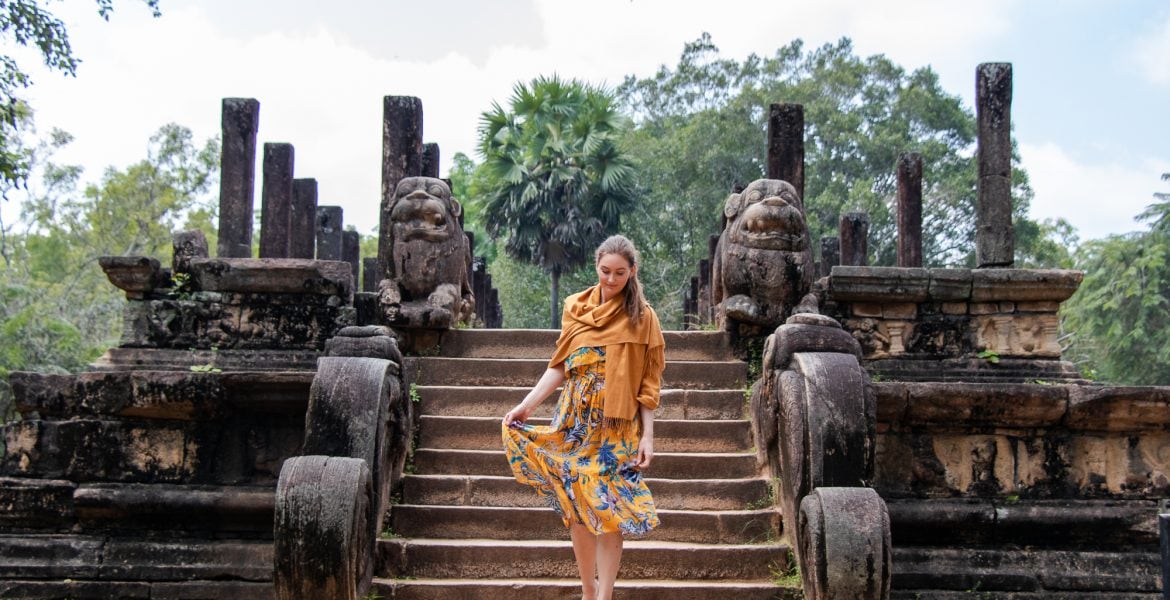
Wondering what to wear in Sri Lanka as a male or female traveler? This travel guide covers everything from cultural etiquette to travel tips on how to dress for every kind of destination, activity & climate so you can pack with confidence.
This island in the Indian Ocean south of India is incredibly diverse. One day, you might be climbing the ancient rock fortress of Sigiriya or exploring temple-filled cities like Anuradhapura. The next, you could be trekking through misty tea plantations in Ella, relaxing on golden beaches, or spotting elephants on safari. That variety in landscapes also means a variety of activities, and figuring out what to wear in Sri Lanka can get tricky. From temple visits that require modest dress to laid-back coastal towns where light, casual clothing works best, your wardrobe will need to adapt to both the local culture and the changing climates.
We spent three weeks in Sri Lanka, splitting our time between the Cultural Triangle (Anuradhapura, Dambulla, and Sigiriya), the lush hill country around Ella, Kandy, and Nuwara Eliya, and the southern beaches of Hiriketiya, Unawatuna, and Mirissa. Experiencing so many different regions made it clear just how much your outfits need to change depending on where you are.
This guide will walk you through it all, so you can feel comfortable, respectful, and ready for every adventure Sri Lanka has to offer.
* Disclosure: This post contains affiliate links. We will receive a small commission if you book through our links. This is at no extra cost to you. This way you’re helping us write awesome travel guides and keep providing you with free content. We only recommend products we like and trust ourselves.

Sri Lanka Trip Planning Essentials
VISA | Apply for a tourist visa online, which allows a 30-day stay. Submit your application at least a week before departure to secure your Electronic Travel Authorization (ETA) confirmation promptly.
TRAVEL INSURANCE | Safeguard your backpacking journey through Sri Lanka with comprehensive coverage from Heymondo for trustworthy travel insurance. (Get 5% OFF through our link)
STAY CONNECTED | Get a local SIM card from SLT Mobitel upon arrival at the airport or opt for an E-sim in advance through Airalo.
CURRENCY | The local currency in Sri Lanka is the Sri Lankan rupee (LKR), and the exchange rate is around 1 USD = 300 LKR. Check XE Currency Converter for updated exchange rates.
HOW TO GET THERE | Explore the best flight deals to Colombo, Sri Lanka, using Skyscanner.
ACCOMMODATION | Discover budget-friendly hostels and hotels through Booking.com.
TOURS & ATTRACTIONS | For the best and most cost-effective tours and day trip excursions, check out GetYourGuide or Viator.
TRANSFERS | Ready to travel to your next destination in Sri Lanka? Book your onward bus or train tickets via 12go.
WHEN TO GO | Plan your visit between December and April to experience the country’s highlights while avoiding the main monsoon season.
Key points to consider when deciding what to wear in Sri Lanka
Before you start filling your suitcase, it’s worth knowing a few things that will help you decide what to wear in Sri Lanka during your trip. The country’s weather, culture, destinations, and activities can vary a lot, so the clothes you pack might look very different depending on your plans.
1. Weather, Climate, and Seasons
Sri Lanka’s tropical climate means warm temperatures year-round, usually between 25°C and 30°C, depending on where you are and the altitude. It’s often hot and humid, so you’ll want to think about breathable, airy clothing from the start. But what to wear in Sri Lanka really depends on when and where you’re going.
Monsoon Seasons in Sri Lanka
The country has two monsoon seasons. The southwest monsoon (May – September) brings rain to the west in places like Colombo and Kandy, and the south coasts, where you will find many popular beach destinations. The northeast monsoon (October – January) affects the east and north in places like Jaffna, Trincomalee, and Arugam Bay.
This means there’s usually sunny weather somewhere on the island, no matter the month. You can still visit during the monsoon period, but expect sudden, heavy rain and wind. The best time to visit the west, south, and central highlands is November to March, while April to September is ideal for the east and north.
What to Wear & Pack Depending on the Climate
The central highlands, including Nuwara Eliya and Ella, are cooler year-round, especially in the evenings. Light, breathable fabrics work best for the coastal and lowland areas. In the highlands, add a light sweater or jacket for early mornings and evenings. If you’re visiting in the wetter months, pack a compact rain jacket or poncho.
Overall, Sri Lanka is hot and humid, so airy cotton or linen clothes are the way to go. You’ll be sweating a lot, so leave delicate synthetic dresses at home. Loose, breathable fabrics keep you comfortable and help avoid mosquito bites. And if your Sri Lanka itinerary includes the highlands, don’t forget that extra layer and rain protection.
Our Experience Visiting in March
We visited in March, a great time for the southern and central parts of Sri Lanka. We had sunny days across our whole trip, from the Cultural Triangle in the north to the beaches in the south. It was hot, so loose cotton and linen fabrics were perfect. In the highlands, the cooler air was actually refreshing for us coming from Western Europe, but a light sweater in the evenings definitely helped.
2. Local Culture and Religion
Sri Lanka is deeply religious, with Buddhism, Hinduism, Islam, and Christianity all part of daily life. While there’s no legal dress code, Sri Lankans value modesty. Yes, you’ll see tourists in hot pants and tops, but covering your shoulders and knees is the more respectful choice, especially outside of major beach towns.
This is particularly important in religious areas, such as ancient cities like Anuradhapura and Polonnaruwa, the Dambulla Cave Temple, smaller towns, and places like Jaffna in the north. As a rule of thumb, if you’re near a temple or sacred site, keep your shoulders and legs covered.
What to Wear When Visiting a Temple in Sri Lanka
Temples and places of worship have clear dress rules for both men and women. At sites like the Temple of the Tooth in Kandy or the Dambulla Rock Temple, shoulders and knees must be covered, and you’ll need to remove your shoes & hat before entering.
Wear clothing that’s loose, opaque, and breathable. If you’re wearing shorts or a sleeveless top, consider carrying a scarf or sarong to cover up. We also noticed that many locals wear white when visiting temples, so if you want to blend in, a long, lightweight white dress or flowy skirt works well. Add a colorful sarong for a fun touch; you’ll find plenty for sale in local markets, making it a perfect souvenir.
For men, comfortable shorts or trousers with a t-shirt work for everyday wear, but bring a sarong to cover your knees at temples. Moritz often wore shorts but kept a sarong in his bag for quick temple visits.
💡 Our Personal Tips | Wherever we went in Sri Lanka, we always had a sarong with us: one for me, one for Moritz. Men also need to cover their knees and shoulders, so it’s just as important for them. Since you must remove shoes at temples, we carried white socks to wear inside. This saved our feet from burning on hot stone surfaces in places like Anuradhapura and Polonnaruwa. Socks are completely fine and make the whole experience more comfortable.
Sri Lankan Temple Clothing Tips
- For Women: Long dresses, long skirts, or lightweight flowy pants with a sleeved top. If not, bring a sarong to cover up.
- For Men: Long pants with a short-sleeved or collared shirt. If wearing shorts, have a sarong handy.
- Footwear: Sandals like Birkenstocks are perfect for quick shoe removal. Pack socks for hot stone surfaces. (Check for her | for him)
3. What to Wear in Sri Lanka Depending on the Destination
Before planning our Sri Lanka itinerary, we had no idea just how varied the landscapes are. You’ll find endless plains, tropical beach towns, ancient cities packed with temples, and the cooler highlands. Clothing styles vary just as much, and what feels fine in one place can feel a bit out of place in another. It also depends on whether you’re in a busy city or a more rural spot.
Sri Lanka’s destinations are diverse, so it’s worth thinking about where you’ll be traveling. Tourist-heavy areas are generally more accepting of different clothing choices, while smaller towns and villages tend to be more traditional.
What to wear in urban and city areas in Sri Lanka
In Colombo and bigger towns like Kandy or Galle, you’ll see a mix of modern and traditional styles. Men often wear jeans with sandals, but honestly, jeans in the Sri Lankan heat aren’t the most comfortable choice as a traveler. Light trousers or shorts work better as a male tourist.
For women, breathable fabrics like linen or cotton are your best friend. Go for loose-fitting pieces such as midi skirts or flowy dresses, nothing too revealing. Showing shoulders is fine if you’re not visiting a temple. Thin longer skirts or wide-legged pants are perfect for sightseeing, keeping you cool without feeling overexposed.
What to wear at Tourist Beach Areas in Sri Lanka
In places like Mirissa, Hiriketiya or Unawatuna, swimwear is totally fine, but only on the beach or at your hotel’s swimming pool. Once you’re walking around town, it’s better to throw on a cover-up, shorts, or a sundress. I always like to pack a linen shirt for covering up, which can also double for covering up when visiting temples.
What to wear in the Highlands
Up in the hills, mornings and evenings can be chilly. Pack a light fleece, sweater, or jacket. If you’re hiking in places like Ella and the sun is out, shorts are fine.
What to wear in Sri Lanka’s rural villages
In smaller towns, loose and modest clothing helps you blend in and show respect. If you’re in a non-touristy area, you’ll probably get a few curious stares no matter what you wear, but shorts are fine as long as they’re not too short. Sleeveless tops are usually okay, though crop tops or sheer fabrics might feel less appropriate.
What Do Locals Wear in Sri Lanka?
Local dress depends on the setting. Men often wear trousers or sarongs with shirts, while women might wear long skirts, dresses, or the traditional saree in bright colors. Western-style clothing is common in the cities, but still tends to be modest compared to many Western countries.
I like to blend in when I travel, so I often wear longer skirts or dresses outside of beach areas. A summery, loose-fitting, colorful dress paired with a sarong works almost anywhere, and sarongs are easy to find in local markets. I’m also a big fan of the classic “backpacker” harem pants. They’re super comfy and double as a fun souvenir.
Overall, the dress code in Sri Lanka reminded me of other tropical spots like Malaysia or Singapore: lightweight, modest clothing that covers your shoulders and knees keeps you comfortable and culturally respectful. It also makes packing much easier as simple, breathable, and practical pieces go a long way.
4. The Type of Activities You Plan on Your Sri Lanka Trip
One of the biggest factors in deciding what to pack for Sri Lanka is the type of activities you’ll be doing. This island is incredibly versatile. One day you might be hiking through misty tea plantations, and the next you could be spotting leopards on safari or lounging on a palm-lined beach. Each activity calls for a slightly different wardrobe, so it’s worth planning ahead.
What to Wear to the Beach in Sri Lanka
Sri Lanka is home to stunning white-sand beaches, and adding some beach time to your itinerary is a must. We especially loved Hiriketiya and Unawatuna, but the southern and eastern coasts are full of great options. Dress codes are much more relaxed at the beach compared to cities, but there are still cultural norms to keep in mind.
Swimwear is fine when you’re on the sand or in the water, but be sure to cover up when you leave the beach. A light beach dress, sarong, or shorts and a T-shirt work perfectly. In towns with large Muslim communities, like Arugam Bay, it’s considered disrespectful to walk around in bikinis or swim shorts, so keep a cover-up handy.
The sun here can be fierce, so pack sunglasses, a wide-brimmed hat, sunscreen, and a quick-dry towel. A dry bag is also handy to keep your belongings safe from sand and water. If you’re planning to surf in spots like Weligama, Arugam Bay, or Hiriketiya, bring a rash guard or bodysuit as the UV rays are intense, and we saw more than a few badly sunburned surfers.
Sri Lanka Beach Packing Essentials:
- Swimsuits (bikinis or one-pieces) / swim shorts and a cover-up.
- Flip-flops or sandals for easy on and off.
- Sun protection: Sunscreen (reef-safe if possible), sunglasses ( his / hers ), hat.
- Light daypack (like one from Deuter) or a dry bag for valuables
- Beach towel
- Water bottle (we recommend getting the following Reusable water bottle)
- Optional: rash guard for surfing, snorkel gear if you want to swim with turtles (rentals available).
The Grayl GeoPress is a reliable and efficient water purifier designed for outdoor enthusiasts and international travelers. It quickly transforms unsafe water into clean, drinkable water by removing bacteria, viruses, and protozoa in just seconds. Its easy-to-use press design and durable construction make it perfect for adventures in harsh environments.
What to Wear When Hiking in Sri Lanka
Head inland to Sri Lanka’s central highlands and you’ll find a completely different climate with lush green hills, misty forests, and cool air. This is the heart of the country’s tea-growing region, and it’s perfect for outdoor adventures.
For hiking, breathable activewear is best. Quick-dry T-shirts, hiking pants or leggings, and a light fleece for evenings will keep you comfortable. A thin waterproof jacket is worth packing, especially if you’re visiting during the rainy season. Sturdy trainers or walking shoes with a good grip are essential. However, there is no need for heavy hiking boots unless you prefer them.
One thing many travelers don’t expect? Leeches in the highlands, especially after rain. On the hike to Little Adam’s Peak, I learned the hard way when I found my sock full of blood at the summit. Long pants or leggings, plus hiking socks, can help prevent bites.
If you’re tackling trails like Pidurangala Rock for views of Sigiriya or hiking in Ella, bring a small backpack for water, snacks, sunscreen, and a hat.
Sri Lanka Hiking Packing List:
- Breathable T-shirts and hiking pants or athletic shorts for him
- Leggings or Active shorts for her
- Long hiking socks to protect against leeches.
- Sturdy walking shoes or trainers.
- Light fleece and waterproof jacket.
- Daypack with water, snacks, a hat, sunglasses, and sunscreen.
- Reusable water bottle with filter (tap water isn’t safe to drink).
What to Wear on Safari in Sri Lanka
Yes, did you know you can go on safari in Sri Lanka?! We had no idea before visiting just how many national parks there are. Yala, Udawalawe, and Wilpattu are all incredible spots to see elephants, leopards, and a variety of birdlife. Our safari in Wilpattu was a highlight; it was so peaceful, with hardly any other jeeps in sight.
When packing for safari, choose light, breathable fabrics in neutral colours like beige, olive, or khaki. Bright colours can disturb wildlife, and dark colours tend to attract insects. Long sleeves and pants will help protect against both sun and mosquito bites.
A wide-brimmed hat, sunglasses, and plenty of sunscreen are musts. If you’re staying overnight near a park, bring a light jacket for cooler evenings. Comfortable walking shoes are fine since you won’t be doing much walking during the safari itself.
Sri Lanka Safari Packing Checklist:
- Neutral-coloured, breathable clothing.
- Long sleeves and pants for sun and insect protection.
- Wide-brimmed hat, sunglasses, sunscreen.
- Comfortable shoes.
- Camera, portable charger, and (optional) binoculars.
- Water—bathroom breaks are limited inside the park.
Final Thoughts on What to Wear in Sri Lanka
What to Wear as a Woman in Sri Lanka
Sri Lanka may be modest by nature, but it’s not overly strict with travelers. Just out of respect for their local culture, but also from a practical point it makes more sense to wear flowy garments. Breathable fabrics like cotton or linen will keep you comfortable in the heat. The key is to avoid clothing that’s too revealing, especially in rural areas or at religious sites.
In cities and tourist areas, tank tops and shorts are generally fine. At the beach, swimwear is completely acceptable, as long as you cover up when leaving the beach. Outside of these spots, you may feel more comfortable in knee-length skirts or dresses, three-quarter pants, and tops that don’t show too much cleavage. A lightweight scarf is always handy for covering shoulders at temples.
My go-to outfits were longer dresses, loose pants, and airy shirts. Pack a mix of modest everyday wear and a few lighter pieces for hikes or coastal stays.
What to Wear as a Man in Sri Lanka
Men’s dress is generally more relaxed, but shoulders and knees should still be covered when visiting temples. Lightweight, breathable shirts and longer shorts are perfect for most places. For cooler areas like the Central Highlands, bring one pair of light trousers (linen is ideal) and a thin sweater or jacket. Jeans are usually too hot for the climate. A sarong works for temple visits if you’re wearing shorts.
Key Takeaways for Deciding What to Wear in Sri Lanka
- Pack for the weather and activities: Light, breathable clothes for the heat; a light layer for cooler highland evenings.
- Respect local customs: Modest clothing is appreciated, especially in rural areas and at religious sites.
- Comfort meets respect: Choose clothes that keep you cool but don’t attract unwanted attention.
- Women: More flexibility in tourist areas; modest outfits recommended elsewhere.
- Men: Shorts and T-shirts are fine in most spots; bring a sarong or trousers for temple visits.
- Religious sites: Always cover shoulders and knees. Take off your shoes and hat.
- Layer up: Mornings and evenings in the highlands can be chilly.
Sri Lanka Travel Resources
TRANSPORTATION | For hassle-free bus, minivan, and train bookings across Sri Lanka, we recommend using the user-friendly platform 12go. Skip the queues and reserve your tickets in advance, especially during peak seasons.
ACCOMMODATION | Booking affordable accommodations in Sri Lanka is effortless with Booking.com. This platform is perfect for discovering budget-friendly hostels, guesthouses, and hotels tailored to your preferences.
FLIGHTS | Find the best flight deals to Sri Lanka on Skyscanner. Benefit from their feature highlighting the cheapest days to fly and the flexibility to search by month or region.
TRAVEL INSURANCE | Ensure comprehensive and reliable coverage for your backpacking journey in Sri Lanka with Heymondo. Prioritize peace of mind with their trustworthy travel insurance options. Get 5% OFF through our link.
STAY CONNECTED | Secure reliable internet access for your Sri lanka trip with Airalo. Simply install it on your eSIM-compatible smartphone before your journey. Use promo code NEWTOAIRALO15 for 15% off any eSIM (for new Airalo users only). Use AIRALOESIM10 for 10% off as an existing user.
TOURS & ATTRACTIONS | Explore the best city tours, day excursions, safari trips, and cooking classes in Sri Lanka with GetYourGuide or Viator.
VISA ORGANIZATION | Check visa requirements for your passport nationality before your Sri Lanka trip with iVisa.com.
ONLINE PRIVACY | Always safeguard your online activity and digital privacy when using public Wi-Fi abroad by using a VPN. We’ve trusted ExpressVPN for years! Plus, a VPN lets you stream Netflix shows from any country. Get 3 months FREE when getting a 12-month plan with our link.
No time to read now? Pin it to Pinterest for later!


