Planning your first trip to Shanghai and not sure where to start? This Shanghai travel guide brings together everything you need to know before your visit, from practical planning tips and transport advice to costs, accommodation, and how to get around once you arrive.
Shanghai is often the first stop for international visitors to China, and for good reason. The city combines futuristic skyscrapers, historic neighborhoods, world-class food, impressive shopping districts, and one of the best skylines in the world. It’s modern, surprisingly easy to navigate, and offers an excellent introduction to a country that can otherwise feel overwhelming for first-time visitors.
In this Shanghai travel guide, you’ll find everything you need to plan your trip, including the best time to visit, where to stay, how much Shanghai costs, how payments work, whether you need a VPN, useful apps to download, transport tips, suggested itineraries, and plenty of practical advice gathered from my own time exploring, studying, and living in this remarkable city. Whether you’re spending a day in the city or building a longer China itinerary, this guide will help you avoid common mistakes and make the most of your time.
* Disclosure: This Shanghai travel guide contains affiliate links. We will receive a small commission if you book through our links. This is at no extra cost to you. This way you’re helping us write awesome travel guides and keep providing you with free content. We only recommend products we like and trust ourselves.

Quick Shanghai Travel Guide & Tips
Planning your first trip? Here’s a quick overview of the most important things to know before visiting Shanghai.
| Language Mandarin Chinese (official). English is limited, so translation apps are highly recommended. | Time Zone China Standard Time (CST) UTC/GMT +8 hours |
| Currency Chinese Yuan / Renminbi (CNY or RMB). 1 USD ≈ ¥7 RMB | Visa Visa requirements vary by nationality. Check the latest requirements on ivisa.com |
| Plugs and Voltage Type A, C and I plugs. Standard voltage is 220V. Use a universal adapter with surge protection | Safety Shanghai is one of the safest major cities in the world. Violent crime is rare. |
| Drinking Water Drink bottled or filtered water | Transport Alipay App can be used for metro rides, bike sharing, and many other transport services. |
| Credit cards & ATMs China is largely cashless. Set up Alipay and WeChat before your trip, as most payments are made via QR codes. | Daily Budget $80–150 per person per day (mid-range budget). |
| When to go Spring (March–May) and autumn (September to November) | How long to go Minimum 3 days for first-time visitors. 5 days is ideal if you want to explore different neighborhoods and take a day trip. |
| Getting there Fly into Pudong International Airport (PVG) or Hongqiao International Airport (SHA). The Maglev, metro, and Didi all provide easy access to the city center. | Stay Connected Buy a local SIM card at the airport or use an eSIM before arrival. Make sure your VPN is installed before entering China. |
1. Essential Travel Information Before You Visit Shanghai
1.1. Visa requirements & travel documents
Before traveling to China, make sure you have the correct travel documents in place.
You’ll need a valid passport with at least six months of validity remaining after your trip. Depending on your nationality, you may also need a tourist visa (L Visa), which typically allows stays of up to 60 days.
When arriving in China, immigration officers may ask for proof of your return or onward flight, as well as your accommodation details, so it’s worth having these ready.
Many nationalities now qualify for China’s 30-day visa-free policy, which is currently available until the end of 2026. Since eligibility varies by country, it’s always worth checking the latest requirements before booking your trip. For less hassle upon arrival, it’s quicker to fill in the online arrival card before flying (if you forgot, you can do it on the spot at the airport machines). It only takes a few minutes to apply, and you can show the QR code on your phone to immigration.
If you do need a visa, you can apply through a Chinese embassy, consulate, or official visa application center in your country. Visa policies can change, so I always recommend checking the official Chinese visa website for the latest information. To avoid any last-minute stress, I suggest starting your visa application at least two months before departure.
1.2. Best time to visit Shanghai
The best time to visit Shanghai is during spring (March to May) and autumn (September to November). These months bring pleasant temperatures, lower humidity, and generally comfortable conditions for sightseeing.
In spring, temperatures usually range between 15°C and 20°C (59°F to 68°F). Parks, gardens, and tree-lined streets start to fill with fresh greenery and blooming flowers. Autumn is equally enjoyable, with temperatures often sitting between 18°C and 25°C (64°F to 77°F), along with clear blue skies and much drier weather. This advice applies to much of China and is one of the reasons these seasons are so popular for travel.
If possible, avoid China’s major holiday periods. The first week of May, the first week of October (Golden Week), and Chinese New Year are some of the busiest travel periods in the country. Millions of people travel domestically during these holidays, which means crowded attractions, higher prices, and train tickets that can sell out quickly.
For the best experience, try visiting Shanghai’s main attractions on weekdays. Popular sights are noticeably busier on weekends, and these days the Bund attracts large crowds almost every evening of the week.
During our most recent visit in mid-October, temperatures stayed between 22°C and 27°C (72°F to 81°F) every day. It honestly felt more like summer than autumn.
1.3. How many days to spend in Shanghai
Shanghai is one of those cities where you could easily spend a week and still find new neighborhoods, cafés, and attractions to explore.
That said, many travelers visit Shanghai as part of a larger China itinerary. In that case, I would consider three days the absolute minimum. This gives you enough time to see the main highlights and get a feel for the city.
Personally, if someone likes more slow travel and to fully immerse, I usually recommend a 5-day Shanghai itinerary. Shanghai is our favorite city, and three days only scratches the surface. With five days, you can explore at a more relaxed pace, spend time in different neighborhoods, and even take a day trip to places like Zhujiajiao Water Town.
What makes Shanghai different from many other destinations is that it isn’t a city built around ticking landmarks off a checklist. Of course, there are famous sights to visit, but the real experience comes from exploring its neighborhoods, food scene, cafés, parks, markets, and waterfront areas.
Throughout our Shanghai travel guide, you will notice it is less about rushing between attractions and more about experiencing the city’s unique contrasts and atmosphere.
1.4. Is Shanghai safe to visit?
I’ve always felt very safe in Shanghai and China as a whole, including when traveling alone as a woman.
Of course, it’s still important to use common sense, just as you would in any large city. Avoid quiet streets late at night, stay aware of your surroundings, and keep an eye on your belongings in busy tourist areas.
That said, Shanghai has one of the lowest crime rates of any major city I’ve visited. In fact, China is often known for how comfortable people feel leaving belongings unattended. While I wouldn’t recommend testing that yourself, it says a lot about the general feeling of safety.
When I lived in Shanghai as a student, I regularly walked around the city alone at night and never felt uncomfortable. That’s only my personal experience, of course, but it’s something I’ve also heard from many other female travelers visiting China.
One thing that adds to the sense of safety is how easy it is to get around. Taxis and Didi, China’s equivalent of Uber, are available at almost any hour and are generally very affordable. If you don’t feel like walking back to your hotel, getting a Didi ride is usually quick and inexpensive.
The metro system is also extremely safe. Trains can get crowded during rush hour, but stations and carriages are monitored with CCTV, and you’ll often see police officers throughout the network. During my time in China, I rarely heard about pickpocketing or other petty crime on public transport.
The only thing that may catch some first-time visitors by surprise is the attention you might receive. Some locals may stare, and occasionally people might ask to take a photo with you. In my experience, this has always come from curiosity rather than anything negative.
2. Planning Your Shanghai Trip
2.1. How to get to Shanghai, China
Shanghai is one of the easiest cities to reach in China. As one of the country’s largest transport hubs, it has two international airports and excellent rail connections to the rest of the country. If you’re already traveling through China, chances are you’ll reach Shanghai by high-speed train. We usually book our train tickets through Trip.com or 12306 Railway.
When booking flights, we normally compare prices on Skyscanner, Google Flights, and Kiwi before making a decision. Booking a few months in advance usually gives you the best fares, especially outside major travel periods such as Chinese New Year and Golden Week.
From Pudong Airport
Most international travelers arrive at Pudong International Airport.
One of the most unique ways to reach the city is by taking the Maglev train. This futuristic train covers the 30-kilometer journey to the city in just over seven minutes and reaches speeds of up to 431 km/h.
If you prefer a cheaper option, Metro Line 2 connects the airport directly with central Shanghai in about 50 minutes. From there, it’s easy to transfer to the rest of the metro network. Since Google Maps doesn’t work properly in China, I recommend downloading Metroman before your trip to plan your metro trip.
Didi, China’s version of Uber, is usually the easiest option. It’s affordable, reliable, and can be booked directly through the Didi app or inside Alipay. The airport has a dedicated ride-hailing pick-up area, making the process straightforward.
💡 Shanghai Travel Tip | Ignore anyone at the airport offering you a taxi. Official taxi ranks are clearly marked, and there is no need to arrange transportation through someone approaching you in the arrivals hall. If you do take a taxi, always make sure the driver uses the meter. Personally, I almost always use Didi instead, as you know the price in advance and it is often the cheapest option. Having a Chinese SIM card or eSIM ready when you arrive makes this much easier.
From Hongqiao Airport
Hongqiao Airport is much closer to the city center and is directly connected to Hongqiao Railway Station.
From Terminal 1, take Metro Line 10. From Terminal 2, you can use either Line 2 or Line 10. Reaching People’s Square takes around 35 minutes and costs only 5 CNY.
Major Train Stations
If you’re arriving by train, you’ll most likely use one of Shanghai’s three main railway stations.
Shanghai Railway Station, located in Jing’an District, mainly serves regular-speed trains and connects directly to Metro Lines 1, 3, and 4.
Hongqiao Railway Station is Shanghai’s main high-speed rail hub. Most bullet trains from cities such as Beijing, Hangzhou, Suzhou, and Nanjing arrive here. The station is modern, easy to navigate, and directly connected to both the airport and metro lines 2 and 10.
Shanghai South Railway Station mainly handles regional routes and southern connections. It’s smaller than Hongqiao but still offers convenient access to the metro network such as Line 1.
2.2. Best areas to stay in Shanghai as a first-time visitor
Choosing where to stay can have a big impact on your trip. For most first-time visitors, I recommend staying somewhere central with easy metro access. The most popular areas are Jing’an, Huangpu, Pudong, Xuhui, and the French Concession.
Jing’an
Jing’an is one of the best all-round areas to stay in Shanghai. You’ll be close to attractions such as Jing’an Temple and the Jade Buddha Temple, while also having plenty of restaurants, cafés, bars, and shopping streets nearby. The neighborhood has a lively atmosphere both day and night and is particularly popular with young locals, expats, and travelers.
Huangpu – Best for Landmarks
If seeing the main sights is your priority, Huangpu is hard to beat. Staying here puts you within easy reach of the Bund, Nanjing Road, Yuyuan Garden, and many of Shanghai’s most famous attractions. While hotels can be more expensive, the location is incredibly convenient for first-time visitors.
Pudong – Best for Skyline Views
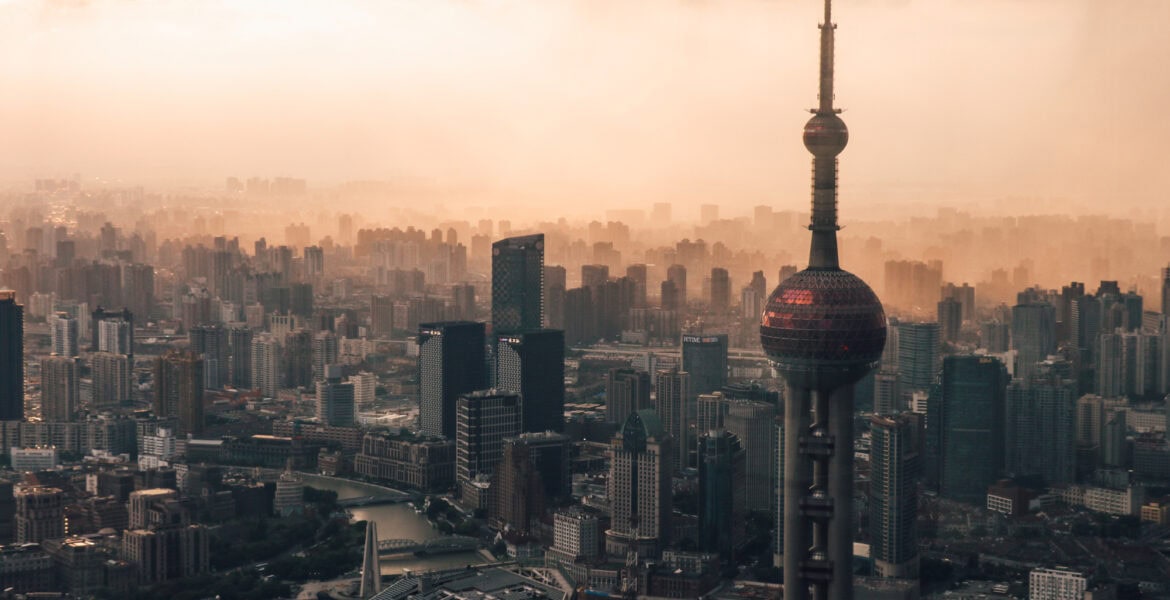
Pudong is home to Shanghai’s famous skyline and some of the city’s tallest skyscrapers. Many hotels offer impressive river views, and the area is well connected through Metro Lines 2 and 14. If you enjoy modern architecture and city views, Pudong is a great choice.
Xuhui – Best for Local Life
Xuhui offers a slower and more residential side of Shanghai. The area is known for beautiful streets such as Wukang Road and Anfu Road, excellent cafés, boutique hotels, and plenty of local restaurants. It’s a great choice if you want to experience everyday life in Shanghai while still staying centrally located.
French Concession
The French Concession remains our favorite area in Shanghai. Tree-lined avenues, historic villas, independent cafés, small boutiques, and a relaxed atmosphere make it one of the most enjoyable parts of the city to explore. It’s also much larger than most visitors expect, with countless side streets worth discovering by foot or bike.
Our Personal Recommendation
After several visits to Shanghai, we almost always stay somewhere in the French Concession. The neighborhood is walkable, well-connected, and full of great cafés and restaurants. Being close to a metro station is always a plus, especially if you plan to explore multiple areas of the city. For a good balance between comfort and price, we’ve stayed at MoYu Movie Hotel several times.
If you’re looking for something more luxurious, staying along the Bund is difficult to beat with hotels like The St. Regis on the Bund. Waking up to views of Shanghai’s skyline is one of those experiences you’ll remember long after your trip.
For booking accommodation in China, we use Trip.com since it offers far more local hotel options than most international booking platforms.
★ BUDGET
- Features rooms with Large-screen projection, food delivery robots & laundry room
- Located near Changle Rd & Huaihai Rd & close to Metro Lines 13 & 1, 10 and 12
- Queen, Twin & Family Rooms $
★★ MID-RANGE
- Guests can enjoy a fitness room, additional breakfast, and a laundry room
- Located just a few steps away from Xintiandi & near Metro Lines 9, 10, and 13
- Twin, Queen, Family Rooms & Suits $$
★★★ HIGH-END
- There is a fitness center, on-site restaurant & cafe, and laundry room. Includes breakfast & skyline river views
- Located on the Bund & close to Metro Lines 2, 10, and 14
- Twin & King Rooms $$$
2.3. Packing travel guide for Shanghai
If you’re wondering what to pack for Shanghai, don’t worry too much. You won’t need any special travel gear. In general, I’d simply recommend packing what you would normally wear at home. Shanghai experiences four distinct seasons, so your clothing should mainly depend on the time of year you’re visiting. The city’s people are also really fashionable, so if you enjoy dressing up a bit or putting together stylish outfits, you’ll fit right in.
No matter the season, these are the items I would always bring:
- Comfortable Walking Shoes – You’ll be walking a lot. Even though Shanghai has an excellent public transport system, exploring the city properly means spending plenty of time on foot. (see his / hers)
- Universal Adapter – China uses three main plug types: Type I (three flat pins in a V-shape), Type A (two flat parallel pins), and Type C (two round pins). A universal adapter makes charging your devices much easier.
- Power Bank – Between navigation, photos, videos, and translation apps, your phone battery will drain faster than you expect. A power bank is one of the most useful things you can pack. Make sure to check that the power bank has the 3C/CCC mark.
- Packing Cubes – Packing cubes help keep your luggage organized and make it easier to find things throughout your trip.
- Cross-body Bag – A practical way to keep your essentials close while keeping your hands free for photos and exploring. (see his / hers)
- Sleeping Mask & Earplugs – Whether you’re staying on a busy street or simply adjusting to jet lag, this sleeping mask can make a big difference to your sleep quality.
2.4. Cost travel guide Shanghai
One of the most common questions people have when planning a Shanghai trip is: Is Shanghai expensive?
Shanghai is definitely one of the most expensive cities in China, if not the most expensive. Compared to many other Chinese cities and destinations in Southeast Asia, you’ll notice that accommodation, taxis, and some services generally start at a higher price point.
That said, Shanghai still feels very affordable compared to Western Europe, North America, or Australia.
Accommodation will likely be your biggest expense after flights. Beyond that, you can make your Shanghai trip as budget-friendly or as luxurious as you want. One thing that often surprises first-time visitors is how much of the city can be enjoyed for free. Many of the places mentioned in this Shanghai travel guide don’t require an entrance fee, public transport is cheap and efficient, and excellent local food can still be found at very reasonable prices.
As a rough estimate, a daily budget of $70–$150 (¥500–¥1,000 CNY) per person is enough for most travelers. Your actual costs will depend largely on your accommodation choices and travel style.
Below is an average daily cost breakdown for a comfortable trip to Shanghai:
➤ Accommodation: Around $120/day (¥880 CNY) for a mid-range hotel room.
➤ Food & Drinks: $25–$60 (¥180–¥430 CNY). Budget around ¥30–¥70 for local eateries or street food, and ¥250–¥400 for a comfortable mix of local and Western restaurants.
➤ Transportation: $10–$25 (¥70–¥180 CNY). Metro rides typically cost ¥3–¥10, while a 15-minute taxi ride usually costs around ¥35.
➤ Attractions: $15–$40 (¥100–¥280 CNY). Many parks, temples, and walking areas are free to visit, while paid attractions such as observation decks and museums can increase your daily budget.
2.5. What to do in Shanghai
Shanghai is packed with fascinating neighborhoods, historic landmarks, local food, and impressive skyline views. If it’s your first visit, these are some of the experiences you shouldn’t miss.
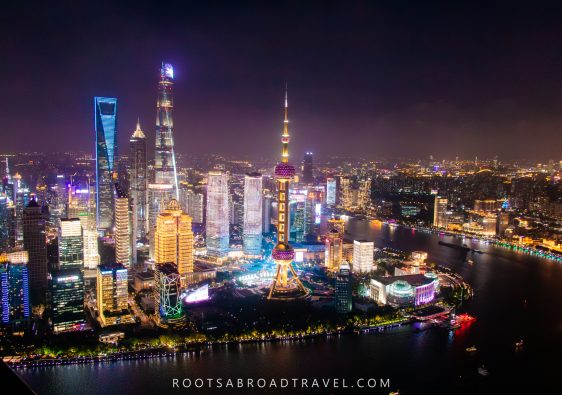
- Be in awe of the iconic skyline at the Bund and watch the city light up after sunset.
- Enjoy the famous Bund Light Show as the Pudong skyscrapers illuminate the riverfront.
- Find a quieter side of the skyline at North Bund Green Land, one of the city’s best free viewpoints.
- Take in panoramic views from one of Shanghai’s famous skyscrapers.
- Explore Lujiazui and walk among some of the tallest buildings in the world.
- Wander down Nanjing Road and experience one of China’s busiest shopping streets.
- Try freshly steamed xiaolongbao, Shanghai’s most famous local dish.
- Stroll through People’s Park and watch daily life unfold around you.
- Explore Shanghai Old Town and discover a glimpse of the city’s historic past.
- Wander through the beautiful pavilions, ponds, and gardens of Yuyuan Garden.
- Step inside Jing’an Temple and admire one of Shanghai’s most important Buddhist temples.
- Bike or walk through the French Concession beneath its famous tree-lined streets.
- Get lost in Tianzifang’s narrow alleyways filled with cafés, shops, and local character.
- Spend an evening soaking up the atmosphere at Xintiandi.
- Take a half-day or full-day trip to a nearby water town such as Zhujiajiao.
3. Practical Tips for Your Shanghai Visit
3.1 You need a VPN
One of the most important things to know before visiting Shanghai is that many websites and apps you use every day are blocked in China due to the country’s internet restrictions, often referred to as the Great Firewall.
Google, Gmail, WhatsApp, Instagram, Facebook, YouTube, and many other services won’t work without a VPN. If you rely on any of these apps, make sure you have a VPN installed before arriving in China.
During our most recent stay in Shanghai, we used V1VPN, and it worked flawlessly throughout the trip. Popular options such as ExpressVPN and NordVPN were much less reliable than they used to be. A VPN allows you to access blocked websites while also protecting your online privacy and location.
💡 Shanghai Travel Tip | Many Chinese eSIMs include a built-in VPN. This is incredibly convenient while using mobile data, but the VPN often stops working once you connect to hotel Wi-Fi. Always double-check before relying on it.
3.2 SIM Cards & Wi-Fi in Shanghai
For most travelers, having mobile data in China isn’t optional; it’s essential.
You’ll constantly be using your phone to navigate, translate menus, communicate with locals, book transportation, make payments, and look up information while exploring the city. Although Wi-Fi is available in some places, public networks are far less common than many visitors expect. In addition, many restaurants, malls, and public spaces require a Chinese phone number to receive a login code before connecting.
For that reason, we usually recommend getting a local SIM card rather than relying solely on Wi-Fi.
The three major providers are China Unicom, China Mobile, and China Telecom. SIM cards are affordable and can be purchased either at the airport after arrival or from official phone stores throughout the city. Just remember to bring your passport, as it is required for registration.
If you’re only visiting Shanghai for a short trip, an eSIM is often the easiest solution. For longer stays, however, a local SIM card usually offers better value. If you are still searching for an eSIM, we can recommend Airalo, use our promo code NEWTOAIRALO15 for 15% off your first eSIM purchase. Returning users can use AIRALOESIM10 for 10% off.
3.3 Currency, cash & payments in Shanghai
The official currency in China is Renminbi (RMB), also known as the Chinese Yuan (CNY). During our trips, we usually keep a currency converter app on our phones to quickly check prices and exchange rates.
The bigger question isn’t what currency to use, it’s how to pay. Technically, cash is still accepted throughout China. In reality, however, almost nobody uses it anymore. China has become one of the most cashless societies we’ve ever visited. From shopping malls and convenience stores to street food stalls and market vendors, almost everything is paid for by scanning QR codes. During our last trip, we withdrew some cash as a backup but barely touched it.
Instead, you’ll want to set up both Alipay and WeChat. We used Alipay for nearly everything, including public transportation, thanks to its built-in transit features. WeChat served as a backup whenever needed and more as a social medium to contact people.
Once your bank card is linked, paying is incredibly simple. In most cases, you’ll either scan the merchant’s QR code or present your own QR code for them to scan.
💡 Shanghai Travel Tip | Download and set up both Alipay and WeChat before your trip. You’ll use them almost immediately after arriving in Shanghai, and the registration process can take a little time. Registration requires a passport and some verification steps, so it’s much easier to do at home than upon arrival.
3.4 Getting around Shanghai
Getting around Shanghai is surprisingly easy once you know which apps to use. While Google Maps can still be useful for saving locations, it isn’t reliable for navigation inside China. Instead, use Amap, Apple Maps, or Baidu Maps during your trip.
➤ Metro – The Shanghai Metro is by far the easiest way to get around the city. It’s clean, efficient, affordable, and covers almost every area you’ll want to visit. Tickets typically cost between 2 and 6 RMB, depending on the distance. We highly recommend downloading either the Shanghai Metro app or Metroman before your trip. Both make route planning incredibly simple.
➤ Bus – Shanghai’s bus network is extensive and useful for reaching places that aren’t directly connected by metro. Fares are usually just 1–2 RMB, although traffic can sometimes slow journeys during peak hours.
➤ Walking – Some of our favorite memories from Shanghai came from simply wandering around on foot. Neighborhoods such as the French Concession, Jing’an, and parts of the Bund area are perfect for exploring without a plan. Wide sidewalks and pedestrian-friendly streets make walking a great way to experience the city.
➤ Bike Sharing – Cycling is one of our favorite ways to explore Shanghai. Shared bikes are available almost everywhere these days and can be unlocked directly through Alipay or Meituan. Simply scan the QR code, unlock the bike, and start riding. It’s an affordable and enjoyable way to cover more ground while still experiencing the city at street level.
➤ Didi – Think of Didi as China’s version of Uber. The app is reliable, affordable, and includes automatic translation features that make communication with drivers easy. Payment can be made through Alipay, a linked credit card, or directly within the app.
3.5 Language & communication in Shanghai
The official language in China is Mandarin Chinese, although many regions have their own local dialects. In Shanghai, you’ll also hear Shanghainese spoken by locals.
One thing that often surprises first-time visitors is how little English is spoken compared to other major Asian destinations. In luxury hotels, tourist attractions, and some higher-end shops, you’ll usually find somebody who speaks at least some English. Outside of those areas, however, communication can sometimes be challenging.
That’s why having a translation app on your phone is incredibly useful. We relied on translation apps constantly throughout our trip, whether it was translating menus, reading signs, asking for directions, or simply having conversations with locals.
In larger cities like Shanghai, you’ll find quite a few English signs, especially in metro stations, shopping malls, and major tourist areas. Even so, a translation app will quickly become one of the most useful tools on your phone.
The good news is that you don’t need to become fluent in Mandarin. Learning a few basic phrases goes a long way and is always appreciated.
The two most useful phrases to remember are:
Hello – Nihao (Nee haow)
Thank you – Xiexie (Sshyeah-sshyeah)
If you’d like to learn a few more, these can come in handy during your trip:
Goodbye – Zaijian (Dzeye jehn)
Good – Hen hao (Hun haow)
Not so good – Bu tai hao (Boo tye haow)
Yes – Shi de (Shee duh)
No – Bu (Boo)
Excuse me / Sorry – Duìbuqǐ
How much? – Duo shao qian?
Where is [place]? – [Place] zai nar?
I don’t understand – Wǒ ting bu dong
A cup of water – Yi bei shui
Spicy or not spicy? – La bu la?
I don’t want it – Bu yao
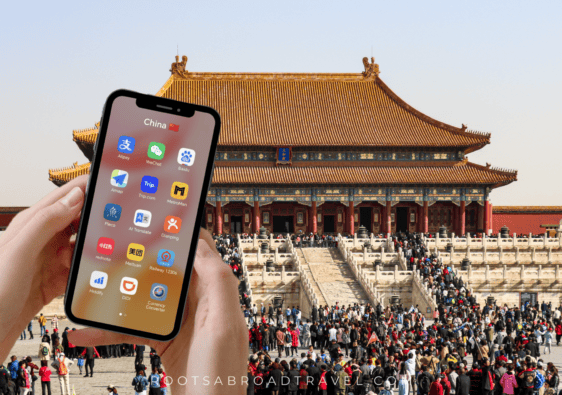
3.6 Essential apps for Shanghai
A handful of apps will make your trip to Shanghai significantly easier. Downloading them before you arrive can save you a lot of time and frustration later.
- Alipay – The single most important app for visiting Shanghai. You’ll use it for payments, public transportation, bike sharing, and even ride-hailing services. We used Alipay dozens of times every day.
- WeChat – China’s all-in-one messaging, social media, and payment platform. While we primarily used Alipay, WeChat was our backup payment method whenever needed.
- Amap – Google Maps isn’t reliable in China, so Amap quickly becomes your best friend. It’s excellent for navigation, public transport routes, restaurants, and finding nearby attractions.
- Didi – China’s version of Uber. Fast, affordable, and surprisingly easy to use thanks to its built-in translation features.
- Trip.com – One of the best apps for booking trains, flights, hotels, attraction tickets, and tours throughout China.
- Pleco & Google Translate – Pleco is fantastic for translating individual words and understanding Chinese characters, while Google Translate is useful for conversations and menu translations when connected through a VPN.
- Baidu Translate – A useful alternative translation app that works particularly well for spoken conversations.
- Metroman or Shanghai Metro – Essential if you plan on using the metro regularly. These apps show routes, transfer stations, travel times, and line information in English.
- Dazhong Dianping – Think of it as China’s version of Yelp. It’s one of the best tools for finding restaurants, reading reviews, and discovering local deals and discounts.
With these apps installed, navigating the city, overcoming the language barrier, and paying for almost everything becomes surprisingly straightforward.
If you’re looking for a more detailed breakdown of the best apps for travelling in China, be sure to check out our dedicated guide.
3.7 Always Carry Your Passport
Your passport is one of the most important things you’ll carry while travelling in China. Hotels, train stations, attraction entrances, and ticket bookings are all linked to your passport number. In many cases, especially for trains and major attractions, your passport effectively becomes your ticket.
During our trips around China, we’ve frequently booked attractions online and then simply presented our passports at the entrance without receiving a physical ticket at all. For that reason, it’s best to carry your passport with you whenever you’re out exploring Shanghai. Just make sure it’s stored somewhere secure.
3.8 Toilets in Shanghai
This might not be the most glamorous travel tip, but it’s one you’ll be glad you knew beforehand.
Not every public restroom in China provides toilet paper, soap, or paper towels. We always carry a small pack of tissues and some hand sanitizer when travelling around the country.
The good news is that Shanghai is one of the easiest places in China for restroom facilities. Modern shopping malls, hotels, cafés, and attractions generally have excellent facilities, and some of the mall bathrooms are honestly more impressive than the attractions themselves.
Squat toilets are still common throughout China, although Shanghai has plenty of Western-style toilets as well. Many restrooms have a mix of both, and you’ll usually find a picture on the door indicating which type is inside.
3.9 Don’t underestimate Shanghai’s shopping malls
Even if shopping isn’t your thing, you’ll probably end up spending more time in Shanghai’s malls than you expect. We found ourselves regularly stopping by malls throughout the day to cool off, grab a coffee, use the restroom, charge our phones, or simply take a break from walking.
Shanghai’s malls are also attractions in their own right. Many feature impressive architecture, huge indoor gardens, designer installations, public art, waterfalls, and some of the best food courts in the city. In fact, some of our favorite meals in Shanghai came from restaurants hidden inside shopping centres. Whenever you need a break from sightseeing, chances are there’s a shopping mall nearby that can solve the problem.
3.10. Scam alert to be aware of
A popular scam that unfortunately still exists targets tourists around popular areas such as East Nanjing Road, the Bund, and the Old Town. Someone may approach you claiming they want to practice English, show you around, or invite you for a tea ceremony, massage, or drink. Everything will seem friendly until a very expensive bill suddenly appears. I encountered this myself during my first visit to Shanghai in 2019, when I was approached near the Old Town (thankfully, I was aware of this scam and politely got myself out of the interaction). If someone you have just met insists on taking you to a specific venue, politely decline and continue on your way.
3.11. What to eat in Shanghai
One of the best parts of visiting Shanghai is experiencing the city’s food scene. If your only experience with Chinese food comes from restaurants back home, prepare to be surprised. The food in China is completely different, and often far better, than what most people expect.
Shanghai cuisine has its own distinct identity. Compared to other regional cuisines in China, Shanghainese food is generally known for slightly sweeter flavors and a strong focus on freshwater and seafood dishes. Because of this, many of the dishes you’ll try in Shanghai are difficult to find elsewhere in the country.
The good news is that you don’t need to spend hours researching restaurants before your trip. Some of our favorite meals in Shanghai came from places we stumbled upon while exploring the city. Whether you’re eating in a shopping mall, train station, local restaurant, or small neighborhood eatery, good food is everywhere. If a restaurant catches your eye, simply look it up on Dazhong Dianping, Amap, or Apple Maps and check the rating. If it looks promising, give it a try. Once you’ve chosen a restaurant, it’s also worth checking Dazhong Dianping for set-menu deals and discounts, which are extremely common in China.
💡 Shanghai Travel Tip | Don’t automatically join every long queue you see. You’ll often notice hundreds of people lining up outside popular bakeries, cafés, and restaurants. While some are excellent, many are simply the latest trend. Unless there’s a specific place you’re excited to try, your time is usually better spent exploring somewhere with a shorter wait.
A few local dishes you should definitely try:
Shengjian Bao – Pan-fried soup dumplings with a crispy bottom, fluffy dough, and juicy pork filling.
Xiaolongbao – Shanghai’s famous soup dumplings. Bite the top, sip the broth, then enjoy the filling. Crab versions are especially popular.
Cong You Ban Mian – Scallion oil noodles tossed in fragrant scallion-infused oil.
Hong Shao Rou – Red-braised pork belly slow-cooked until tender with a rich, sweet-and-savory flavor.
Crab Roe Noodles – One of Shanghai’s most famous seasonal specialties.
Jiaozi – Classic Chinese dumplings that can be found throughout the city.
JOIN A SHANGHAI BIKING & FOOD TOUR
If you want a fun, effortless way to get oriented in the city, the Shanghai: Half‑Day Biking and Local Food Tour is a great add-on. In just a few hours, you’ll cycle through highlights like the French Concession, Xintiandi, Taikang Road, and the Bund with an English-speaking guide. It’s relaxed, beginner-friendly, and includes local snacks along the way, perfect if you want a compact but immersive taste of everyday Shanghai life.
4. Suggested Shanghai Itineraries
5 Days in Shanghai
If it’s your first time visiting Shanghai, I think five days is the sweet spot. It gives you enough time to see the city’s main highlights, explore different neighborhoods at a slower pace, take a day trip, and experience Shanghai after dark. If you’d like a more detailed breakdown, check out my complete 5-day Shanghai itinerary.
Day 1: Shanghai’s Icons & Historic Center
Start your trip with Shanghai’s most famous sights. Walk along the Bund, explore Yuyuan Garden and the surrounding Old Town, and enjoy your first basket of Xiao Long Bao. Later, visit People’s Square before strolling down East Nanjing Road. Finish the day back at the waterfront to watch the Pudong skyline light up after sunset.
Day 2: Exploring the French Concession
Dedicate a full day to one of Shanghai’s most enjoyable neighborhoods. Rent a bike and spend the day exploring the French Concession’s leafy streets, historic villas, cafés, boutiques, and local shopping areas. Highlights include Wukang Building, Tianzifang, Sinan Mansions, Fuxing Park, and Xintiandi.
Day 3: Zhujiajiao & Pudong Skylines
Escape the city for a few hours with a visit to Zhujiajiao, one of the most accessible water towns near Shanghai. After returning, head across the river to Lujiazui to explore Shanghai’s modern skyline, walk the elevated pedestrian bridges, and visit one of the city’s observation decks for sunset.
Day 4: Temples, Art & Modern Shanghai
Spend the day exploring Jing’an and some of Shanghai’s lesser-known attractions. Visit Jing’an Temple and Jade Buddha Temple, browse local shopping streets, explore the M50 Art District, and stop by the striking 1000 Trees development before ending the evening with a rooftop drink overlooking the city.
Day 5: Green Spaces & North Bund Views
For your final day, venture beyond the classic tourist areas. Visit the impressive Shanghai Greenhouse Garden, explore Hongkou District, and discover spots like 1933 Old Millfun and North Bund Green Land. End your trip with one last skyline view from the Stage Observatory or the North Bund waterfront.
3 Days in Shanghai
Three days is enough to see many of Shanghai’s highlights, although you’ll need to be a little more selective with your time. I’d focus on the city’s major landmarks, experiencing the classics, those insane skyline views Shanghai is known for but also soaking up historic neighborhoods and a watertown.
Day 1: The Classic Shanghai Experience
Start at Yuyuan Garden and the Old Town before heading toward People’s Square and East Nanjing Road. Spend the evening at the Bund, which remains one of the best places to experience Shanghai’s famous skyline.
Day 2: Zhujiajiao & Modern Shanghai
Take a morning trip to Zhujiajiao before returning to the city in the afternoon. Spend the rest of the day in Lujiazui, walking among Shanghai’s skyscrapers and visiting an observation deck for sunset views over the city.
Day 3: Temples & the French Concession
Visit Jing’an Temple and explore the surrounding area before heading south into the French Concession. Spend the afternoon cycling between historic streets, cafés, shopping areas, and landmarks such as Tianzifang, Sinan Mansions, and Xintiandi. Finish your trip with one final skyline view from a rooftop bar, the Stage Observatory, or the North Bund.
24 Hours in Shanghai
If you only have one day in Shanghai, you’ll need to focus on the city’s biggest highlights.
Start your morning at Yuyuan Garden before exploring the surrounding Old Town area. For lunch, try a basket of Shanghai’s famous Xiao Long Bao.
In the afternoon, head to Lujiazui and walk around the futuristic skyscraper district. If time allows, visit one of the city’s observation decks for panoramic views across Shanghai.
Later, make your way to East Nanjing Road before finishing your day at the Bund. Watching the lights come on across the Pudong skyline is one of the most memorable experiences in Shanghai and the perfect way to end a short visit.
5. Final Tips for First-Time Visitors
5.1. Is Shanghai worth visiting?
Absolutely.
We may be slightly biased because of personal reasons that we love Shanghai so deeply and make it our favorite city. Regardless, even setting personal preferences aside, it is one of the most fascinating destinations in the country.
What makes Shanghai special is that it doesn’t feel like anywhere else in China. Its unique history has created a city where traditional Chinese culture, colonial influences, and futuristic development all exist side by side. You can spend the morning exploring centuries-old temples and historic neighborhoods, then find yourself standing among some of the tallest skyscrapers in the world a few hours later.
Many Chinese cities are famous for either their history or their modern development. Beijing is known for its imperial heritage. Chongqing is famous for its dramatic cyberpunk-like cityscape. Shenzhen showcases China’s technological ambitions. Shanghai manages to combine all of these elements in a way that feels surprisingly natural.
Another reason we keep returning is the food. Shanghai cuisine has its own identity, with local specialties you won’t easily find elsewhere in China. Add to that an excellent café culture, some of the best bakeries in the country, and a constantly evolving restaurant scene, and it’s a city where every meal becomes part of the experience.
Shanghai is also one of China’s most fashionable cities. Whether you’re interested in luxury shopping, local designer brands, trendy cafés, or creative neighborhoods, Shanghai is often where new trends arrive first.
And then there’s the skyline. We’ve visited many cities around the world, but in our opinion, Shanghai offers the most impressive skyline anywhere. Seeing the lights come on across the Huangpu River for the first time is one of those travel moments that genuinely lives up to the hype.
5.2. Where to visit after Shanghai
One thing worth remembering is that Shanghai isn’t representative of the entire country. It’s one of China’s most international and developed cities. If you continue to places such as Xi’an, Chongqing, Zhangjiajie, or smaller cities, you’ll experience a very different side of China. That’s exactly why Shanghai makes such a great starting point, as it gives first-time visitors an easy introduction before exploring the rest of the country.
Shanghai is one of the best places to start a China itinerary, especially if it’s your first visit to the country. The city is modern, easy to navigate, and well accustomed to international travelers, making the transition into China far smoother than many people expect.
It’s also one of the country’s biggest transportation hubs. Whether you’re continuing by high-speed rail or domestic flight, reaching other major destinations is usually straightforward.
Classic destinations on a China itinerary
For first-time visitors following a classic China route, these destinations pair particularly well with Shanghai:
➤ Beijing offers a completely different experience, with imperial landmarks such as the Forbidden City, historic hutong neighborhoods, and easy access to the Great Wall. The high-speed train journey takes around 4.5 hours.
➤ Xi’an provides a glimpse into China’s ancient past and is home to the famous Terracotta Warriors. Compared to Shanghai, the city feels much more traditional and historically focused.
➤ Hong Kong combines dramatic skylines, island scenery, and a fascinating blend of Chinese and international influences, making it a natural addition to many China itineraries.
Looking beyond the classic route? More popular destinations in China
If you have more time available, several other destinations regularly feature on first-time China itineraries.
➤ Chengdu is famous for its giant pandas, incredible Sichuan cuisine, and laid-back atmosphere, offering a much slower pace of life than Shanghai.
➤ Zhangjiajie is home to some of China’s most dramatic scenery, with towering sandstone pillars, glass walkways, and mountain landscapes that inspired the floating mountains in Avatar.
➤ Guilin and nearby Yangshuo are known for their iconic karst mountains, river scenery, and rural landscapes, making them some of the most beautiful destinations in southern China.
Close by trips
If you’re planning a shorter trip, you don’t even need to travel far from Shanghai.
➤ Suzhou is famous for its classical gardens, canals, and slower pace of life, making it one of the easiest and most rewarding side trips from the city.
➤ Hangzhou offers beautiful lakeside scenery, tea plantations, and a much more relaxed atmosphere than Shanghai.
➤ Nanjing combines important historical sites with a modern city atmosphere and can easily be visited as part of a broader eastern China itinerary.
Finally, don’t overlook the region’s many water towns. Zhujiajiao is the easiest day trip from Shanghai, but there are plenty of others scattered throughout the Yangtze River Delta that can be combined with visits to Suzhou or Hangzhou.
Practical Travel Resources
TRANSPORTATION | For booking transportation online such as bullet trains and domestic flights, we recommend using the website Trip.com. This platform has been our go-to for China, saving us from the hassle of queuing at travel agencies and securing a seat in peak seasons.
ACCOMMODATION | Finding affordable places to stay in China is a breeze with Booking.com. It’s the ideal platform to discover budget-friendly hostels and hotels.
FLIGHTS | Discover the best flight deals to China on Skyscanner. We love that they highlight the days with the cheapest prices for a destination, and the ability to search by month or region for flexibility.
TRAVEL INSURANCE | Ensure comprehensive and reliable coverage for your journey in China with Heymondo. Prioritize peace of mind with their trustworthy travel insurance options. Get 5% OFF through our link.
STAY CONNECTED | Guarantee reliable internet access throughout your China trip by using Airalo. Install it on your eSIM-compatible smartphone before your journey for convenient connectivity. Use promo code NEWTOAIRALO15 for 15% off any eSIM (for new Airalo users only). Or use the code AIRALOESIM10 for 10% off as an existing user.
TOURS & ATTRACTIONS | For the best and most affordable city tours, day trip excursions, food tours, and cooking classes in China, check out GetYourGuide or Viator.
VISA ORGANIZATION | Before your trip, ensure you check the visa requirements for your passport nationality. Explore details on travel documents at iVisa.com.
ONLINE PRIVACY | Always safeguard your online activity and digital privacy when using public Wi-Fi abroad by using a VPN. We’ve trusted ExpressVPN for years! Plus, a VPN lets you stream Netflix shows from any country. Get 3 months FREE when getting a 12-month plan with our link.
No time to read this Shanghai travel guide right now? Pin it to Pinterest for later!