Planning your first travel to Seoul and not sure where to start? This Seoul travel guide brings together everything you need to know before your visit, so you can dive into the fun part of exploring the city without feeling overwhelmed.
Seoul is one of those places that sweeps you up instantly. We knew it would be exciting, but it still managed to surprise us. Think cozy cafés tucked into side streets, endless Korean food to sample, and unique experiences everywhere you turn. It’s the kind of city where the list of things to do never really runs out.
But before you start mapping out your Seoul itinerary, there are a few practical pieces to sort out. Things like how to get around, how to stay connected, where to stay, the best time to visit, and what to organize before you even book your flight. From pre-travel essentials and hotel tips to navigating Incheon Airport and using your T-money card, this travel guide is designed to make your first time in Seoul feel smooth from the moment you land.
To help you skip the planning stress and make the most of your trip, this Seoul travel guide gathers all the key things to know before you go, so you can simply enjoy the adventure ahead.
* Disclosure: This Seoul Travel Guide contains affiliate links. We will receive a small commission if you book through our links. This is at no extra cost to you. We only recommend products we like and trust ourselves.

Seoul Quick Travel Guide & Tips
| Language Korean (official). English is common in tourist areas, but not everywhere; use translation apps. | Time Zone KST (Korea Standard Time) UTC/GMT +9 hours |
| Currency South Korean Won (KRW). 1 USD = ~₩1,700 | Visa Many nationalities get visa-free entry for 90 days; check the requirements on ivisa.com |
| Plugs and Voltage Type C and F plugs; 220/230V. Use a universal adapter with surge protection | Safety One of the safest cities in Asia; petty theft is rare, but stay aware in busy areas. |
| Drinking Water Drink bottled or filtered water | Transport Get a T-money card for hassle-free subway & bus payments. |
| Credit cards & ATMs Cash is common in markets & small eateries. ATMs are widely available. | Daily Budget $80–100 per person per day (mid-range budget). |
| When to go Spring (March–May) and autumn (September to November) | How long to go Minimum 3-4 days for the city, add an extra day for a day trip to the DMZ zone. |
| Getting there Fly into Incheon International Airport (ICN); AREX Airport Express, bus, and taxi options connect to the city center. | Stay Connected Get a SIM card upon arrival at the airport or use an Airalo e-SIM for instant connectivity. |
Why visit Seoul?
We spent a week in Seoul recently, almost on a whim, adding it to our latest China visit. I (Frédérique) have wanted to visit for years, partly because I’m a huge K-drama and K-beauty fan, but beyond that, we honestly knew very little about the city. We only had time to research the basics before we arrived.
South Korea has been receiving significant global attention thanks to the rise of K-pop and K-dramas, but what really surprised us was how quickly we fell in love with the city itself. Seoul completely exceeded our expectations. Within a day or two, it became one of our favorite cities in Asia.
Seoul has this incredible mix of culture, food, history, and modern energy. The food scene was a huge draw for us! If you love eating your way through a destination, Seoul will spoil you. But the city offers so much more than that. You’ll find centuries-old palaces standing next to sleek skyscrapers, charming neighborhoods filled with cafés and boutiques, markets packed with street snacks, and even beautiful nature just beyond the city.
What surprised us most was the atmosphere. For a city of this size, Seoul feels surprisingly calm and intimate. We never felt overwhelmed the way we sometimes do in other big cities like Bangkok, Hong Kong, Chongqing, or Kuala Lumpur. It’s lively, absolutely, but not chaotic. Instead of sensory overload, there’s a sense of ease. You can wander slowly, take in the details, and actually enjoy the pace.
No matter what type of traveler you are, foodie, culture lover, café hopper, history enthusiast, or someone who just wants a fresh city break, Seoul has something for you. It’s a place that’s easy to enjoy, rewarding to explore, and full of moments that stick with you.
Essential Travel Guide before you visit Seoul
Checklist before booking your flights
Before you book flights to South Korea, there are a few important things to check. Think of this part of your seoul travel guide as the quick checklist you’ll want to run through before you even compare prices. And if you’re planning to travel to Seoul, these are the documents that matter most.
➤ Passport
Make sure your passport is valid for at least six months beyond your departure date. Technically, South Korea doesn’t enforce a six-month rule for tourists, but many airlines do. If your passport is expiring soon, you risk being denied boarding even before you leave home, so play it safe.
➤ Visas & K-ETA
Depending on your nationality, you may need a visa to enter South Korea. A quick way to check your requirements is through iVisa.com, especially if you need to apply.
Most visitors from the US, UK, Canada, Australia, and most EU countries don’t need a visa for short stays (up to 90 days). However, you normally need to apply for the K-ETA (Korea Electronic Travel Authorization) at least 72 hours before your trip via the official website or the mobile app.
Good news if you’re planning to travel in the remainder of 2026: many countries are currently exempt from the K-ETA requirement.
➤ International driver’s license
Planning to rent a car? Check whether you need an international driver’s license and whether you have time to request one before your trip.
Once you’ve ticked off these basics, you’re all set to book your flights to South Korea and handle the rest of the admin later on.
Best time to visit Seoul
Like Japan, South Korea has four distinct seasons. The great thing about Seoul is that it’s interesting all year round, but summer can be intensely humid, and winter can hit you with freezing temperatures. If you prefer comfortable weather and gorgeous scenery, spring (March–May) and autumn (mid-September to early November) are the most popular months to travel to Seoul. Both seasons transform the city with color: pink and white cherry blossoms in spring, and fiery red, orange, and gold foliage in autumn.
Here’s what each season looks like:
Spring (March–May)
Even though temperatures warm up, it may still feel chilly, so pack layers. Cherry blossoms usually bloom in early April, turning the whole city into a soft, dreamy floral landscape. It’s a beautiful time to explore, especially if you love photography.
Summer (June–August)
Expect heat, humidity, and the occasional typhoon. It doesn’t rain nonstop, but the moisture in the air can be intense. If that doesn’t bother you, summer comes with lots of festivals and fun events around the city.
Autumn (September–November)
Our personal favorite. Temperatures stay mild, rain is minimal, and the fall colors are incredible. We visited in early November and absolutely loved it. The foliage alone makes autumn one of the best times to include Seoul in your South Korea itinerary.
Winter (December–February)
Winter gets extremely cold, but it’s also quieter and often cheaper. You’ll enjoy fewer crowds, though snow is absolutely possible, so dress warm and prepare for icy mornings.
How many days are ideal for Seoul?
Before you dive into planning your travel itinerary, you’ll need to decide how many days you want to spend in the city. Seoul is huge, and how long you stay really depends on how much you want to see and how fast you like to travel.
We spent a full week here and still felt like we could’ve stayed longer. There’s just so much to discover, especially if you enjoy wandering through neighborhoods and taking your time. I also tried to cover a lot for the blog, so we explored more than the average traveler would.
If you’re short on time, 4–5 full days in Seoul gives you a great introduction to the city. You can hit the highlights at a relaxed pace, squeeze in a day trip to the border with North Korea, and explore a few lesser-known areas too.
If you have more time, even better, as Seoul is one of those places where you won’t run out of things to do. The itinerary linked further in this Seoul travel guide is flexible and easy to customize for different interests.
Safety in Seoul
We felt very safe in Seoul, even when walking around late at night, both in busy districts and quiet residential areas. Crime rates are low, locals are friendly, and petty theft is rare across the country. You won’t hear much about pickpocketing or street crime. The city is covered with CCTV, and according to Global Finance, South Korea has a safety index score of 7.51.
Even though South Korea is technically still at war with North Korea, you won’t feel that tension during everyday travel to Seoul. The only time you’ll notice anything related is if you take a day trip to the border (which we can highly recommend).
As always, keep basic travel awareness in mind, so stick to well-lit streets, avoid sketchy alleys, and keep your belongings close in crowded places.
Travel Insurance
Make sure you’ve got travel insurance sorted for your South Korea adventure! Heymondo offers coverage for medical emergencies, theft, delays, cancellations, lost luggage, and much more. With 24/7 worldwide assistance and access to medical chat, you can travel with peace of mind. Optional add-ons cover electronics and adventure activities. Plus, as a reader of Roots Abroad, we’ve got you covered with a 5% discount!
Planning guide for your Seoul travel
Booking flights to Seoul, South Korea
When you travel to Seoul, you’ll find plenty of airlines to choose from, depending on where you’re flying from. Since we usually leave from Germany, we often fly with Air China & China Airlines for trips to Asia and have had great experiences with them. If you’re flying from another European city or from within Asia, consider booking with Korean Air or Asiana Airlines. Both offer excellent service and good value for money.
To compare fares and find the best deals, we always rely on Skyscanner; then we cross-check prices on Google Flights and Kiwi. It’s the easiest way to see all options in one place.
Also good to know is that Seoul has two airports:
- Incheon Airport, the main international hub, is located in the nearby city of Incheon.
- Gimpo International Airport is used mostly for domestic travel but has a handful of international routes.
Both airports are well connected by train and bus (more on that later in this Seoul travel guide).
💡 TRAVEL TIP | If you don’t mind longer travel times, flights with a stopover in China can sometimes cost 2/3 the price of direct routes. We flew with China Airlines over Beijing, and really enjoyed the flight; the service was excellent!
Travel guide on where to stay in Seoul for first-timers
One of the best things about Seoul is that it has this big city vibe, yet its neighborhoods are surprisingly easy to explore without spending hours on the metro. Still, staying in the right area makes a big difference when you travel to Seoul for the first time.
Based on our experiences (and lots of research), these four neighborhoods are ideal for first-timers:
Insadong / Jongno-gu | A super walkable and central area near major sights like Gyeongbokgung Palace, Bukchon Hanok Village, and Gwangjang Market. Great for culture lovers, and much quieter at night.
Myeong-dong | Right in the middle of everything, modern surroundings, and famous for shopping. It’s lively day and night, though sometimes a bit crowded.
Itaewon | A diverse, international neighborhood packed with global food, nightlife, and galleries.
Hongdae | Trendy, youthful, and energetic, packed with cafés, boutiques, and nightlife. It can get loud on weekends, but that’s part of the charm.
We stayed near the lovely Ikseon-dong Hanok Village in Jongno-gu at Tommy Hostel and absolutely loved it. The location was perfect: right next to a metro station, steps from lively cafés and restaurants, and within walking distance of major historic sights. It quickly became our favorite part of the city, and we’d happily stay there again.
💡 TRAVEL TIP | To get the best deals, always compare prices on both Agoda and Booking.com. They often have different offers, so it pays to look at both.
Our Hotel Recommendations for Seoul
★ BUDGET
Dormy Inn EXPRESS SEOUL Insadong
- Features a sauna, on-site restaurant & wonderful breakfast
- Located just a few steps away from Insadong Cultural Street & the Purple Line
- Double, Twin & Family Rooms $
★★ MID-RANGE
Moxy Seoul Insadong
- Guests can enjoy a lounge, fitness room, and games room
- Located just a few steps away from Ikseon-Dong & the Purple and Orange Line
- Twin & Double Rooms $$
★★★ LUXURY
Westin Josun Seoul Hotel
- There is an indoor pool, spa & bar + laundry services
- Located close to Lotte Mall and Myeong-dong shopping street & Green Line
- Twin & King Rooms $$$
Packing travel guide for Seoul
Packing smart makes any trip smoother, and since Seoul follows four distinct seasons, what you bring depends on when you plan to travel to Seoul. Summers are hot and humid, winters are freezing, and spring and autumn can swing between chilly and warm. Style-wise, Seoul is fashionable, but you can simply bring your usual city outfits and add your own twist.
Wondering what to pack for Seoul? No matter the season, here are the essentials you’ll want in your suitcase:
- Comfortable Walking Shoes: You’ll walk a lot. Seoul is surprisingly hilly, and many charming neighborhoods involve little climbs. Choose shoes that can handle both city strolling and light hiking. (see his / hers)
- universal adapter: South Korea uses Type C and F plugs, so bring a universal adapter to keep your devices charged.
- Power Bank: You’ll be taking tons of photos and navigating all day so a good power bank is a lifesaver.
- Packing Cubes: Packing cubes keep your bag organized and make day trips easier.
- Cross-body Bag: Keeps your essentials close and your hands free. (see his / hers)
- Sleeping Mask & Earplugs: Whether your accommodation is in a lively spot or a quiet street, this sleeping mask helps you sleep well after a long day out.
Cost travel guide to Seoul
South Korea isn’t as budget-friendly as parts of Southeast Asia, but Seoul still offers great value, especially if you plan well. Flights are usually the most expensive part of any trip, so once you’ve covered that, the rest can be surprisingly manageable.
Accommodation tends to be pricier than in other major Asian cities, but you can still find good quality stays at reasonable prices. Food is where Seoul really shines: incredible meals at affordable prices, street snacks everywhere, cozy cafés, and delicious treats that don’t break the bank. We expected to spend much more than we did, so that was a pleasant surprise!
Most museums are free, many attractions are low-cost, and public transport is efficient and very affordable.
Here’s a rough breakdown of daily costs ranging from budget to high-end traveler (excluding shopping for fashion, K-beauty, and souvenirs):
- Hotels: $20–$250 per night (budget to high-end; luxury and hanok or apartment stays can go higher)
- Food: $10–$50 per day
- Activities / Fun: $5–$50 per day
- Transport: $5–$10 per day
💡 TRAVEL TIP | Book your accommodation for Seoul via Agoda or Booking.com at least 2 months in advance to have the best selection & prices.
Places to visit in Seoul
Seoul is packed with exciting neighborhoods, historical landmarks, and amazing food. For your first trip, these are the must-see spots:
- Bukchon Hanok Village – Beautiful lanes filled with traditional Korean houses
- Gyeongbokgung Palace – The largest and most iconic palace in the city
- Gwangjang Market – A foodie paradise
- Insadong Street – Great for shopping, galleries, and souvenirs
- Ikseon-dong – Charming alleys lined with cafés and small shops
- Myeongdong Night Market – Lively atmosphere for foodies & shopping
- N-Seoul Tower – One of the best viewpoints in the city
- Gangnam – Sleek, modern, and perfect for shopping and beauty treatments
- Hongdae – Trendy, youthful, and energetic student area with shops & cafés
- War Memorial of Korea – A powerful look at Korea’s past
Must-have experiences in Seoul
Beyond sightseeing, here are some fun and memorable experiences you shouldn’t miss when you travel to Seoul:
Korean BBQ: A full experience, grilling your own meat, choosing sides, and enjoying the lively atmosphere. Try bulgogi or galbi if you want something classic.
Chimaek (Chicken + Beer): A popular combo and a true Korean comfort experience.
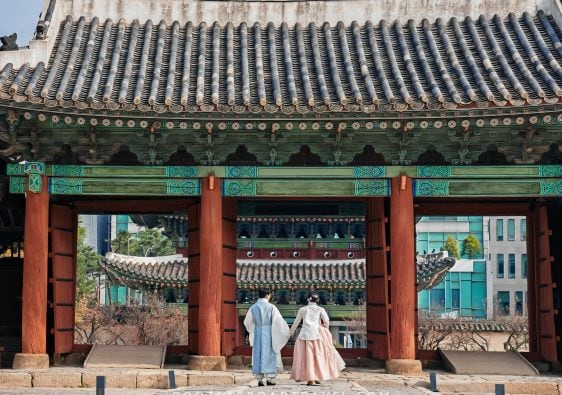
Dress Up in a Hanbok: Hanbok rentals are available near the palaces and in Bukchon, or you can book one online in advance. They make for stunning photos and a fun way to experience Korean culture.
Visit Traditional Markets: Places like Gwangjang Market or Namdaemun Market are perfect for trying local street food. If it feels overwhelming, join a guided market tour, locals know exactly where to go.
Go Café Hopping: Seoul’s café culture is next-level. Arrive early to avoid queues. You can also visit traditional teahouses like Jeong’s Tea House for Korean teas and desserts.
Eat Your Way Through the City: Trying new dishes is half the fun. Joining a food tour is a great way to get started.
Shop for K-Beauty: Visit Olive Young for all your K-beauty favorites.
Convenience Store Snacking: We love grabbing ramen and snacks at places like GS25, CU, or 7-Eleven.
Stay in a Hanok: For a unique experience, consider an overnight stay in a traditional Korean house like Luxury Hanok Stay Onyou.
DMZ Tour: A meaningful and eye-opening day trip that adds depth to your visit.
What to book in advance?
A few things sell out quickly, so it’s smart to book these before you travel to Seoul:
- DMZ Tours: Spots are limited and must be reserved ahead of time. We booked the following DMZ tour and can highly recommend this one!
- Lotte Tower Observatory: One of the tallest skyscrapers in the world, with incredible views. Get your tickets online in advance.
- Popular restaurants and cafés: Many use the Catchtable app, so create an account early if you want to secure trendy spots.
Suggested Seoul itinerary
This 5-day Seoul itinerary is perfect if you want to see the city’s highlights without rushing from morning until night. It blends historic palaces, charming hanok streets, great food, and cozy neighborhoods, with enough breathing room to wander wherever your curiosity takes you. If you’re planning to travel to Seoul for the first time, this is a smooth, well-balanced route to start with.
Day 1
Start your morning with salt bread at Jayeondo Sogeumppang, then make your way to Gyeongbokgung Palace. After exploring the grounds, grab lunch nearby and continue to the charming lanes of Bukchon Hanok Village. Later in the afternoon, head to Insadong for its teahouses, crafts, and galleries. Before dinner, stop by Jogyesa Temple, then end the day with a cozy meal in a hanok restaurant.
Day 2
Have a filling breakfast around Anguk Station, then visit Changdeokgung Palace and its Secret Garden. Continue next door to Changgyeonggung Palace. If you have extra time, stroll through Jongmyo Shrine. After lunch, dive into the buzz of Myeongdong for street food and shopping. In the evening, wander the alleys of Ikseon-dong Hanok Village for Korean BBQ, or grab dinner at a pojangmacha followed by a craft beer.
Day 3
Kick off the day with street snacks at Gwangjang Market. Then head to Namsan Baekbeom Square and hike up to N Seoul Tower for the views. On your way down, pass through Namdaemun Market, then visit the War Memorial of Korea. Finish in Itaewon, the perfect area for dinner, drinks, or a fun night out.
Day 4
Spend your morning in Gangnam and visit Bongeunsa Temple. Grab lunch in the area, then explore more of Gangnam’s shops and cafés before heading to the top of Lotte World Tower for sweeping city views. In the evening, cross over to Seongsu, a trendy neighborhood full of warehouse cafés, indie shops, and a creative nighttime vibe.
Day 5
Start your final day with a DMZ tour, an eye-opening look at the history of the Korean peninsula. When you’re back in Seoul, spend your last evening wandering through Hongdae. It’s packed with cafés, indie boutiques, and relaxed spots for a mellow end to your trip.
For full details, extra suggestions, and neighborhood guides, check out our complete 5-day Seoul itinerary. Seoul is also incredible for food lovers, so you’ll find recommendations for snacks, cafés, traditional dishes, and dinner spots throughout the full guide. To keep things efficient, everything is grouped by area so you’re not zigzagging across the city. Adjust the days depending on your pace and interests as this itinerary is meant to be flexible.
Short on Time?
If you only have 4 days, you can merge Days 3 and 4.
Start at Gwangjang Market, hike to N Seoul Tower, then head to Gangnam for sightseeing and finish the evening in Seongsu.
If you only have 3 days in Seoul, focus on the city itself and skip the DMZ day trip. You’ll still get an amazing overview of the capital’s highlights.
Practical travel guide for your Seoul visit
Submit your Digital e-Arrival Card
When you travel to Seoul, one of the first steps in this Seoul travel guide is completing the e-Arrival Card. This online form replaces the old paper version and makes arriving in the country much smoother.
As of 24 February 2025, South Korea introduced the digital e-Arrival Card for international visitors. The paper form will disappear after December 2025.
You can submit your e-Arrival Card up to 72 hours (3 days) before arrival, either online or directly at the airport before immigration.
Get a SIM card or eSIM
Staying connected makes everything easier, from navigating metro lines to translating menus. You’ll want consistent data coverage when you travel to Seoul.
We always recommend using an eSIM these days. It activates instantly when you land, and you don’t need to swap physical cards. Our go-to is Airalo, which lets you set everything up before your flight.
Free Wi-Fi is common in cafés, hotels, and public areas, but it can be slow or unreliable. If you plan to use maps, translation apps, social media, or video calls, a SIM or eSIM is absolutely worth it.
Get Connected with an eSIM
Secure reliable internet access for your Seoul trip with Airalo. Airalo eSIM lets you stay connected as soon as you arrive at your destination. Simply install it on your eSIM-compatible smartphone before your journey. It’s easy, convenient, and affordable + you don’t have to keep switching SIM cards! Use our promo code NEWTOAIRALO15 for 15% off any eSIM (for new Airalo users only). Use AIRALOESIM10 for 10% off as an existing user.
Get a T-money card upon arrival
Another essential of any Seoul travel guide is the T-money card, a must-have for your Seoul trip. It’s a rechargeable transportation card that works on subways, buses, and even taxis across the country.
You can buy one at the airport station, convenience stores like 7-Eleven – Seoul Station, CU, or GS25. They cost about ₩2,500 (around $2).
Top-ups are easy at subway kiosks (cash only), and you can refund your remaining balance at the end of your trip, minus a ₩500 fee.
Book The Discover Seoul Pass
If you want to visit lots of attractions, the Discover Seoul Pass can save you money. It gives you free entry to top sights like palaces, theme parks, museums, and boat tours. The pass also works as a T-money card, which makes it super convenient.
It’s available in 24, 48, 72, and 120-hour versions and can be topped up at convenience stores or station kiosks. Depending on how packed your itinerary is, it may be a great value for your trip.
Currency & money travel guide for Seoul
The currency in Seoul is the South Korean Won (KRW). As of 2026, €1 ≈ ₩1,700.
International cards are accepted almost everywhere, and card payments are easy and reliable. For street food stalls or tiny shops, it’s handy to carry a bit of cash. For currency exchange, Myeongdong is the best area for good rates, usually better than the airport. ATMs are widely available, but keep in mind that many charge withdrawal fees. It’s usually better to withdraw a larger amount only once.
💡 Money Tip | Some ATMs offer two options: with conversion or without conversion. Always choose without conversion. This lets your bank set the exchange rate, which is almost always better than the ATM’s rate.
How to get from the airport to the city?
Seoul has two airports:
- Incheon International Airport (ICN) – the main hub for long-haul flights.
- Gimpo International Airport (GMP) – mostly domestic and short regional routes.
Most international flights arrive at Incheon International Airport. From here, you have several ways to reach the city:
➤ AREX Airport Express – The fastest option. It gets you to Seoul Station in 43 minutes, has comfortable seating, and even free Wi-Fi. Tickets cost around ₩9,500. You can purchase tickets right at the airport station or online in advance.
➤ All-Stop Train – A slower but cheaper option, reaching Seoul Station in about 58 minutes. Tickets cost ₩4,150–₩4,750. We used this train and found it super convenient. You can find this train and purchase tickets at the exact same station as the Express train.
➤ Limousine Bus – Great if you want a direct ride to specific neighborhoods like Myeongdong, Hongdae, Gangnam, Itaewon, or Dongdaemun. Expect a 60–80 minute ride depending on traffic. Tickets cost around ₩17,000, you can book them in advance via Klook.
➤ Airport Bus – Another budget-friendly option, including late-night buses between the airport and central Seoul. At Terminal 1, you can purchase bus tickets and get related information at the ticket booths located inside the terminal (next to exits 4 and 9) and outside the terminal (near exits 4, 6, 7, 8, 11, and 13). For more information, check out the airport website.
➤ Taxi – Comfortable but pricey. Expect ₩65,000–₩90,000 for a ride into the city (about 1 hour).
➤ Private Transfer – The most convenient option if you want door-to-door service. You can book in advance through popular travel platforms.
How to get around Seoul
Seoul has a fantastic public transportation system. The metro and buses are clean, fast, affordable, and foreigner-friendly.
We used the metro almost everywhere all the time, for which the aforementioned T-Money card really comes in handy. Fares start at ₩1,400 (around $1), and trains are frequent. Wherever the metro doesn’t go, the buses fill the void. Taxis (Uber) are also affordable, with regular cabs starting around ₩4,800.
Despite being a large city, Seoul is surprisingly walkable. We easily hit 15K+ steps a day. Just be ready for lots of stairs and hills, especially in charming hanok areas.
Google Maps doesn’t work well for navigation in South Korea, but you can still save places and use the blue dot to orient yourself.
Download Important Apps for Transportation & Communication
These apps will make your trip much smoother:
- Google Maps — Not reliable for directions, but great for saving places and checking reviews.
- Naver Map — The best app for navigation in South Korea. Use this for walking, public transport, and driving routes.
- Kakao Talk — Widely used for messaging and sometimes for reservations.
- Google Translate — Perfect for menus, signs, and shops where English isn’t available.
- Uber — Works in South Korea, but transforms into a local taxi-hailing service when you open it there
Language & communication in Seoul
The official language of South Korea is Korean, and it’s always nice to learn a few basic words before you travel to Seoul. Even something as simple as “hello” or “thank you” goes a long way and usually earns you a smile.
That said, you’ll get around just fine without speaking Korean. We managed perfectly with a mix of English, Google Translate, and the two Korean words we knew. English is fairly common in Seoul, especially among younger people, many of whom speak it well.
Even if someone doesn’t speak English, signs and directions are easy to follow. Streets, metro stations, and many public areas have English translations. Subway and bus announcements are also made in English.
Some restaurants offer English menus, but when ordering, it’s often easier to point to the Korean name of the dish to avoid any confusion.
All in all, not speaking Korean won’t stop you from enjoying the city. You don’t need to know Hangul (the Korean alphabet) to get around comfortably, though learning a few basics can make interactions more fun.
Below are a few helpful Korean phrases for your trip:
| English | Korean | Pronunciation |
|---|
| Hello | 안녕하세요 | annyeonghaseyo |
| Bye | 안녕히 계세요 | annyeong-giseyo |
| Thank you | 감사합니다 | gamsahamnida |
| You’re welcome | 천만에요 | cheonmaneyo |
| Please | 주세요 | juseyo |
| Excuse me | 저기요 | jeogiyo |
| Sorry | 죄송합니다 | joesonghamnida |
| Yes | 네 / 예 | ne / ye |
| No | 아니요 | aniyo |
Final Tips for First-Time Visitors
Before wrapping up this Seoul travel guide, here are a few last tips that make a big difference once you’re actually on the ground.
Common Mistakes to Avoid
Overloading your itinerary
It’s tempting to squeeze everything into a few days, but Seoul is a city best enjoyed at a slower pace. Leave space to wander neighborhoods, pop into cafés, browse shops, or relax in palace gardens. Those in-between moments become some of the best memories.
Underestimating the size of the city
Even with an excellent metro system, getting from one corner of the city to another takes time. Group sights by neighborhood to save energy, and definitely pick up a T-money card as it makes public transport effortless.
Timing your visit
If you can, avoid traveling during major holidays unless you want the full holiday-crowd experience. South Korea sometimes has a “Golden Week” in early October when National Foundation Day, Chuseok, and Hangeul Day line up. Attractions get crowded, hotels book up, and some places close. Neighboring countries like China & Japan also have holidays around this time, so expect bigger crowds overall.
Practical Things to Know
Get an Integrated Palace Ticket
If you love history or want to visit several palaces, the integrated palace ticket is a great deal. It includes entrance to four major palaces: Changdeokgung Palace (including the Secret Garden), Changgyeonggung Palace, Deoksugung, and Gyeongbokgung Palace, plus Jongmyo Shrine.
Buying them separately costs about ₩17,000. The pass gives you access to all five for ₩10,000.
Get a Tourist Discount Pass
If you’re visiting many attractions mentioned throughout this Seoul travel guide, the Discover Seoul Pass may be worth it. It gives free admission to many top sights, works as a T-money card, and offers discounts for shops and entertainment. You can choose a 24, 48, or 72-hour pass depending on your plans.
Bring the Right Power Adapter
Outlets in South Korea use Type C or Type F plugs, and the voltage is 220/230V. Make sure your devices are compatible or bring the correct adapter.
Seoul Travel Resources
TRANSPORTATION | To book bus, minivan, and train rides online, we recommend using the website Trip.com.
ACCOMMODATION | Finding affordable places to stay in Seoul is a breeze with Booking.com & Agoda. It’s the ideal platform to discover budget-friendly hostels and hotels.
FLIGHTS | Discover the best flight deals to Seoul on Skyscanner. Benefit from their feature, highlighting the cheapest days to fly and the flexibility to search by month or region.
TRAVEL INSURANCE | When it comes to travel insurance, consider Heymondo. It’s our top recommendation for comprehensive and trustworthy coverage. Get 5% OFF through our link.
STAY CONNECTED | Secure reliable internet access for your Seoul trip with Airalo. Simply install it on your eSIM-compatible smartphone before your journey. Use promo code NEWTOAIRALO15 for 15% off any eSIM (for new Airalo users only). Use AIRALOESIM10 for 10% off as an existing user.
TOURS & ATTRACTIONS | For the best and most affordable tours, day trip excursions and cooking classes in Seoul, check out GetYourGuide or Viator.
VISA ORGANIZATION | Before your trip, ensure you check the visa requirements for your passport nationality. Explore details on travel documents at iVisa.com.
ONLINE PRIVACY | Always safeguard your online activity and digital privacy when using public Wi-Fi abroad by using a VPN. We’ve trusted ExpressVPN for years! Plus, a VPN lets you stream Netflix shows from any country. Get 3 months FREE when getting a 12-month plan with our link.
Final thoughts on this Seoul Travel Guide
We hope this Seoul Travel Guide helps you when planning for your exciting upcoming trip. You can show some ❤ and support for the blog by treating us to a cup of coffee, this way we can keep on sharing more adventures! Our travels are entirely self-funded, so any show of support is greatly appreciated. It allows us to keep writing helpful travel guides and gather information to make it easier for people to discover the world.
No time to read this Seoul Travel Guide now? Pin it to Pinterest for later!