Looking for the best things to do in Seoul, South Korea? You’re in the right place. After spending a full week exploring the city, we put together our personal list of 17 must-see sights, neighborhoods, and experiences you don’t want to miss on your trip.
For years, Seoul flew a little under the radar compared to other major Asian capitals. But in the last decade, thanks to K-dramas, K-pop, and a beauty industry that’s taken over the world, the city has finally stepped into the spotlight. We’d been curious about Seoul for ages, and when a recent China trip gave us the chance for a stopover, we grabbed it. And honestly? Seoul exceeded every expectation.
If you’re searching for a city that truly has it all, Seoul is it. Think historic palaces where you can step back into the past, modern skyscrapers & some of the best shopping in Asia, inspiring neighborhoods packed with trendy bars and cozy cafés, a vibrant student scene, and a food culture that’s worth the trip all on its own. There are so many things to do in Seoul that you could easily spend a week (or more) and still have plenty left for your next visit.
To help you plan your own adventure, we’ve gathered the 17 spots and experiences we loved most, from iconic landmarks to lesser-known gems, all based on our own time in the city. Whether it’s your first time in Seoul or you’re returning for another round, this guide will show you exactly why Seoul has become one of our favorite cities in the world.
* Disclosure: This post contains affiliate links. We will receive a small commission if you book through our links. This is at no extra cost to you. We only recommend products we like and trust ourselves.

Our First Impressions of Seoul
Oh Seoul… where do I even start? The city won us over almost instantly. It has everything you expect from a huge metropolis: hip bars, cozy cafés, endless food options, fun shopping streets, and incredible sights at every turn. But what surprised us most was how beautifully Seoul blends old and new. One moment you’re wandering through a Joseon Dynasty palace, and the next you’re looking up at a wall of glass skyscrapers with mountain peaks in the background.
For such a busy city, Seoul feels surprisingly calm. Many neighborhoods are lively, of course, but there’s a certain serenity in the air. And when you need a true break, nature is right there waiting. Seoul is situated in a hilly, mountainous landscape, making it incredibly easy to escape into greenery. Just keep in mind that some parts of the city itself are pretty steep, so pack good shoes!
We were also struck by how clean the streets are and how polite and friendly people are. And then there’s the food… honestly, Korean cuisine has become one of our all-time favorites. Even if you’re not in the mood for local dishes, you’ll find amazing international options everywhere. Moritz even claims he had the best smashed burgers of his life in Seoul. The café culture adds so much warmth as well, with every neighborhood having somewhere cute to grab a coffee and people-watch.
Speaking of neighborhoods, Seoul boasts numerous excellent ones. We stayed for a full week and still didn’t run out of new areas to explore. We visited in autumn and absolutely loved it. The crisp weather and colorful foliage made the city feel even more photogenic. If you can, aim for late October to early November.
Another surprise? Seoul is more affordable than we expected. Ok, Seoul’s accommodation isn’t the cheapest in Asia, that’s true, but food is very reasonably priced, especially compared to places like Hong Kong. Entrance fees for major sights are also on the low end, which definitely helps the daily budget. We even visited during a local holiday, which meant several attractions were free.
In short, Seoul blew us away. We completely understand the hype and why more travelers fall in love with the city every year. I was slightly worried I had romanticized Seoul too much (I’m guilty of loving my K-dramas), but it somehow lived up to, and surpassed, everything I imagined. We can’t wait to return.
Where to stay in Seoul?
When we first started planning our trip, we quickly realised just how massive Seoul really is. The city is packed with neighborhoods, each with its own vibe, and choosing the right one felt a little overwhelming at first. We always like to base ourselves somewhere with three things: easy access to public transport, good food options within walking distance, and a few things to see or do nearby.
For first-time visitors, the most popular areas are Insadong, Myeongdong, Hongdae, Itaewon, and Gangnam.
We ended up staying a full week at Hostel Tommy (Check latest prices on Booking.com or Agoda) near Insadong. It’s right next to a metro station and just across from the lively Ikseon-dong, filled with cafés, bars, and restaurants. Plus, you can walk to most of Seoul’s major historic sites from here. It turned out to be our favourite part of the city, and honestly, we’d stay in the same area again on a future visit.
If it’s your first time in Seoul, Insadong in the Jongno-gu district is a great home base. It’s central, full of character, and perfect for sightseeing. If you prefer something a bit more modern and upscale, take a look at nearby Myeongdong, which has loads of hotels in all price ranges.
Below, you’ll find our favourite hotel picks for every budget in this part of the city.
★ BUDGET
Dormy Inn EXPRESS SEOUL Insadong
- Features a sauna, on-site restaurant & wonderful breakfast
- Located just a few steps away from Insadong Cultural Street & the Purple Line
- Double, Twin & Family Rooms $
★★ MID-RANGE
Moxy Seoul Insadong
- Guests can enjoy a lounge, fitness room, and games room
- Located just a few steps away from Ikseon-Dong & the Purple and Orange Line
- Twin & Double Rooms $$
★★★ LUXURY
Westin Josun Seoul Hotel
- There is an indoor pool, spa & bar + laundry services
- Located close to Lotte Mall and Myeong-dong shopping street & Green Line
- Twin & King Rooms $$$
Best things to do in Seoul
1. Step Into the Joseon Dynasty at Seoul’s Five Grand Palaces
One of the classic things to do in Seoul is visiting one or more of its five remaining royal palaces: Gyeongbokgung, Changdeokgung, Deoksugung, Changgyeonggung, and Gyeonghuigung. Each one has its own story, architecture, and charm and yes, each one has a name that takes a little practice to pronounce. Below you can find the palaces we recommend visiting:
Gyeongbokgung Palace (the one you shouldn’t skip)
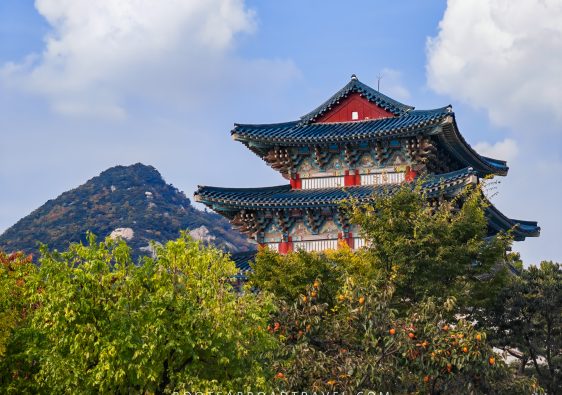
If you only have time for one palace in Seoul, make it Gyeongbokgung. It’s the biggest and most impressive, and even though it’s the most visited, the grounds are huge. After you pass the main gate, you’ll find plenty of quiet corners where you can slow down and take it all in.
Gyeongbokgung was originally built in 1395 as the main seat of the Joseon Dynasty. Over the centuries, it was destroyed multiple times, first during the Japanese invasions in the 16th century, and again during the Japanese colonial period. Reconstruction didn’t begin until the 1990s, and more restoration projects are still planned. Walking around today genuinely feels like stepping back in time.
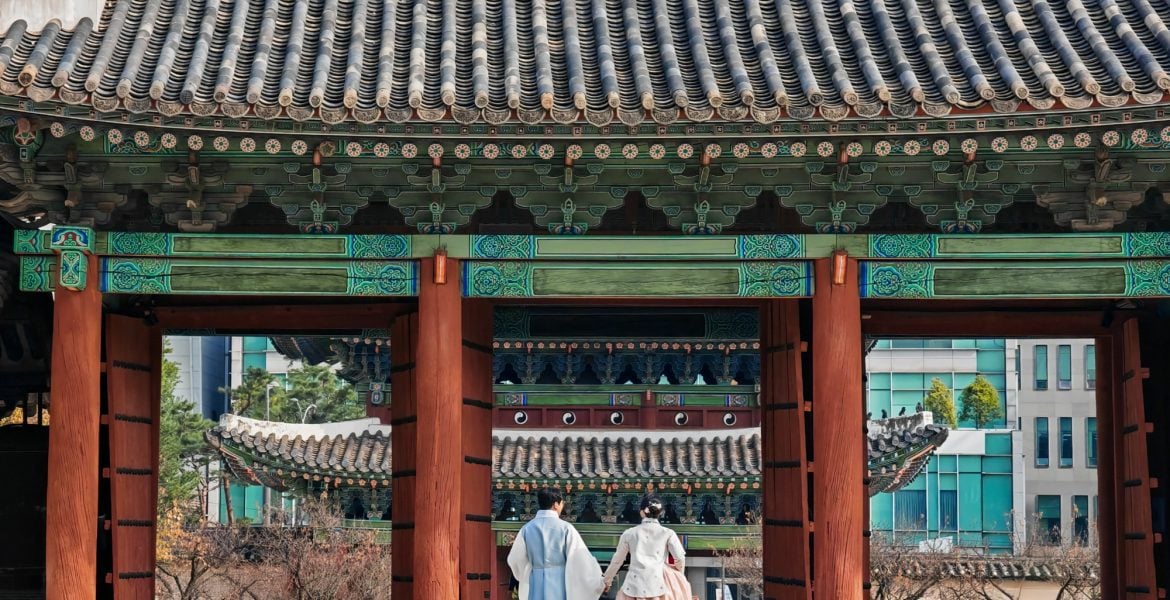
What makes the experience even more like stepping inside a historical K-drama set is the sea of visitors in traditional Korean hanbok. Koreans and tourists alike dress up to explore the grounds, and it adds so much atmosphere. If you want to join in (highly recommended), you can rent a hanbok at the many shops around the palace or book one online.
PRO TIP: If you are wearing a hanbok when visiting the palaces, you will get in for free.
Try to time your visit for the changing of the Royal Guard at 10 AM and 2 PM; the costumes and instruments are beautiful.
If you like culture and history, check out the museums inside the complex. We especially loved the Street of Memories next to the National Folk Museum, which holds a photogenic replica of old Korean shops like barbers, teahouses, and small groceries.
Practical Info
• Opening Hours: 9 AM – 6 PM (open every day, closed Tuesdays)
• Price: 3,000 KRW (~$2) / free with hanbok
• Nearest Subway: Gyeongbokgung
• Free tours in English: 11 AM, 1.30 PM, 3:30 PM
TRAVEL TIP | If you intend to visit multiple palaces, get yourself the Royal Palace Pass. For 14,000 KRW (~$10), which includes Gyeongbokgung, Changdeokgung, Changgyeonggung, Deoksugung, and the Jongmyo Shrine. You can purchase it at any palace ticket office.
Changdeokgung Palace & the Secret Garden
Changdeokgung is a UNESCO World Heritage Site and one of the prettiest palaces in Seoul. It was originally the “secondary palace” to Gyeongbokgung, but it ended up being the favored residence of many princes. It’s also the best-preserved of all five palaces, with elements that trace back to Korea’s Three Kingdoms era.
The highlight here is the Huwon Secret Garden; this area is full of ponds, pavilions, and shaded paths. You can only enter with a guide, and spots often sell out, so consider booking ahead.
Practical Info
• Opening Hours: 9 AM – 5 PM (closed Mondays)
• Price: 3,000 KRW (~$2)
• Nearest Subway: Anguk
Changgyeonggung
Changgyeonggung connects directly to Changdeokgung, so you might wander into it without even realizing. It’s smaller and more peaceful, with pretty gardens that look stunning in autumn with their colorful foliage. It also holds the oldest throne room in Korea, which is worth a stop.
Jongmyo Shrine
From Changgyeonggung, it’s easy to continue toward the Jongmyo Shrine, the oldest ancestral shrine of the Joseon Dynasty. It has been used since the 16th century, and inside you’ll find wooden tablets believed to hold the spirits of the royal family.
The grounds themselves aren’t particularly remarkable, but the history is fascinating. If possible, join the free English tour, held every two hours from 10:00 on weekdays. These tours are for foreigners only and cannot be reserved in advance.
Practical Info
• Opening Hours:
Feb–May & Sep–Oct: 9 AM – 6 PM
Jun–Aug: 9 AM – 6.30 PM
Nov–Jan: 9 AM – 5.30 PM
• Price: 1,000 KRW
• Nearest Subway: Jongno 3-ga
For updated information, check the official website.
2. Wander Through Bukchon Hanok Village
Bukchon Hanok Village is one of the most iconic things to do in Seoul, and also one of the most photographed spots in the entire city. It’s a hillside neighborhood full of narrow alleys and traditional wooden houses (hanok) that date back to the Joseon dynasty. Some are over 600 years old.
The village is packed with cozy tea houses, small museums, craft workshops, and beautiful cafes that range from traditional to hyper-Instagrammable. Some of the best local restaurants are here too, where you’ll often see lines of office workers wandering in for lunch.
Because the streets climb up the hill, there’s a spot where the rooftops open up toward the modern skyline. It’s gorgeous, especially in the early morning. If you want to take photos without the crowds, going early is key.
But keep in mind: Bukchon is a living neighborhood. People actually live here, so visitors are expected to be quiet and respectful. That’s why the village is only open to tourists 10 AM –5 PM, Monday to Saturday. Sundays and public holidays are for residents only.
You can even stay overnight in a hanok if you want the full experience, such as at the stunning Luxury Hanok Stay Onyou. Prices are usually higher because the homes are historic and limited in number.
Cost: Free
Nearest Subway: Anguk
Seoul Highlight Tour with Hanbok & Tea Ceremony
Discover the best of Seoul in one full day on this small-group tour. Explore highlights like Bukchon Hanok Village, Gyeongbokgung Palace, N Seoul Tower, Gwangjang Market, and Insadong, with an optional hanbok rental. A perfectly paced intro to Korean culture with great tips for first-time visitors.
3. Get Lost in the Cozy Alleys of Ikseon-dong
Ikseon-dong quickly became one of our favorite neighborhoods in Seoul. It dates back to the 1920s and feels like a maze of lantern-lit alleys and renovated hanok houses. We stayed right in the middle of it at Hostel Tommy, which ended up being the perfect base for exploring the area’s restaurants and cafés.
Ikseon-dong is the kind of place you stumble into by accident, then end up spending hours wandering around. The narrow lanes are packed with cute boutiques, little galleries, traditional houses, and creative shops.
The food scene here is amazing. You’ll find everything from traditional Korean dishes served in hanok restaurants to modern fusion spots, bakeries selling the famous Korean salt bread, stylish cafés, and cozy bars. We were surprised by how many locals hang out here, especially younger people grabbing Korean BBQ or fried chicken and beer (chimaek) after work. The vibe is great in the evenings.
Ikseon-dong feels traditional and trendy at the same time, and it’s easily one of the most atmospheric things to do in Seoul if you love exploring local neighborhoods.
4. Explore Insadong’s Art Studios & Craft Shops
Insadong is another neighborhood we loved, and it sits just a short walk from Ikseon-dong. It’s one of the best places to experience South Korean culture and is one of the top things to do in Seoul for art lovers.
The area is filled with galleries, antique shops, craft stores, and traditional tea houses. At the same time, it has plenty of colorful souvenir shops and fun spots for Korean snacks. Wander down the main street, but don’t miss the tiny side alleys where you’ll find the most charming tea rooms and restaurants.
If you enjoy art, check out the Kyung-In Museum of Fine Arts. It’s a lovely place to see both classic and modern works. Afterwards, take a break at Dawon Tea Room, an oasis where tradition meets modern Seoul.
TRAVEL TIP | Since you’re in the area, consider stopping by Museum Kimchikan. You’ll learn all about kimchi-making traditions, taste a few samples, and if you’re interested, even join a workshop where you make your own batch.
Jogyesa Temple (just around the corner)
Right next to Insadong is the peaceful Jogyesa Temple, tucked between high-rise buildings. It dates back to the 14th century but was reconstructed in the early 1900s after a fire. This is the head temple of the Jogye Order of Korean Buddhism, and throughout the year, the Dharma Hall hosts ceremonies and celebrations. During Buddha’s birthday, the temple lights up with a beautiful lantern festival.
Cost: Free
Nearest Subway: Anguk
5. Hike to N Seoul Tower from Namsan Baekbeom Square
If you love Korean dramas, you’ll probably recognize this spot right away. Even if you don’t, Namsan Baekbeom Square is a beautiful and peaceful place to wander. It’s a quiet corner of the city with locals out for strolls, stunning views, and easy access to several hiking trails.
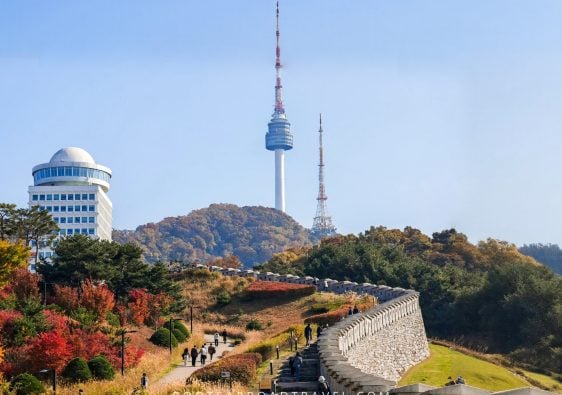
From here, you can follow the path up Namsan Mountain toward the famous N Seoul Tower. You’ll already spot the tower from many places in Seoul, but seeing it framed by the old stone fortress walls and autumn colors was one of our favorite moments in the city. The views along the way are incredible.
If you want to hike all the way up, it takes about 40 minutes from the square via the northern trail. It’s basically a wooden staircase all the way to the top. If you prefer an easier ride, there’s also a cable car. A round-trip ticket costs around 15,000 won ($10).
At the top, you’ll find cafés, small shops, and more panoramic viewpoints. You can even head up to the very top of the tower itself. The elevator takes you another 138 meters up to the N Seoul Tower Observatory for 26,000 won ($15). The view is impressive in every direction. Online, you can book combo tickets for the cable car & entrance to the N Seoul Tower Observatory.
6. Shop, Snack & Explore the Buzzing Streets of Myeongdong
Myeongdong is Seoul’s shopping playground. If you love skincare, makeup, fashion, or just browsing, this is where you’ll want to be. The main walking street is packed with stores like Olive Young, Nature Republic, Holika Holika, and more Korean beauty brands than you ever knew existed.
Come during the day for shopping, but make sure to return at night. Once the neon lights switch on, the whole area feels completely different. After 3 PM, a night market pops up with tons of street food, where you can find all kinds of snacks such as lobster tails, fish-shaped cakes with sweet fillings, dalgona, tanghulu, you name it.
And if you want a fun little souvenir, you’ll see sock stalls everywhere selling the cutest (and funniest) sock designs with anime characters, noodle brands, Hello Kitty… everything. They’re about 1,500 won ($1) and honestly, such a fun gift.
TRAVEL TIP | On your way to Myeongdong, walk by Cheonggyecheon Stream. It’s a peaceful little escape running right through the city. This whole area used to be rundown but was beautifully restored, and now it’s a lovely spot for a walk or even a morning jog.
7. Taste the Best Korean Food in Seoul
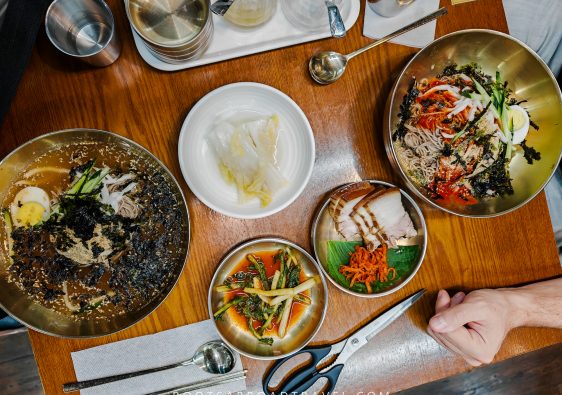
Trying Korean food was one of the best parts of our Seoul trip. We didn’t know much about it beforehand, but it quickly became one of our favorite cuisines. From street food tents to cozy noodle spots and BBQ restaurants, you’ll eat incredibly well in this city.
Here are a few dishes and snacks you shouldn’t miss:
- Tteokbokki: Chewy rice cakes in a spicy sauce. Super popular street food and especially good on cool evenings.
- Kimbap: Seaweed rice rolls stuffed with veggies and meat or fish. Great for a quick snack on the go.
- Chimaek: Korean fried chicken paired with beer. Ultra crispy and dangerously addictive.
- Hotteok: Sweet pancakes filled with brown sugar or honey.
- Korean BBQ: A must-try. Grill pork belly or brisket right at your table. It’s such a fun experience.
- Bibimbap: A classic rice bowl topped with veggies, meat, and sauce. Simple but so satisfying.
- Mandu: Korean dumplings, you can have them boiled, steamed, or fried. Easy, tasty, comforting.
- Samgyetang: A whole young chicken stuffed with rice and cooked in a mild ginseng broth. Warm, nourishing, and one of our favorites.
8. Explore the Trendy Streets of Gangnam
Gangnam sits south of the Han River and instantly feels different from the rest of Seoul. It’s sleek, modern, and full of energy. Think upscale shops, trendy cafés, and lots of K-pop influence.
Garosu-gil is great for shopping and people-watching, and K-Star Road is where you’ll find the colorful K-pop “GangnamDols.” Each bear represents a different group, including the famous BTS one.
Right outside the COEX Shopping Mall, you’ll also find the bronze Gangnam Style sculpture. People really do recreate the dance here, and it’s hilarious to watch.
COEX shopping mall itself is worth a visit too. The mall is huge, but the real highlight is the Starfield Library with its massive 13-meter bookshelves. You’ve probably seen it on Instagram already. Even though most books are in Korean (and many are just for show), it’s still a cool place to take a break or grab a coffee.
Bongeunsa Temple
If you’re already exploring Gangnam or visiting COEX Mall, it’s worth crossing the street to Bongeunsa Temple, a 1,400-year-old Buddhist temple complex. You wouldn’t expect a place this calm in the middle of one of the busiest districts in Seoul. You can wander around the old wooden halls, originally commissioned by the monk Yeon-hoe, and take in the views of Seoul’s modern skyline rising right behind them. Don’t miss the huge 100-foot statue of Maitreya, the Future Buddha. It’s tucked a little higher up on the hillside, so you’ll need to walk deeper into the grounds to find it, but it’s worth the small climb.
9. Try Local Street Food at Gwangjang Market
Gwangjang Market is one of the best places to dive into Seoul’s street food scene. It’s one of the oldest and largest traditional markets in South Korea, packed with around 5,000 stalls selling everything from street food snacks, to fresh produce & fish to handmade hanboks. It’s busy, chaotic, and so much fun to explore the labyrinth of stalls and just watch it all.
If you are feeling hungry, you can try all the classics here: kimbap, tteokbokki, mung bean pancakes, and kimchi mandu, all cooked right in front of you. The atmosphere feels very authentic and a little nostalgic, especially when you squeeze into a counter seat and watch the vendors work.
If the market looks familiar, it might be because Gwangjang was featured in Netflix’s Street Food: Asia. The stalls that appeared on the show are easy to spot, just look for the Netflix signs or the very long queues. They’re great, but they’re also more expensive than anywhere else in the city. Some dishes are almost triple the price compared to other neighborhoods. Still, if you love food, Gwangjang Market is one of the most memorable things to do in Seoul.
10. Experience Seoul’s Youth Culture in Hongdae
Hongdae is Seoul’s youthful, creative side, it’s loud, colorful, and full of energy. It’s one of the most popular areas in the city for nightlife, shopping, and street performances, and there’s always something happening here.
By day, you’ll find trendy clothing shops, cafés, and random pop-up stalls. By night, the streets fill with performers, music, students, and a lively crowd that gives Hongdae its signature vibe. If you want to understand modern youth culture in Seoul, this is the place.
For a quieter moment, walk over to Gyeongui Line Forest Park, a former railway track turned into a relaxing green walkway. There are cafés, small shops, and plenty of spots to sit and unwind before heading back into the buzz.
Hongdae is fun at any time of day, but at night, the atmosphere really comes alive, making it one of the best things to do in Seoul if you love a good night out.
11. Take in the City Views from Lotte World Tower
For some of the best panoramic views in Seoul, head up Lotte World Tower. At 555 meters tall, it’s not only the tallest building in South Korea, but also the sixth tallest in the world. It opened in 2017 and still feels impressively modern.
The observation deck, called Seoul Sky, stretches across multiple floors from level 117 to 123. At the top, you’ll find cafés, lounges, and even a glass-floor walkway, which is perfect if you want a little adrenaline with your view.
Sunset is especially beautiful here. The entire skyline and Han River glow in soft orange light, making it one of the most photogenic viewpoints in the city. Most people take their photos at the glass wall inside, but don’t miss the outdoor terrace. It’s usually less crowded and just as spectacular.
If you’re building your Seoul itinerary and love city views, Lotte World Tower definitely deserves a spot on your best things to do in Seoul list.
12. Grab a Craft Beer in Seoul’s Coolest Neighborhoods
Koreans love to drink and they drink a lot. No surprise, Seoul is packed with great craft beer bars, and grabbing a pint is one of the best things to do in Seoul at night. It’s also a nice way to reward yourself after a full day of sightseeing or shopping.
We ended up at a couple of really fun spots right in Ikseon-dong, where we stayed at Hostel Tommy, like Hanghout and Art Monster. Both serve great beer and the classic combo of chimchaek (beer and fried chicken). Highly recommended.
If you want to explore further, two big areas stand out: Euljiro and Itaewon.
Euljiro is still pretty unknown to foreign tourists, but locals love it. It’s only a few minutes from Myeongdong and has become one of the hippest areas in Seoul. Think dive bars, speakeasy-style hangouts, and tons of good food tucked away in old alleyways. It’s a little rough around the edges, but that’s part of the charm. Every corner has a hidden bar or a new restaurant popping up. We can highly recommend Daily Fix if you are craving a burger!
Itaewon, on the other hand, is known as the “foreigner district.” You’ll find international restaurants, indie shops, bookstores, and plenty of hair salons, all partly because of the nearby U.S. military base. Expect American-style bars and burger joints everywhere. We had amazing Texan BBQ at Smoke Town!
The nightlife in Itaewon is some of the best in Seoul, with casual beer bars, dance clubs, and several LGBTQ+ friendly pubs. Lots of travelers stay here, and if bar hopping is on your bucket list, it’s a great area to base yourself. A pub crawl can also be a fun way to meet new people.
13. Step Back in Time at Unhyeongung Palace
Just a short walk from the main palaces, you’ll find Unhyeongung Palace, a smaller and often overlooked royal residence. It offers a really nice glimpse into the late Joseon Dynasty, but without the big crowds.
We randomly stumbled upon it early one morning on our way to Bukchon Village. With the crisp autumn air and barely anyone around, the place felt almost magical. Compared to the larger palaces, Unhyeongung feels quieter and more intimate, and it’s a great cultural stop if you’re spending time in Ikseon-dong.
The palace dates back to the 1860s and was originally the home of Yi Ha-eung and his family, before becoming the residence of King Gojong. It went through a long period of neglect and was even taken over by the Japanese administration in 1912.
Since the 1990s, significant restoration work has been undertaken to revive it. Today, it’s a designated Historic Site of Seoul, and you can often catch traditional Korean music performances here.
14. Learn About the Korean War at the War Memorial of Korea
Before visiting South Korea, we watched a documentary about the Korean War, as it is something barely covered in European schools. Often called the “forgotten war” in the West, it was essentially a clash of ideologies between the USA, China, and the Soviet Union. The war lasted from 1950 to 1953, ending in an armistice agreement. South Korea didn’t actually sign it, and because no formal peace treaty was ever made, the two Koreas are technically still at war today.
The War Memorial of Korea is a fascinating stop for those seeking a deeper understanding of this history. You’ll see military equipment, the main memorial monument, and a huge collection of artifacts. The museum holds around 33,000 pieces, with one-third on display across indoor and outdoor halls.
It’s genuinely insightful and a must-see for anyone wanting to better understand Korean history and culture.
Opening hours: Daily 9:30 AM – 6 PM (closed Mondays)
Price: Free
Nearest subway: Samgakji
15. Dive Into History at the National Museum of Korea
Seoul has no shortage of impressive museums, but if you love history or art, the National Museum of Korea is a must.
We really wanted to learn more about Korean history, and this museum takes you on a full journey, from the country’s earliest eras all the way to the end of the Joseon Dynasty in 1897. It houses some of the most important artifacts in the country.
You’ll also find entire sections dedicated to Buddhism with some truly beautiful statues. And on top of that, there are exhibitions from other civilizations like Greece, the Roman Empire, Egypt, and several Asian cultures. There’s a lot to see, and we easily spent half a day here (and still had to rush the last few halls).
The main exhibits are free, but special exhibitions require a ticket.
Opening hours:
– 10 AM – 6 PM daily
– Wednesdays & Saturdays: open until 9 PM
– Sundays: open until 7 PM
Price: Free (special exhibits not included)
Nearest Subway: Ichon
16. Sing Your Heart Out at a Korean Noraebang
If you want a classic Korean experience, go for a night of karaoke at a Noraebang. And don’t worry, you don’t have to sing on a stage in front of strangers. A Noraebang is a private room where you and your friends can sing, drink, snack, and just have fun. Some locals even rent the rooms alone to practice.
You’ll find the traditional Noraebang setups, but also tiny coin Noraebangs, where two people can squeeze in, pay per song, and belt out a few hits on the go. It’s chaotic, funny, and very Seoul.
17. Take a day trip with a DMZ tour
If you have an extra day in your Seoul itinerary, we highly recommend booking a DMZ tour (we booked this one!). It’s one of the most interesting and eye-opening day trips you can do.
The DMZ is the 235-kilometer demilitarized zone separating North and South Korea. You can’t visit it on your own; every visitor must join an organized tour due to strict security and time registration. Tours often sell out, so it’s smart to book ahead.
On our tour, we started with the famous Gamaksan suspension bridge, then visited Imjingak Pyeonghwa-Nuri Park, where you can see the “Bridge to Freedom” and even buy North Korean banknotes as souvenirs. From the Dorasan Observatory, you can look directly into North Korea using telescopes and high-tech cameras. You’ll see guards on patrol, farmers working, and daily life happening just across the border. (You are not allowed to take any photos here).
You also get to walk down into the 3rd Infiltration Tunnel, dug by North Korea as a potential invasion route (even though they still deny it). This was really quite the experience, something we won’t forget soon.
It’s a sobering but incredibly fascinating experience, and it teaches you a lot about the political reality between the two Koreas.
Seoul Travel Resources
TRANSPORTATION | To book bus, minivan, and train rides online, we recommend using the website Trip.com.
ACCOMMODATION | Finding affordable places to stay in Seoul is a breeze with Booking.com & Agoda. It’s the ideal platform to discover budget-friendly hostels and hotels.
FLIGHTS | Discover the best flight deals to Seoul on Skyscanner. Benefit from their feature, highlighting the cheapest days to fly and the flexibility to search by month or region.
TRAVEL INSURANCE | When it comes to travel insurance, consider Heymondo. It’s our top recommendation for comprehensive and trustworthy coverage. Get 5% OFF through our link.
STAY CONNECTED | Secure reliable internet access for your Seoul trip with Airalo. Simply install it on your eSIM-compatible smartphone before your journey. Use promo code NEWTOAIRALO15 for 15% off any eSIM (for new Airalo users only). Use AIRALOESIM10 for 10% off as an existing user.
TOURS & ATTRACTIONS | For the best and most affordable tours, day trip excursions and cooking classes in Seoul, check out GetYourGuide or Viator.
VISA ORGANIZATION | Before your trip, ensure you check the visa requirements for your passport nationality. Explore details on travel documents at iVisa.com.
ONLINE PRIVACY | Always safeguard your online activity and digital privacy when using public Wi-Fi abroad by using a VPN. We’ve trusted ExpressVPN for years! Plus, a VPN lets you stream Netflix shows from any country. Get 3 months FREE when getting a 12-month plan with our link.
Final thoughts on seoul
No time to read now? Pin it to Pinterest for later!