Planning your first trip to Vietnam? Excellent choice! Vietnam is a fantastic country with a mix of vibrant cities, beautiful countryside, rich history, and stunning coastlines. Whether you’re into bustling urban scenes or tranquil rice terraces, Vietnam has something for everyone. But, let’s be real, planning a trip to Vietnam can be a bit tricky. From its unique shape on the map to avoiding travel scams, there’s a lot to consider. That’s where this Vietnam Travel Tips guide comes in handy.
Whether you’re a newbie or looking for some fresh insights, we’ve put together a comprehensive guide to make your Vietnam adventure smooth sailing. Discover must-visit destinations, get help crafting your itinerary, and find practical advice on when to visit, visa requirements, travel costs, and other essential preparations. Once you step onto Vietnamese soil, our guide continues to assist you with valuable tips on getting a local SIM card, navigating transportation, handling finances, and becoming a bargaining pro. Get ready for an amazing journey with these essential Vietnam travel tips!
* Disclosure: This Vietnam Travel Tips post contains affiliate links. We will receive a small commission if you book through our links. This is at no extra cost to you. We only recommend products we like and trust ourselves.

Vietnam Quick Travel Tips & Facts
| Language Vietnamese (official), English is widely used in the tourism sector | Time Zone Indochina Time (ICT), UTC+7 |
| Currency Dong (VND), 1 USD = ~25,000 dong | Visa Most travelers need visas; check requirements on ivisa.com |
| Plugs and Voltage Types A, C, and F plugs; 220V, 50Hz. Use a universal adapter with surge protection | Safety Generally safe; beware of petty theft and parking scams |
| Drinking Water Drink bottled or filtered water | Bargaining Common practice, especially in markets and with tuk-tuks |
| Credit cards & ATMs Cash is king! ATMs are widely available, check TP Bank & VP Bank for no fees | Daily Budget $25-50 USD per person per day (for a mid-range budget) |
| When to go Late February to April (spring shoulder season) for cooler and overall dry weather | How long to go 1 week for one region, 2 weeks for highlights, 3-4 weeks for a good overview |
| Getting there Fly into Hanoi or Saigon; buses are available from neighboring countries | Stay Connected Get a SIM card upon arrival at the airport or check out Airalo e-SIMs |
Planning your Vietnam Route
Starting off these Vietnam travel tips, it’s crucial to understand how big Vietnam is. Traveling from one place to another might take longer than you think. Just to give you an idea, the train ride from Ho Chi Minh City to Hanoi is around 35 hours!
When planning your trip, keep these long distances in mind. Night buses and overnight trains are popular for covering more ground efficiently, but we’ll talk more about that later.
Vietnam can be split into three main parts: North, Central, and South. If you’re wondering how much time to spend in Vietnam, my suggestion is about one week for each region.
Even though Vietnam is sizable, some people try to see the whole country in one go. To do that properly, we’d recommend at least 3 weeks, but ideally 4 weeks.
To help you visualize, we’ve marked out some common travel destinations on the map below. It’s a handy reference for your Vietnam planning and travel tips.
The Best Places to Travel for Your First Time in Vietnam
Embarking on your first journey through Vietnam is like stepping into a vivid painting, where the landscapes shift from towering northern mountains to sun-soaked southern beaches. One of the most valuable Vietnam travel tips: Immerse yourself in the energy of at least one bustling city to truly feel the pulse of daily life in Vietnam.
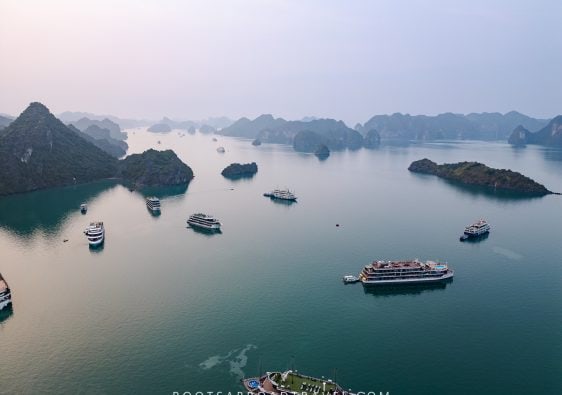
Crafting a well-rounded experience means delving into destinations like Hanoi, the capital where history echoes through the charming Old Quarter, and Halong Bay, a breathtaking collection of limestone islands best explored on a sailing journey.
Move north to Sapa for captivating rice terraces and mountain treks, or venture to Ha Giang Province for its dramatic mountain scenery and encounters with traditional hill tribes, promising an authentic adventure.
In Ninh Binh, be prepared for landscapes that seem almost otherworldly, while Phong Nha invites you to explore the surreal underground world of the world’s largest caves. Further south, Hue welcomes you with pagodas and temples, offering a serene cultural embrace, while Hoi An, a charismatic town, captivates with its undeniable charm through its colonial architecture.
Nestled in the Central Highlands, Dalat offers a cooler climate. If you seek coastal experiences, consider lively resorts like Nha Trang or Mui Ne, or opt for the quieter retreat of Qui Nhon. Down south, the Mekong Delta beckons with floating markets, providing a unique river experience. Finally, dive into the dynamic urban landscape of Ho Chi Minh City, where modernity and tradition coalesce seamlessly.
Together, these destinations create an immersive introduction to Vietnam’s beauty, culture, and diversity, ensuring your first visit is a memorable exploration of both the past and the vibrant present.
Bucket List Experiences
✔ Explore the Old Quarter in Hanoi: Wander through the historic charm of Hanoi’s Old Quarter and dive into Vietnam’s vibrant coffee culture at one of the adorable cafés.
✔ Join a Food Tour: Let an expert local guide your taste buds on a gastronomic journey, sampling the best dishes in every city.
✔ Light Lanterns in Hoi An: Experience the magical glow of lanterns illuminating the entire town of Hoi An at night.
✔ Get a Tailored Suit in Hoi An: Indulge in the tradition of hand-made suits, a popular choice among tourists in Hoi An.
✔ Explore Imperial History in Hue: Uncover Vietnam’s imperial history in Hue, where glimpses of the country’s past come to life.
✔ Indulge in Street Food: Immerse yourself in Vietnam’s rich culinary scene, trying local delicacies like Banh Mi and pho for as little as $1.
✔ Drive a Motorbike along the Hai Van Pass: Feel the thrill of the open road as you navigate the scenic Hai Van Pass on a motorbike.
✔ Trek the Rice Terraces and Stay with Hill Tribes: Escape the hustle and bustle by trekking through Sapa’s breathtaking landscapes, home to Vietnam’s highest peak, Fansipan. Experience the local culture by staying with hill tribes.
✔ Cruise through the captivating Halong Bay: Admire the majestic limestone rocks and take a refreshing leap into the tranquil waters.
✔ Eat Your Heart Out in Hue: Discover the delights of Hue’s imperial cuisine, from the renowned Bun Bo Hue beef noodle soup to an array of other mouthwatering dishes.
✔ Cross the Streets in Ho Chi Minh City: Immerse yourself in the vibrant city vibes of Ho Chi Minh City by navigating its bustling streets.
✔ Bike around Ninh Binh’s Countryside: Pedal through the lush countryside of Ninh Binh, exploring its picturesque rice terraces and scenic landscapes.
How Long Do You Need in Vietnam?
With so much to see, you could easily spend a few months in Vietnam and still discover new places. We’re big fans of taking it slow when traveling, especially on your first visit. Give big cities like Hanoi and Saigon at least three full days each to soak in the experience.
Getting to know Vietnam, its unique culture, traditions, and delicious food, takes time, and each region has its distinct vibe. If you try to rush through everything, you might miss out on the full experience.
Don’t be fooled by Vietnam looking small on the map, it still takes a while to travel around, especially if you’re relying on trains and buses. Adding a few domestic flights can be a smart move, saving you time and letting you explore even more.
However, as not everyone has so many vacation days in a year, for a well-balanced exploration, two weeks in Vietnam is an ideal timeframe. It provides a chance to witness the country’s highlights while traversing from North to South or vice versa. If time is further limited to just one week, consider immersing yourself in a single region, avoiding the rush and appreciating the richness without covering extensive distances.
Optimal for a more immersive experience, 3 or 4 weeks offer the luxury to deeply absorb Vietnam’s friendly and vibrant culture. This leisurely pace allows for a profound connection with the country.
For those with a generous six weeks, the opportunity to traverse the main regions and sights of Vietnam arises, with extra time to indulge in a bit of beach relaxation.
Vietnam Itinerary Suggestions
Here are some Vietnam itinerary suggestions based on your available time:
One Week in Vietnam Itinerary:
Focus on one region to minimize travel time.
North: Hanoi – Ha Long Bay – Sa Pa or Ninh Binh
Central: Hue – Hai Van Pass – Hoi An – Da Nang
South: Ho Chi Minh City – Mekong Delta – Phu Quoc or Mui Ne
Two Weeks in Vietnam Itinerary:
Option 1: Cover main highlights from north to south (or vice versa):
Hanoi – Ha Long Bay – Ninh Binh OR Hue – Hoi An – Ho Chi Minh City
Option 2: Focus only on the North or South in combination with central destinations
North & Central: Hanoi – Sa Pa – Ha Long Bay – Ninh Binh – Hue – Da Nang – Hoi An.
Central & South: Hue – Da Nang – Hoi An – Nha Trang – Da Lat – Ho Chi Minh City – Mekong Delta.
Three Weeks in Vietnam Itinerary:
Dive deeper into popular spots with more time for exploration.
- Days 1 – 3: Hanoi
- Days 4 – 6: Sapa
- Days 7 – 9: Ha Long Bay
- Days 10 – 12: Ninh Binh
- Days 13 – 14: Hue
- Day 15: Hai Van Pass Day Trip
- Days 16 – 18: Hoi An
- Days 19-21: Ho Chi Minh
Check our comprehensive 3-week Vietnam itinerary guide for detailed suggestions and alternatives. If you follow our 3-week Vietnam itinerary, all that is left to do is to book your accommodations and transportation for the duration of the trip. We suggest a variety of accommodation options for different budgets, so you can choose whichever one suits you the most. 12Go Asia is the best platform to book your transportation in advance.
Where to start your Vietnam trip: North or South?
If you’re aiming to capture all the highlights of Vietnam, your best entry points are Hanoi in the North and Ho Chi Minh in the South. Given the country’s considerable length, starting in the center might not be ideal unless you intend to focus on one half exclusively.
Contemplating whether to kick off your Vietnam journey by flying into Ho Chi Minh and then heading north, or commencing the adventure in Hanoi and traveling south? There’s no definitive right or wrong here, as both directions are entirely feasible. While our suggested 3-week itinerary flows from north (Hanoi) to south (Ho Chi Minh), you have the flexibility to reverse it. Two considerations can guide your decision-making process.
Firstly, it’s wise to check the weather beforehand (see below), steering clear of chilly winter months in the northern cities or scorching summer temperatures in central and southern Vietnam. Secondly, assess which city offers more favorable flight options for your journey. Both Hanoi and Ho Chi Minh boast international airports connecting to the world and domestic flights, making either a suitable starting point for your Vietnam adventure.
Vietnam Planning Travel Tips: Know before you go
First-Time Vietnam Checklist
- Best time to travel
- Check Visa Requirements
- Book your flights
- Vaccinations
- Travel Insurance
- What to pack for Vietnam
- Determine your travel budget
- Pre-book internal flights and trains
- Pre-book popular tours, accommodations & Halong Bay trip
- Credit Card
- Download Useful Apps
Best time to travel to Vietnam
Once you’ve decided on the duration of your Vietnam trip, it’s crucial to determine the best time to visit, taking into account the specific regions you plan to explore. Vietnam, being a year-round destination, presents a climate that varies significantly between the northern and southern parts of the country. This geographical diversity can catch travelers off guard, assuming a uniform weather experience throughout.
For an all-encompassing exploration, March and April stand out as the prime months. During this period, lighter rainfall and pleasant temperatures prevail, making it an ideal time to catch all the country’s highlights. The north isn’t too cold, and the south and coastal areas aren’t excessively hot. However, it’s crucial to note the rainy seasons in both the North and South, spanning from May to October, with the additional need to avoid the typhoon season from September to November.
The weather in Vietnam can be unpredictable, ranging from freezing temperatures and heavy downpours to intense heat and evening storms. To choose the right season, consider your travel destinations and be flexible with your itinerary based on weather conditions. Avoid visiting during public holidays like TET to mitigate higher prices, closed shops, and reduced transport services.
If you opt for a visit to the northern regions in March, pack a light jacket, as it might not be tropically warm. Conversely, if your visit falls in December-January, be prepared for surprisingly cold temperatures.
Best times to visit different parts of Vietnam
Best Time to visit the North: December – April
Cooler weather prevails from November to March, with the least rainfall. However, this period may bring foggy and cold conditions in mountainous regions. December-January is the coldest period, with temperatures dropping to 10°C. If you want to experience Sapa’s rice paddies, August to November offers warmer temperatures with clearer views. Halong Bay enjoys clearer skies from April to June and September/October. Monsoon season is May-October.
Best Time to visit Central Vietnam: February – May
Avoid the wet typhoon season from September to November. Places like Hoi An can be flooded around this time of the year. From January to August it’s hot and dry, with temperatures reaching the mid-30°C.
Best Time to visit the South: November – March
Steer clear of the rainy season from May to October, with peak rainfall in June, July, and August. Dry and hot conditions generally prevail from November to April.
Vietnam Travel Tips | Check Visa Requirements
The next travel tip to ensure a smooth start to your Vietnam travel is to check the visa requirements after deciding on your itinerary and timeframe.
Before embarking on any international journey, it’s essential to confirm visa requirements. iVisa, a user-friendly website, streamlines this process. Simply input your origin and destination to quickly determine if a visa is necessary. For those requiring a visa, iVisa allows straightforward online applications.
Option 1: e-Visa
Good news, as of August 2023, Vietnam issues e-visas with a 90-day validity, applicable to travelers of any nationality. To secure an e-visa:
- Apply directly online on the Vietnamese government website (you can switch to English in the top menu).
- Enjoy a stay of up to 90 days.
- Multiple entries are allowed via any airport or overland border.
The government fees are $25 for a single entry and $50 for multiple entries, which is advisable to get if you plan on doing any side trips to neighboring countries. Submit your online application for approval within a few working days (we suggest applying at least a week in advance of your travel date). Once approved, present your e-visa upon arrival in Vietnam.
Option 2: Visa Exemption
Citizens from 29 countries enjoy visa exemption, allowing stays of 14 to 45 days, depending on nationality. Confirm if your country is on the exemption list and review the associated conditions. This hassle-free option requires no prior approval; you can arrive at the border. However, be prepared to show proof of onward travel, such as your return flight ticket out of Vietnam.
How to get to Vietnam?
Getting to Vietnam is a breeze, given its popularity and numerous affordable options from around the globe. Several airlines operate flights to Vietnam, making it essential to compare prices and flight schedules to snag the best deal. Skyscanner is a great resource for finding budget-friendly flights tailored to your Vietnam itinerary.
For international arrivals, three major airports serve as gateways:
- Tan Son Nhat International Airport (SGN) in Ho Chi Minh City, Vietnam’s largest city.
- Noi Bai International Airport (HAN) in Hanoi, the capital city.
- Da Nang International Airport (DAD) in Da Nang, a central Vietnam hotspot.
Many travelers incorporate Vietnam into broader Southeast Asian adventures. For a cost-effective approach, consider flying into nearby hubs like Singapore, Kuala Lumpur, or Bangkok and then either continuing by land or opting for low-cost flights with airlines like AirAsia.
Traveling by land is straightforward, with accessible border crossings and the once-tricky Vietnamese visa process now simplified. Long-distance bus and train services connect Bangkok to Ho Chi Minh City, while local buses seamlessly transport you from Cambodia across the border into Vietnam.
Travel Tips | Use the box below to easily search for the most affordable flights to Vietnam. With Skyscanner, simply enter “from your city” and “to Vietnam” to discover which city offers the lowest airfare. Additionally, you can explore the calendar feature to find the cheapest dates for flying from your city to Vietnam.
Do I need any vaccinations for Vietnam?
Before embarking on your Vietnam journey, consult your preferred healthcare professional regarding necessary vaccinations. According to the CDC, the following vaccinations are recommended for travel to Vietnam:
Highly Recommended:
- All routine vaccinations, including MMR (Measles Mumps Rubella), diphtheria, tetanus, and polio.
- Hepatitis A and Typhoid, as these can be contracted through contaminated food or water in Vietnam.
Check with your doctor for consideration:
- Hepatitis B, Japanese Encephalitis, Malaria, Rabies, and Yellow Fever.
Malaria risk in Vietnam is generally low, and most travelers won’t require antimalarials. However, if you plan extended stays in rural areas, especially outdoors, consult your local vaccination clinic for personalized advice.
For any medical concerns, it’s advisable to seek guidance from specialists. In this case, consult with your local travel vaccination clinic or personal doctor to ensure your specific situation is appropriately addressed.
Is Vietnam Safe?
Vietnam is a very safe country to travel through. Violent crime is practically non-existent, giving you a sense of security throughout your travels. However, like anywhere else, petty crime and pickpocketing can be a concern in cities, so here’s one of our crucial Vietnam travel tips: keep your valuables locked, avoid flaunting large sums of cash, and always be aware of your surroundings.
Now, a few things to keep on your radar: watch out when strolling with your phone on busy streets, day or night. We’ve heard and seen instances where motorbikes attempt to snatch phones right out of people’s hands. Another Vietnam travel tip (or all of Asia for that matter): never leave your belongings unattended on public transport. Sadly, people have had their money and bags disappear while catching some sleep or going to the toilet. We highly recommend using locks for an extra layer of security.
Moving on to the roads, traffic can be a bit wild, especially in bustling cities. Vietnam’s streets are filled with motorbikes and cars, and traffic laws aren’t always strictly followed. If you’re opting for the motorbike experience, buckle up and be cautious in the chaos. Always wear a helmet, ensure you’re covered with insurance, and carry an international driver’s license. When venturing into more remote areas, pay attention to warning signs, as some places might still have leftover landmines from the war.
Vietnam Travel Tips | Get Travel Insurance
While Vietnam is generally a safe destination, accidents can happen anywhere. Ensuring you’re prepared for unforeseen circumstances is a wise travel strategy. It’s highly recommended to secure travel insurance before your journey to cover accidents or losses that may occur during your trip.
A valuable travel tip is to ensure your insurance provides coverage for riding a motorbike, a popular mode of transportation in Vietnam. For comprehensive and reliable coverage, we recommend Heymondo.
Heymondo offers a user-friendly app for the management of your travel insurance policy and any requests you may have. Communication is made easy through the app and even via WhatsApp. Coverage includes Emergency Medical Assistance, encompassing medical expenses for accidental injury, sudden illness, and hospitalization costs.
In the unfortunate event of stolen or damaged luggage, a quick claim on the app with proof of loss or damage ensures a prompt resolution. Moreover, Heymondo extends coverage to replace missing or stolen Visas or passports.
Travel Disruption coverage takes care of basic expenses for meals and accommodation if your travel plans face delays beyond your control. Additionally, Heymondo provides Trip Cancellation Coverage, safeguarding your trip in case it’s canceled or cut short due to family hospitalization, among other benefits. There is much more and Heymondo also covers a few more things at an additional cost such as electronic equipment and adventure sports coverage.
💡 TRAVEL INSURANCE | Make sure to check out Heymondo for your upcoming Vietnam trip and enjoy 5% OFF through our link.
What To Pack For Vietnam?
If you’re embarking on a backpacking adventure across Vietnam, packing versatile clothing suited for varied weather is key.
In the northern regions during winter, warm gear is a must. Conversely, for the southern areas, opt for breathable lightweight fabrics like cotton or linen to combat the scorching heat and humidity. Locals often cover up in hot weather, so blending in is easy with a light scarf or long-sleeved throw-over for sun protection.
At religious and historical sites, conservative dress is mandatory. For women, a scarf is recommended, while men should opt for long, lightweight pants. Vietnam leans towards conservatism, so dressing modestly is a wise choice.
Essential clothing for your Vietnam expedition includes:
- Hiking Shoes (lightweight and low-cut): Brands like Salomon are recommended for extra support, excellent grip, and stability on diverse terrains. GORE-TEX membrane-equipped shoes provide waterproofing – a valuable feature during sudden rain showers or muddy encounters.
- Lightweight everyday shoes (we enjoy the ones from Adidas)
- Pair of leggings – Perfect for the colder areas when you go hiking, but I also use these as loungewear
- Long sleeve baselayer – as loungewear for overnight train rides and hiking in colder areas.
- Lightweight cotton scarves (in some fun colors) for covering up when visiting temples, often I also use them to protect myself from the sun when I am wearing a sleeveless top. We always carry one in our backpack as it comes in handy on numerous occasions, as well as a sarong or beach blanket!
- Fleece or hoodie – to be comfortable on train rides and definitely if you plan on visiting North Vietnam like Sapa
- Bikinis for Ha Long Bay and the beaches further south
Useful Gear for your Vietnam Adventures:
- Packing cubes for organized packing, no matter which backpack you choose for your travels, these will make packing and life in general so much easier!
- Day pack: having a quality daypack for your day-to-day adventures is essential. We recommend this light daypack from Deuter.
- Bring a Reusable water bottle or consider bringing a Life Straw or GRAYL for safe drinking water.
- A Microfiber Towel is convenient for going to the beach or going on a motorbike loop.
- Action Camera for capturing all your adventures, we have been enjoying the GoPro Hero 10 on our latest travels.
- Personal belongings safety can be ensured with luggage locks, along with anti-theft gear like those from Pacsafe bag—an anti-theft bag.
- Don’t forget to pack a universal adaptor to ensure you can charge all your electronic devices during your trip.
- A reliable power bank is highly recommended for on-the-go charging, particularly during long bus rides or full days of exploration when you may not have access to power outlets.
- Mosquito repellent is essential, especially during the wet season
- Sunscreen: maybe stating the obvious here, but you want to protect yourself as the Vietnamese sun is insanely hot. Bring your own sunscreen because a lot of the ones you’ll find there have whitening agents in them and the prices are outrageous. For water activities, be sure to pack reef-safe sunscreen to protect our oceans!
For tips on clothing and a more in-depth packing list check out our complete guide on what to pack for Vietnam.
Costs Of Travelling In Vietnam
In general, Vietnam is a budget-friendly destination, offering delicious street food at incredibly low prices and a range of well-priced accommodations across the country. Bus travel is particularly affordable, but if you opt for domestic flights, it might stretch your budget a bit (~$60 one-way flight).
For budget travelers staying in hostels, enjoying street food, and using local transport, a daily budget of $15-$25 per person is reasonable. Those seeking a bit more comfort can expect to spend $30-$60 per day, covering accommodation, three meals, occasional Vietnamese coffee, transport, and sightseeing.
As in many countries, your travel costs can rise significantly if you choose luxury hotels and upscale restaurants, or decrease if you indulge in street food and stay in hostels. Prices remain generally consistent in major cities like Hanoi and Ho Chi Minh, with slightly cheaper options available in the countryside.
Breakdown of typical costs in Vietnam:
Accommodation
Hostels start at approximately $5 per night, while budget hotels or guesthouses offer basic private rooms starting from around $15. In major cities, private rooms in well-decorated accommodations can range from $20 to $40.
Motorbike Rental
Renting a motorbike averages around 200,000 VND ($8) per day.
Food
Vietnamese cuisine is both cheap and delicious. For instance, a large bowl of pho costs around 50,000 VND (approximately $2), and a Banh Mi is available for as little as 30,000 VND (a little over $1). Sit-down restaurants offer affordable meals, typically costing no more than $5. Fancier dining options, catering to both local and Western tastes, may range from $8 to $12.
Activities
Vietnam offers a plethora of free activities, but for those requiring payment, here’s a snapshot. Halong Bay cruises start at around $50 for day trips, with overnight options ranging from $150 to $250. Guided trekking can cost between $40 and $170, depending on the duration. Entrance fees to museums, temples, and sites generally fall within the range of $1 to $10.
Accommodations in Vietnam
When planning your Vietnam trip, choosing the right accommodation is crucial for a good night’s rest and convenient access to attractions. Vietnam offers a wide range of affordable options, catering to backpackers, luxury travelers, and everyone in between. You can find private rooms starting at around $20 per night and luxury hotels for $150 or more (mainly in cities). Hostels, priced at $5 per night for dorm rooms, are great for meeting fellow travelers, especially in big cities and touristy areas.
For the best selection, use Booking.com, in our opinion, it has the best interface for finding hotels, guesthouses, or apartments. We always love to compare prices afterwards on Agoda. Budget travelers can explore Hostelworld for incredibly cheap dorms and rooms.
During our Vietnam trip, we enjoyed boutique hotels and homestays, appreciating the value and quality for the price. Every stay was a pleasant surprise, with well-located options in cities and serene settings in smaller towns, like Ninh Binh amid rice paddies and limestone mountains. For regional experiences, consider homestays, offering a glimpse into local life and culture, often priced at $15 or less per night for a private room.
For quick accommodation finds, check our recommendations for each stop on our 3-week Vietnam itinerary.
Vietnam Travel Tips | Apps you need to download upfront
Here are some essential apps you should download before your trip:
Grab & Gojeck – Easily book taxis or Xe Om (motorbike taxi) and enjoy a fast and safe ride with the nearest driver available.
12GO – Compare various forms of public transport to find the quickest or most affordable travel options.
XE Currency – Stay informed about currency exchange rates and conveniently calculate conversions when needed.
Express VPN – Protect your sensitive information and ensure online security while traveling in Vietnam and beyond.
Google Translate – Overcome language barriers with this app that helps you communicate, even if you have limited knowledge of Vietnamese.
Google Maps – Navigate easily through Vietnam, especially in remote areas where specific addresses may be unavailable.
Maps.Me – Download offline maps to never get lost, even without an internet connection.
Travel Tips for When You Arrive in Vietnam
Vietnam Travel Tips: Get a SIM card upon arrival
For useful Vietnam travel tips, consider getting a local prepaid SIM card upon arrival, ensuring a reliable connection for navigating cities like Hanoi or Saigon, using transportation apps, and staying connected across the country. We recommend Viettel for its fast and reliable coverage, and you can easily purchase a 1-month tourist SIM card for around $10, with the option to haggle for better prices if you’re with multiple people.
💡 VIETNAM TRAVEL TIPS | For immediate internet access upon landing, you can explore eSim options, and we suggest checking out Airalo, a global eSIM marketplace offering convenient connectivity without the need to switch out your physical SIM card. Use our promo code NEWTOAIRALO15 for 15% off any eSIM (for new Airalo users only). Use AIRALOESIM10 for 10% off as an existing user.
Money & ATM’s
The official currency in Vietnam is the Dong (VND), with an approximate exchange rate of around 25,000 VND to $1 as of now. For the latest exchange rates, you can check xe.com and consider downloading their app. It’s essential to carry cash as most places do not accept credit cards. Having smaller notes is advisable for convenient transactions with street food vendors and small shops, as cash remains widely accepted.
While ATMs are abundant, be aware that they often charge high fees for withdrawing money using a foreign card. When using an ATM, opt for those in well-lit areas during daylight, preferably attached to a bank for added security. This way, if any issues arise, you can easily resolve them by stepping into the bank.
💡 VIETNAM TRAVEL TIPS | Look out for ATMs from TP Bank & VP Bank as they don’t impose any fees.
Getting from the airport to the city center
Arriving at Hanoi International Airport? Opt for the most economical route to the city center by hopping on the Hanoi Airport Bus 86, conveniently located just outside the arrival terminal. Departing every 30 minutes from 6:20 AM to 11 PM (waiting until reasonably filled), the bus takes approximately 1 hour to reach its final stop, Hanoi Railway Station near the Old Quarter. The ticket costs 45,000 VND (less than 2 USD) and can be paid directly on the bus. If you’re running low on cash, visit an ATM inside the airport before boarding.
For those flying into Ho Chi Minh City (Saigon), take Airport Bus 109 to District 1. This direct service only takes 45 minutes to reach the center and costs €0.80 (VND 20,000). The bright yellow bus departs from Column 12 in the international terminal or Column 18 in the Domestic Terminal. Another option is Bus 152, a public bus with a similar route. Public bus tickets are cheaper at €0.40 (VND 10,000) but only operate until 6 pm, taking up to 60 minutes depending on traffic. The final stop is at a roundabout opposite Ben Thanh Market. Tickets can be purchased at the airport’s ticket booths or directly on board the bus, with payments on the bus accepted only in the local currency (VND).
Taking a bus from the airport to the city is the most budget-friendly option. Alternatively, though pricier, taxis are available. For the best rates, download the Grab app (Southeast Asia’s equivalent to Uber).
Language
Vietnamese is the official language of Vietnam, and mastering it can be quite a challenge. English is not widely spoken, with proficiency mostly found among those working in tourist-centric areas like the hotel and tourism industry, as well as the younger generation. To avoid misunderstandings or potential embarrassment, it’s wise not to overly complicate matters. Communication hurdles are quite common, something we experienced ourselves!
A valuable tool in such situations is downloading Google Translate. Additionally, acquiring a few basic Vietnamese phrases can be beneficial and showcase respect for the local culture. Even a small effort in learning some Vietnamese words or expressions goes a long way and is genuinely appreciated.
Here are a few phrases that proved helpful during our travels in Vietnam:
- Hello – Xin Chao
- How are you? – Ban Khoe Khong
- Thank you – Cam on
- Goodbye – Tạm biệt
- Sorry – Xin Loi
- Yes – Vâng
- No – Không
- How much is it? – Bao nhiêu tiền?
- It is too expensive – Mắc quá
- I don’t understand – Tôi không hiểu
Power outlets
Vietnam operates on an electricity supply of 220 Volts at 50Hz. The commonly used plug types are A (two flat vertical pins), C, and F (two round pins), which are compatible with most electrical outlets in the country. For plugs with 3 pins, a universal adaptor is necessary, as most outlets lack grounding holes.
If you find yourself in Vietnam without the right adaptor, worry not! You can easily purchase a world plug or travel adapter at various convenience stores, including Circle K and Family Mart.
Travel Tips for During Your Vietnam Trip
Vietnam Travel Tips: How To Get Around Vietnam?
Navigating Vietnam is typically straightforward, thanks to its excellent bus network and the Reunification Express railway stretching from Hanoi to Saigon, offering efficient coverage over vast distances. However, comfort levels may vary; local buses can be slow, and night buses often feature cramped bunk beds with limited leg space. Investing a bit more in a 1st class train ticket or a ‘VIP’ bus service can enhance your travel experience, especially if your budget allows.
Opting to travel overnight is a popular choice for backpackers in Vietnam, particularly given the considerable distances involved. Traveling at night can be advantageous, saving both time and money as you can skip booking accommodation for that night. However, it’s important to note that not all night travel experiences are equally comfortable.
For the best prices, opt to book through online platforms like 12GO, which offer a range of transport options, including buses, mini-vans, trains, and ferries. Another reliable platform for Vietnam is Baolau.com, with a similar process and pricing structure. Booking in advance, especially during high season, is advisable to secure your preferred seat on specific legs of your journey.
Flying in Vietnam
Exploring Vietnam through domestic air travel is a convenient choice, particularly for those with limited time. With affordable flight options, most journeys between regions take less than 2 hours, averaging around US$50 per person when booked in advance. Both Vietnam Airlines and VietjetAir provide connections between major cities and some regional destinations. To explore flight options, schedules, and fares, you can refer to Skyscanner.
Trains in Vietnam
Train travel stands out as the optimal way to explore Vietnam! The primary rail route follows the picturesque coastal path from Hanoi to HCMC, serviced by the Reunification Express. We personally experienced the comfort of the night train from Ninh Binh to Hue, which was an amazing experience to travel the long distance. Compared to buses, train travel in Vietnam is notably more relaxing, laid-back, and considered safer. Though pricier, even the lower-class options remain reasonably priced.
For popular routes like the night train with 1st class sleeper cabins, it’s advisable to book in advance, sometimes up to two weeks ahead. The 1st class (soft sleeper) carriages boast four comfortable and clean beds, while the 2nd class berths have six beds but are quite cramped, offering limited space to sit upright.
To secure your spot, use a booking platform like 12Go Asia. Upon booking, you’ll receive a PDF document featuring a QR code, along with your carriage and seat numbers. Simply display this on your phone to the attendant, and each carriage has its own dedicated staff member to assist you in finding your seat.
Buses in Vietnam
Buses serve as the primary mode of transportation throughout Vietnam, offering an economical and widely accessible travel option. The extensive network of routes spans across the entire road network, connecting cities and towns nationwide.
However, the quality of bus companies varies significantly. Our journey on VIP buses with 20 sleeper seats from Hanoi to Sapa was a luxurious and enjoyable experience. On the other hand, the Sleeper bus with 34 seats from Sapa to Halong Bay was a challenging ride, and we advise against it, though it’s often the only option for that route.
Many bus companies feature three rows of bunk beds stacked on two levels. The beds, enclosed in plastic casings, can be restrictive, especially for tall passengers. Typically lacking onboard toilets, these buses make regular restroom stops that may disrupt the journey. Unless you’re strictly adhering to a tight budget, consider keeping an eye out for upgraded ‘VIP’ buses for a more comfortable travel experience.
Boats in Vietnam
When considering a visit to the Ha Long Bay area, the most captivating way to explore this part of Vietnam is from the water. Ha Long Bay offers a variety of experiences, with prices ranging from 50 USD for a day trip to 250 USD for an overnight cruise. The duration and quality of your selected tour significantly influence the overall experience, and in the case of Ha Long Bay, you truly get what you pay for. Opting for a mid-range option with Dora Cruises, we found it worthwhile to invest a bit more for this unique and unforgettable journey, aiming for a tranquil cruise with fewer crowds. One of the key travel tips for embarking on a boat cruise in Vietnam is to book in advance, particularly if you have a specific cruise in mind, as these slots fill up rapidly.
Minivans in Vietnam
Another viable option to explore is the use of minivans or minibusses, provided your budget allows it. Serving as an excellent alternative to buses, this mode of transportation is a convenient and comfortable method and often comes at a comparable cost to regular travel buses. In our travels, we opted for a minibus when journeying from Halong Bay to Ninh Binh.
Motorbiking in Vietnam
One of the most favored ways to explore Vietnam is arguably by motorbike. This allows you to venture off the typical travel routes, bringing you closer to the authentic essence of the country. Many travelers acquire a second-hand motorbike in Hanoi or Ho Chi Minh to embark on a cross-country journey.
However, motorbike travel in Vietnam may not be suitable for everyone. If a full tour seems overwhelming, an alternative is to rent a motorbike or scooter for day-to-day adventures, especially in smaller towns like Ninh Binh or Hoi An, offering flexibility and a personalized pace. Scooters, the predominant mode of transportation in Vietnam, are readily available for rent across the country. You can rent a scooter through hostels or hotels in any accommodation in Vietnam. Prices typically go for around 200,000 VND per day (~$8). Exercise caution in the chaotic Vietnamese traffic, avoid major cities like Hanoi and Saigon, and drive within your comfort level.
For those seeking scenic routes, self-drive travelers often explore popular options such as the breathtaking Ha Giang loop in the north or the iconic Hai Van Pass in central Vietnam. The Hai Van Pass, situated along the coastal line between Hue and Hoi An, was one of our most unforgettable memories on our Vietnam journey. We opted for a tour with the easy riders, allowing us to enjoy the experience without driving ourselves, as we shared the backseat with an experienced driver.
Taxis/grab for getting around town
When it comes to taxis in Vietnam, there’s a need to be cautious about scams. Local taxis are generally affordable but be wary of the meter. Not all drivers play fair, so avoid taxis that claim their meter is broken. Stick to reputable companies like Vinasun and Mailinh, as they consistently use working meters. Don’t bother negotiating fares, instead insist on using the meter.
One of our major travel tips for getting around cities or towns in Vietnam is using the Grab app, similar to Uber. Enter your pick-up and drop-off points, and the app will give you a fixed price. This helps avoid potential detours and overcharging. In larger cities, you can also opt for an Xe Om or motor taxi through Grab for a cheap and efficient way to travel around.
Drinking water
It is not advisable to drink tap water in Vietnam as it can lead to food poisoning, even in upscale hotels or resorts. It is recommended to stick to bottled water throughout your trip. Bring a Reusable water bottle that you can refill at drinking water stations. Alternatively, consider purchasing a large jug of water from a supermarket and use it to refill your reusable water bottle.
Another option is to bring your own water filters, such as a Life Straw or GRAYL Water Purifier Bottle, we brought the latter on our latest trip and really came in handy! Especially when traveling to rural areas where access to bottled water may be limited.
Restaurants typically serve filtered water in jugs, and ice is generally made from purified water, so it is usually safe. However, if you have concerns, you can request drinks without ice. When it comes to food, it all depends on the sensitivity of your stomach, issues may vary. One of the important Vietnam travel tips is to avoid consuming fruits and vegetables that have been washed with tap water, as it can be a common cause of illness during trips.
Tipping
In Vietnam, tipping isn’t a common practice unless explicitly mentioned. You don’t need to tip for street food, taxis, or services like salons. Instead, expressing your gratitude for restaurants and tours is best done through reviews on platforms like TripAdvisor. However, if you’re dining at a high-end restaurant or experiencing exceptional service at a hotel, a small additional gratuity can be considered as a token of appreciation. Be aware that some establishments may include a 10% service fee in your bill. Tipping tour guides and drivers is welcomed, and a range of 10-20% is suggested, depending on your satisfaction with the service.
Culture of haggling
In Vietnam, bargaining is almost like a local sport, and it’s a skill you’ll want to bring along, much like in many other Asian countries. Even though Vietnam is generally affordable, bargaining is a common practice, especially at markets and small shops. It’s perfectly expected to engage in friendly haggling when you’re shopping for items or negotiating prices for cyclo rides and tours.
Keep in mind that prices for tourists are often marked up, and the key to getting a better deal is through negotiation. Feel free to ask around to understand the bargaining range, settle on a price you’re comfortable with, and stick to it. Aim to pay 40% of the original asking price. You might even try the “walk away” trick – sometimes vendors will call you back with a more favorable offer when you step away.
💡 Here’s a fun fact: When dealing with tourists, prices are usually quoted in USD, regardless of your origin – a quirky trend. And one more tip: Avoid shopping near the entrance of markets; those stalls are notorious for charging higher prices!
Best Tours in Vietnam
One of the crucial Vietnam travel tips to remember is that you don’t necessarily have to book a tour to explore Vietnam. Utilizing helpful resources like this blog 😉 can assist you in planning a trip to and around Vietnam.
However, for certain activities, it’s important to note that you might need to book a tour through an operator or a private local guide. I recommend steering clear of booking tours directly through your hotel, as prices tend to be higher, and you might end up in a large group, feeling rushed, and having a less-than-optimal experience.
Lastly, ensure you make advance bookings to secure your spot on the chosen tour. Utilizing reliable sources like GetYourGuide or Viator is advisable. They provide cancellation policies and excellent customer service. These are the services we personally use and recommend.
Below are some Vietnam tours worth considering:
Hanoi Street Food Tour
★★★★★
The ultimate introduction to Vietnamese street food? Embark on a street food tour! Our first evening in Hanoi was made unforgettable by a delightful small-group street food adventure led by Minh, our fantastic guide. Amidst exploring the bustling streets, we sampled Hanoi’s finest dishes. Minh’s expertise led us to hidden gems we’d have missed otherwise. With insights into each dish’s nuances, alongside fascinating tidbits about Hanoi and its culinary scene, this tour emerged as a highlight of our trip. Without a doubt, an experience we wholeheartedly endorse!
Sapa Trek Through Rice Terraced Fields With a Local
★★★★★
We explored Y Linh Ho – Lao Chai – Ta Van villages south of Sapa with Vang from Trekking Tour Sapa. This trek offers breathtaking mountain landscapes and showcases Sapa’s significant rice terraces, rivers and valleys. During these treks, you’ll delve into the local culture, customs, and traditions of Sapa’s two main ethnic minorities. Our knowledgeable tour guide shared insights into Hmong’s unique marriage traditions, rice fields, work, house-building techniques, and much more!
Luxury 3 Days 2 Nights Cruise in Halong Bay
★★★★★
Sailing through the serene emerald waters of Ha Long Bay amidst limestone formations and floating villages is truly an enchanting experience that we strongly recommend adding to your Vietnam itinerary. Discovering the islands, cycling around, exploring local fishing villages, kayaking along limestone peaks, and uncovering hidden caves all contributed to an unforgettable adventure for us. Opting for a boat cruise with an overnight stay provides the perfect blend of relaxation and exploration along your journey through Vietnam. To truly grasp the beauty of this mesmerizing part of Vietnam, we can recommend spending slightly more on this once-in-a-lifetime experience and doing some research because there are unfortunately many subpar tours out there. ALSO! Make sure to book upfront as the good cruises always quickly get booked out.
Easy rider tour of the Hai Van Pass
★★★★★
Explore the highlights of the Hai Van Pass and the journey from Hoi An to Hue (or vice versa) on a motorcycle with an experienced driver on this incredible full-day private tour. This famous 20 km winding road weaves through hills and coastlines, reaching 500 m above sea level. This journey is sure to be one to remember, with amazing scenery and visits along the way to Tam Giang Lagoon, Suoi Mo Waterfall, Lang Co Beach, and the Marble Mountains.
Ho Chi Minh Street Food Tour by Motorbike
★★★★★
We highly recommend going on a motorbike street food tour in Ho Chi Minh! We had a delightful evening exploring various street food spots across the city while being chauffeured from one place to another on the back of a motorbike. As mentioned, the streets of HCM are teeming with motorbikes, and the tour’s expert drivers are skilled at maneuvering through the traffic. Simply driving around was an experience in itself, and the food was equally fantastic!
Cultural Tips for Vietnam
Respecting the local culture and people is crucial when traveling in Vietnam. Similar to other Southeast Asian countries, there are specific social customs that locals adhere to. Travelers can benefit from observing, or at least being aware of them:
➤ Vietnamese culture values “keeping face,” so it’s crucial to maintain composure, avoid raising your voice, or causing public disruptions. Stay calm, even in challenging situations.
➤ Refrain from public displays of affection towards members of the opposite sex or even touching them.
➤ Avoid touching Vietnamese individuals on the head as it is considered extremely rude and offensive.
➤ Be mindful of not pointing your feet at people or sacred objects. Also, avoid pointing with your finger; it’s better to use your whole hand.
➤ When passing items use two hands, especially when handling money or dishes during a meal.
➤ Dress appropriately, even in a warm climate. Respectful attire is expected, particularly when entering temples or sacred sites.
➤ When entering homes, follow the local custom of removing your shoes.
Must-Know facts & travel tips for Vietnam
- Street-crossing is an art form: Brace yourself for swarms of motorbikes buzzing in all directions. In Hanoi and Ho Chi Minh City, street chaos reigns, making crossing a road the day’s ultimate challenge. Follow the local advice: cross the street FABULOUSly—radiate confidence, don’t hesitate, and show no fear to signal scooters to maneuver around you.
- The saying goes, ‘Saigon counts more motorbikes than people,’ offering a vivid image of the bustling motorbike-filled streets.
- Beware of parking scams: In tourist-frequented spots, fake parking attendants might try to exploit unsuspecting visitors. Stay firm and disregard unofficial claims; this was notably encountered in Ninh Binh at Bich Dong Pagoda & Hua Mua Viewpoint.
- Fun with pronunciation: The Vietnamese word “PHO” can mean soup, street, or prostitute, so mind your pronunciation when placing orders 😛.
- Agree on prices beforehand: As is customary in Southeast Asia, establish and confirm the price before availing a service. Clearly communicate the agreed-upon amount and the expected service to avoid misunderstandings.
- Handle vendor hassling: Touristy areas often invite persistent vendor haggling. Politely decline with a firm ‘NO THANKS’ or ignore when necessary to maintain a hassle-free experience.
- Opt for Grab: For convenient city travel, rely on Grab bikes or cars. Similar to Uber, Grab calculates fares in advance, ensuring affordability and eliminating the need for negotiations.
- Embrace market bartering: While shopping in markets, don’t shy away from bargaining for a better deal. Outside tourist zones, the same item can cost significantly less.
- Mind your Dong notes: Vietnam’s currency notes can be confusing due to similar colors. Pay close attention to denominations, especially with small and large notes that resemble each other.
- Book in advance: Secure accommodations, activities, and transportation options by planning ahead, especially during peak seasons, ensuring a smoother travel experience.
Vietnam Travel Resources
TRANSPORTATION | For booking boat, bus, and train rides online, we recommend using the website 12go.Asia. This platform has been our go-to across Asia, saving us from the hassle of queuing at travel agencies or bus stations. If you’re traveling during peak season, consider booking tickets ahead, some routes in Vietnam can get booked out quickly.
ACCOMMODATION | Finding affordable places to stay in Vietnam is a breeze with Booking.com. It’s the ideal platform to discover budget-friendly hostels and hotels.
FLIGHTS | Discover the best flight deals to Vietnam on Skyscanner. We love that they highlight the days with the cheapest prices for a destination, and the ability to search by month or region for flexibility.
TRAVEL INSURANCE | When it comes to travel insurance, especially for backpacking in Vietnam, consider Heymondo. It’s our top recommendation for comprehensive and trustworthy coverage. Get 5% OFF through our link.
STAY CONNECTED | Secure reliable internet access for your Vietnam trip with Airalo. Simply install it on your eSIM-compatible smartphone before your journey. Use promo code NEWTOAIRALO15 for 15% off any eSIM (for new Airalo users only).
TOURS & ATTRACTIONS | For the best and most affordable city tours, day trip excursions, food tours, and cooking classes in Vietnam, check out GetYourGuide or Viator.
VISA ORGANIZATION | Before your trip, ensure you check the visa requirements for your passport nationality. Explore details on travel documents at iVisa.com.
ONLINE PRIVACY | Always safeguard your online activity and digital privacy when using public Wi-Fi abroad by using a VPN. We’ve trusted ExpressVPN for years! Plus, a VPN lets you stream Netflix shows from any country. Get 3 months FREE when getting a 12-month plan with our link.
No time to read now? Pin it to Pinterest for later!